
The blank canvas is becoming less important. Meta’s next AI move is built around the photos, chats, profiles, rooms and product discovery habits already sitting inside its apps.
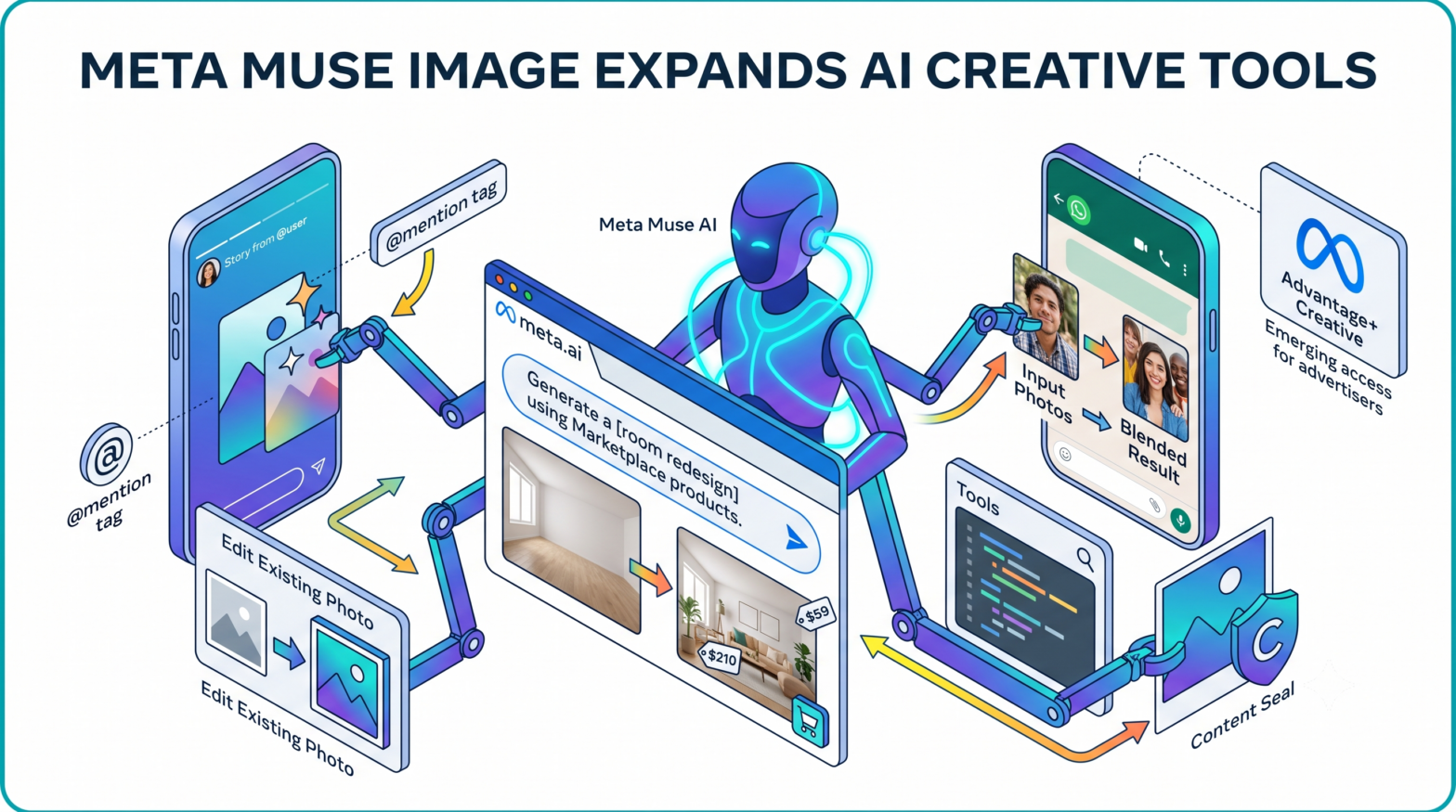
Meta has introduced Muse Image, its first image generation model from Meta Superintelligence Labs, and is placing the model directly inside Meta AI, Instagram Stories and WhatsApp. The company says the model can generate new visuals, edit existing photos, blend multiple image references and use public Instagram context when users tag accounts in Meta AI.
The timing matters because this is not just another AI image generation tool. Muse Image is being distributed through apps where social content, messaging, commerce and advertising already happen at scale.
Meta Is Bringing Image Generation Into The Places People Already Post
 |
 |
Muse Image is available now in Meta AI, including the Meta AI app and meta.ai. Meta says it is also powering more than 30 AI-powered effects for Instagram Stories and image generation in WhatsApp chats through Meta AI, starting in limited countries with more locations planned.
That distribution is the real story.
For years, generative image tools mostly lived as standalone destinations. Users opened a separate product, wrote a prompt, downloaded the result and carried it somewhere else. Meta is taking the opposite route. It is placing creative generation closer to the moment of sharing.
Inside Instagram Stories, the model supports AI effects. In WhatsApp, users can create images inside direct chats. In Meta AI, people can generate visuals that can be shared to a chat, story or feed. Meta says Muse Image is also coming soon to Facebook, Messenger and advertisers through Meta Advantage+ creative.
That puts Meta AI deeper into the production side of social content, not just the answer side of search or chat.
The Model Is Built To Edit, Not Just Generate
 |
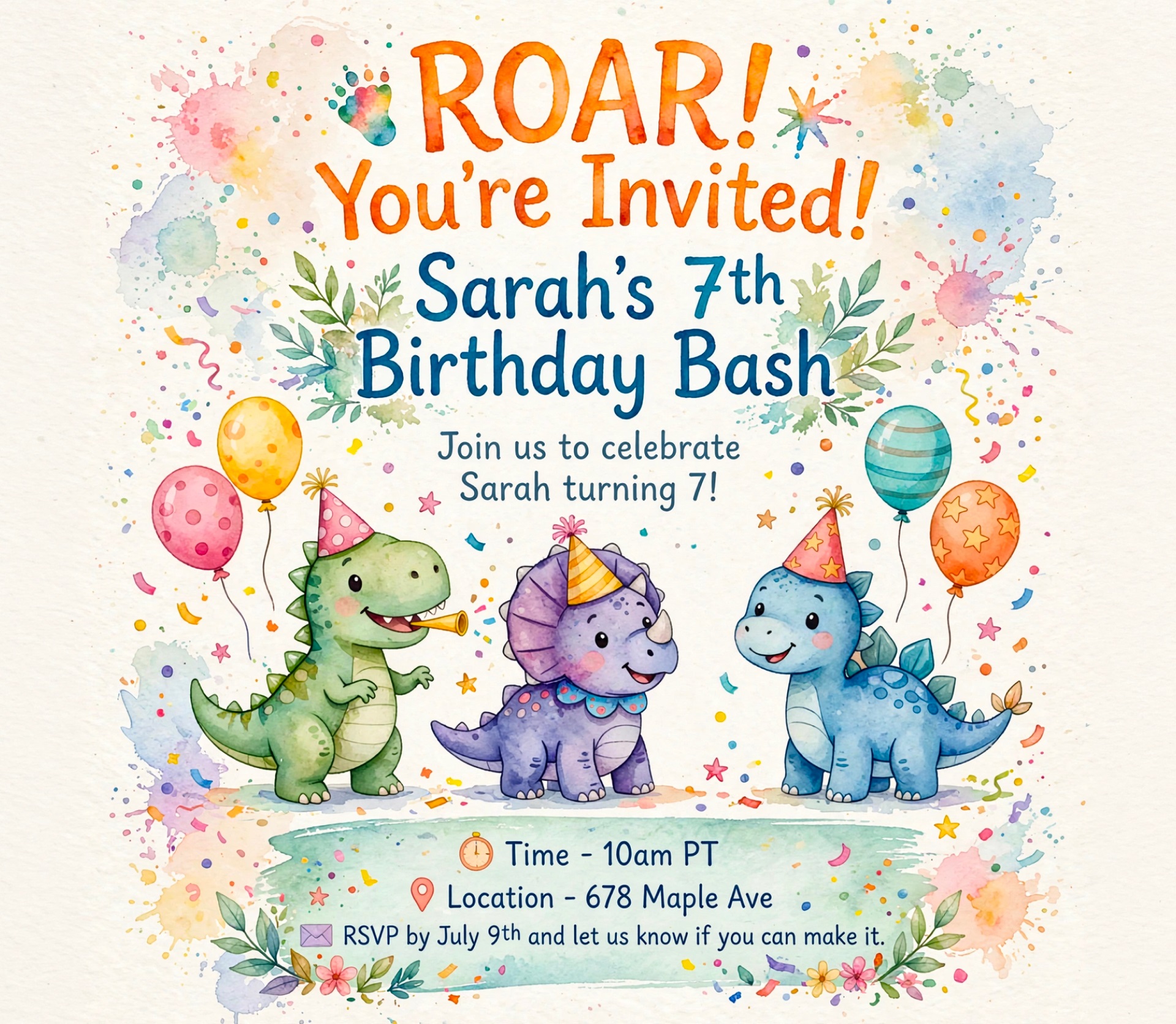 |
Meta is positioning Muse Image as a model that can handle more than text-to-image prompts. The company says users can start from scratch, work with an existing photo, erase unwanted objects, mock up scenes and ask for visuals with clean text rendering, including how-to guides or infographics.
That is a practical shift for creators and brands.
A simple prompt can produce a new visual. A supplied photo can become the base for an edit. Multiple photos can be blended into a single composition. Meta says users can also sketch changes directly onto an image, which moves the workflow closer to visual editing than ordinary prompting.
The Meta AI research post goes further. It says Muse Image can follow instructions, edit with precision, compose from multiple references and use Instagram for social context. The model also uses tools, including search and code, to improve accuracy on certain prompts.
That matters for AI image generation because marketers often need controlled variation, not random novelty. A campaign image may need the same product, the same colour palette, the same subject, the same layout logic and a small change to background, format or message. Tools that cannot preserve those elements usually create more review work than they save.
Muse Image is aimed at that gap.
Instagram Context Makes The Feature More Personal And More Sensitive
One of the more notable features is social context.
Meta says users can @-mention Instagram accounts in the Meta AI app to bring specific Instagram profiles into image creation. The company says this can be used for event invitations, collaborative concepts and personalized graphics, using public photos tied to the tagged profile. Meta also says Instagram users have a setting that lets them control whether their content can be tagged for AI creation.
That feature creates a new creative surface for public Instagram content.
For everyday users, it could make AI-generated visuals feel more personal. For creators and brands, it adds another reason to treat public Instagram imagery as reusable platform context, not just static feed content.
It also raises familiar questions around likeness, permission and brand safety. Meta’s own framing includes a control setting, but the broader operational issue remains clear: public-facing brand assets may increasingly become inputs for AI-assisted creative experiences inside social platforms.
That is not theoretical anymore.
Shopping And Room Redesigns Point Toward Commerce
Muse Image is also connected to product discovery. Meta says users can take a photo of a room and ask Meta AI to redesign it using real products from the web or Facebook Marketplace. Users can suggest a style or ask Meta AI to use trending ideas for the makeover.
This is where the update starts to look less like a creator feature and more like a commerce layer.
Room redesign prompts can connect visual imagination with purchasable products. A user does not need to search for a couch first. They can show the space, ask for a new look and see products placed into the image. That changes the order of discovery.
Search used to come before the mockup. In this flow, the mockup can create the search.
For ecommerce brands, home retailers and marketplace sellers, that could make product imagery, catalogue data and visual merchandising more important inside Meta’s AI systems. The better a product can be understood, styled and placed, the more useful it becomes in AI-assisted shopping contexts.
Meta has already been building more AI into commerce and business workflows. TechWyse recently covered Meta Business Agent, which expands AI support across WhatsApp, Instagram and Messenger for business interactions. Muse Image adds another piece to that same platform direction: AI does not just answer customer questions. It can help users imagine the purchase.
Advertisers Are Next In The Creative Pipeline
Meta’s announcement says Muse Image is coming soon to advertisers through Meta Advantage+ creative. That makes the update directly relevant to paid social teams, even before the advertiser rollout becomes widely available.
Advantage+ creative already sits in the part of Meta’s ad system where creative assets can be adapted, optimized and varied for placements. Adding Muse Image would bring Meta’s newest media generation model closer to campaign production and creative testing.
Practical implications for marketers: AI creative tools are moving from optional side tools into native platform workflows. Social teams will need stronger brand asset libraries, clearer creative rules, more disciplined approval processes and cleaner product information. The advantage will not come from generating more images alone. It will come from knowing which generated variants are accurate, on-brand, legally usable and aligned with campaign intent.
The competitive pattern is also broader than Meta. Pinterest, TikTok, LinkedIn and Google have all been adding more AI into campaign creation, shopping and ad workflow automation. TechWyse has also covered how AI ad tools are becoming a platform-level battleground rather than a niche feature category.
Meta is now adding its own image model to that race.
Meta Adds Watermarking As AI Content Gets Easier To Share
Meta says images created by Muse Image in the Meta AI app and on meta.ai include Content Seal, an invisible watermarking system designed to help identify AI-generated images. The company says the signal is intended to remain intact even when images are cropped, compressed, resized or screenshotted. Meta is also previewing a detection tool that can check whether an image carries the Content Seal watermark.
That detail matters because Muse Image is built for sharing.
When AI visuals can move from prompt to story, feed or chat inside the same ecosystem, provenance becomes harder to separate from distribution. Watermarking will not solve every trust issue around synthetic media, but Meta is signalling that generated content needs a verification layer as it becomes easier to create and publish.
Meta also previewed Muse Video alongside Muse Image. Muse Video is not broadly available yet, but Meta says it is coming soon to creators and Meta AI. The company says the model is built on the same pretraining base and includes native audio support.
For now, the live product is Muse Image. It is available in Meta AI, active in Instagram Stories in the U.S., rolling out through WhatsApp in limited countries and moving toward Facebook, Messenger and advertiser tools next.