
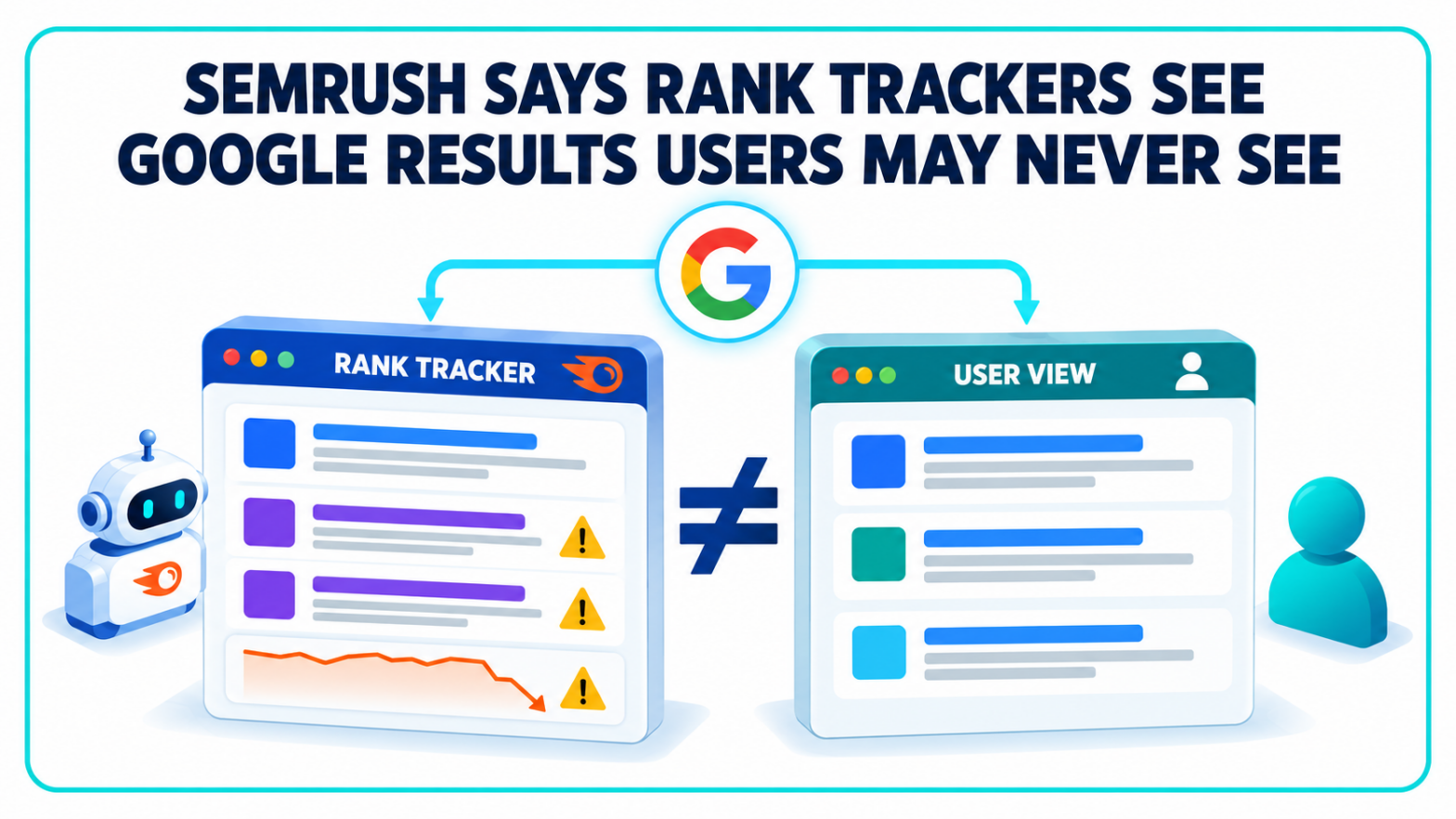
A sudden ranking collapse may no longer indicate that a website lost its position. It could be a faulty Google results page served to the tool measuring it.
Semrush confirmed on October 27 that some automated search requests are returning results that differ from those a typical Google user would see. The company describes these pages as “poisoned SERPs,” although Google has not confirmed the behaviour or indicated that inaccurate results are being served deliberately.
For SEO teams, the immediate problem is data integrity. Rank trackers depend on repeated automated requests to measure where domains and URLs appear for selected queries. When the underlying results are unreliable, routine reports can show losses, gains or competitor movements that never occurred for searchers.
Google Rank Tracking Now Has a Data-Quality Problem
Semrush characterized the issue as affecting data providers across the SEO industry in its October 27 statement. The company said changes in how Google responds to some automated requests can produce pages that appear legitimate while containing results a regular user would be unlikely to receive.
That distinction separates the issue from ordinary search personalization. Google results can legitimately vary by location, device, language, time and search history. Rank trackers already account for many of those variables by using controlled settings and repeated collections.
The current problem is more disruptive. A collection can return domains that have little connection to the query, creating an apparent ranking change that cannot be explained by personalization or routine algorithmic movement.
Google rank tracking has always provided an external estimate rather than direct access to Google’s ranking systems. The latest discrepancy adds another layer of uncertainty to that estimate.
Google reinforced that boundary in its June 2026 guidance for third-party SEO services. It states that outside tools do not have access to Google’s internal ranking data and that their predictions may not materialize.
The Faulty SERPs Can Look Convincing
Semrush identified two forms of inaccurate results.
The first is obvious: an entire results page can appear unrelated to the search, including listings near the top. These pages are comparatively easy for a provider to flag because they depart sharply from expected domains and topics.
The second is harder to detect. A results page may begin with familiar, relevant listings before introducing loosely connected pages farther down. The first few results create the appearance of a valid collection, allowing questionable data to pass through less sophisticated quality checks.
Semrush cited a search in Brazil for a specific baby stroller model. The automated results included a dental supply company’s equipment page because both products used the Portuguese word “carrinho.” The shared term created a linguistic connection, but not the commercial or topical relevance expected for the query.
A result like that can produce several misleading signals at once. A relevant retailer may appear to fall, an unrelated domain may seem to gain visibility and the calculated competitive landscape may shift. If the inaccurate page is stored, those errors can also enter historical comparisons and reporting dashboards.
The term poisoned SERPs describes the data received by tracking systems. It does not establish that Google intentionally corrupted the results or that ordinary users are seeing the same pages.
Semrush Is Filtering Suspect Results and Collecting Them Again
Semrush said its systems already detect clearly invalid pages during collection and exclude them from its database. It has also changed some data sources and added validation checks that flag potentially inaccurate results for another collection attempt.
Those safeguards matter because a single rerun can produce a different result set. Recollection gives the platform an opportunity to replace an anomalous page before it reaches a customer’s report.
Detection is more difficult when a SERP is only partially inaccurate. Normal Google tests, changing local results, new content and genuine algorithmic movement can all alter the mix of ranking domains. A rule that rejects every unfamiliar result would risk removing legitimate changes along with faulty data.
That leaves providers balancing two errors: accepting a bad collection or filtering out a real ranking shift. Semrush said it is continuing to refine its validation processes as search engine behaviour changes.
The episode also raises questions about historical trend lines. If questionable collections entered a database before new checks were introduced, a chart may contain short-lived spikes or drops that do not represent actual search visibility. Semrush did not specify how many results were affected or provide an estimate of the historical data involved.
SEO Tracking Tools Need a First-Party Comparison
Marketers should not treat every unexpected movement as false. They should also avoid making content, technical or link changes based on one abrupt reading from a third-party platform.
A practical review starts by checking whether the movement persists across several collection dates. Teams can then compare the affected queries and landing pages against Google Search Console, organic traffic and conversions. A broad decline in impressions and clicks carries more diagnostic weight than a ranking drop visible in only one tool.
Google Search Console provides first-party performance data, but it is not a direct replica of a rank tracker. Its position metric is an average based on impressions, and results can vary by user context. Google’s documentation recommends focusing more on trends in clicks and impressions than on position alone.
SEO tracking tools still serve a different purpose. They can monitor fixed keyword sets, compare competitors and preserve consistent reporting views that Search Console does not provide. The safer interpretation is comparative: use third-party rankings to identify a possible change, then look for supporting evidence before diagnosing its cause.
That discipline is especially important during periods of ranking volatility. An algorithm update, a reporting anomaly and an inaccurate automated SERP can produce similar-looking charts while requiring entirely different responses.
The Cause Remains Unconfirmed
Semrush pointed to industry discussion suggesting the behaviour may be connected to efforts to limit large-scale data collection, including collection used by AI systems. It presented that explanation as a possibility, not a confirmed cause.
Google had not publicly commented on the issue when Semrush published its statement. There is therefore no verified basis for concluding that the company is deliberately identifying rank trackers, targeting particular vendors or changing automated results as an anti-scraping measure.
The available evidence establishes a narrower finding: some automated requests can return irrelevant or partially inaccurate Google results, and Semrush has changed its collection and validation processes in response.
Semrush advised customers who notice unexpected rankings, particularly for keywords unrelated to their pages, to compare the reports with their own data and submit the affected domain and keywords to its support team. The company said its October 27 statement reflects its current understanding and may be updated as more information becomes available.