YouTube may have found another place to put an ad without stopping the video.
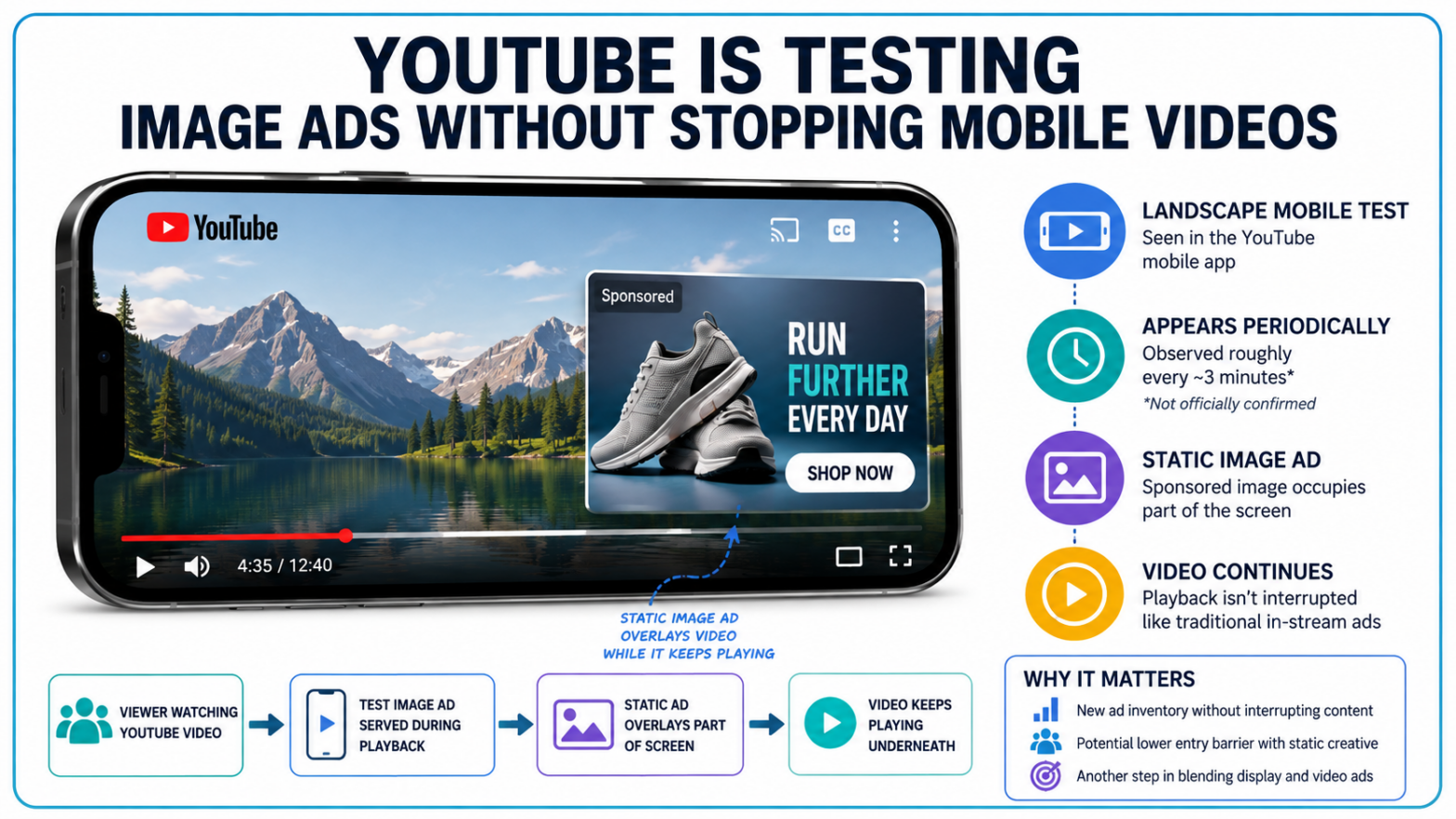
A new test spotted on mobile devices is displaying static image ads over part of the screen while users watch YouTube videos horizontally. The underlying video continues playing, putting the experimental format somewhere between a traditional display placement and an in-stream video ad.
For advertisers, that distinction could be significant. YouTube's most valuable viewing environments have historically pushed brands toward video creative. A static placement inside active playback would give Google another way to monetize viewing time while potentially opening that inventory to advertisers working with image assets.
Google has not publicly confirmed a broad rollout, and the format should currently be treated as a test rather than a new generally available YouTube Ads placement.
The Video Keeps Playing While the Ad Takes Screen Space
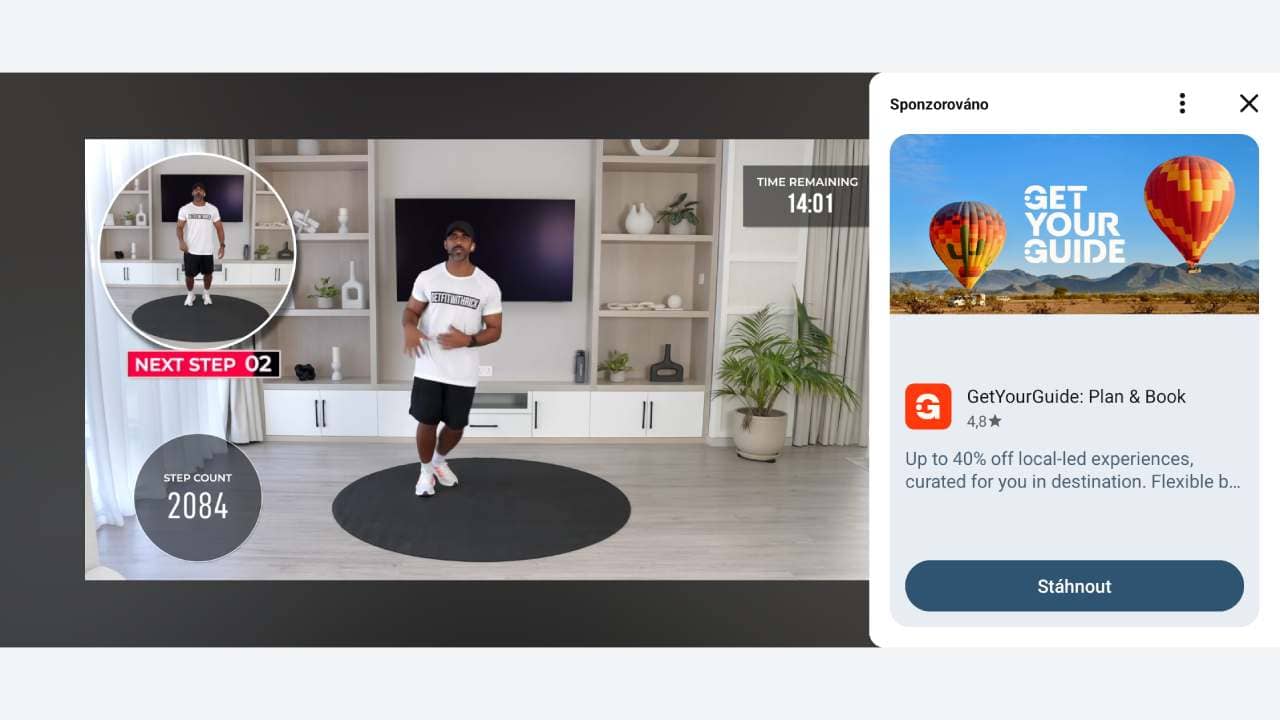
The experimental format has been observed during landscape playback on the YouTube mobile app.
Instead of triggering a conventional commercial break, the ad appears as a sponsored static image that occupies part of the viewing area. The video itself keeps running.
Early observations indicate the placements can surface roughly every three minutes during playback, although there is no official Google documentation establishing that interval as a fixed frequency.
That makes the experience materially different from the established YouTube in-stream model.
Google's current video ad documentation describes skippable and non-skippable formats that run before, during, or after videos. Skippable in-stream ads, for example, interrupt playback and give viewers the option to skip after five seconds.
The image test does not appear to work that way.
Rather than replacing the content temporarily, YouTube is testing whether an advertisement can coexist with it.
That sounds like a small interface adjustment. From an inventory perspective, it is something more.
YouTube's Playback Screen Could Become New Ad Inventory
YouTube already has no shortage of surfaces advertisers can buy.
Ads can appear across in-stream video, the Home feed, search results, Watch Next, Shorts, connected TVs, and other areas of the platform. Google has also been drawing more of its visually driven advertising products into Demand Gen.
TechWyse recently reported on Google moving Display inventory into Demand Gen, bringing the Display Network closer to the same campaign environment already used for YouTube, Discover, Gmail, and other visual placements.
The landscape image test points in a similar direction at the format level.
Google currently says single-image Demand Gen ads can serve on several YouTube surfaces, including feeds, but its Demand Gen asset documentation specifically states that YouTube in-stream inventory does not support single-image ad formats.
A static image appearing while a video is actively playing would therefore represent a different type of inventory from the image placements advertisers can already access.
Whether Google ultimately makes that inventory available through Demand Gen, another Google Ads campaign type, or not at all remains unknown.
For now, the test shows that the company is at least exploring the space.
Static Creative Would Lower the Entry Cost for Some YouTube Advertisers
Video advertising has an obvious creative requirement: advertisers need video.
Google has spent years lowering that barrier through automated asset generation, resizing, and campaign tools that can adapt creative across different screen formats. In June, TechWyse reported that Google added Gemini creative recommendations and expanded video resizing to Demand Gen.
A native static placement during YouTube playback would go a step further.
Brands already producing display, social, Performance Max, or Demand Gen image assets could theoretically have another route into YouTube viewing sessions without developing a dedicated video ad.
There is no indication yet that advertisers can intentionally select the experimental placement or that existing image campaigns are automatically eligible for it. Google also has not published asset specifications, bidding rules, reporting dimensions, or campaign eligibility for the test.
Those details will determine whether the format becomes meaningful for media buyers.
Google's existing systems already have considerable flexibility in adapting assets. Its documentation for responsive display ads says advertisers can provide combinations of images, logos, headlines, descriptions, and videos, with Google AI generating combinations for available inventory across websites, apps, YouTube, and Gmail.
The broader advertising stack is therefore already built to move creative between surfaces. Adding another image-supported YouTube environment would fit that architecture, even though Google has not confirmed that this test is part of it.
An Extra Ad Does Not Necessarily Require Another Ad Break
There is another side to the experiment: ad load.
YouTube can create more inventory by adding conventional commercial breaks, but every interruption asks the viewer to stop watching the content they selected and watch something else instead.
An overlay-style image creates inventory without requiring the same interruption.
The trade-off is screen space.
A static advertisement occupying part of a phone display could be highly visible precisely because it appears while someone is trying to watch something else. Its effect on viewer behaviour will depend on its size, duration, frequency, dismissal controls, and whether it obscures important parts of a video.
None of those variables has been formally documented by YouTube for this test.
The experiment arrives while Google is putting more measurement behind how users interact with YouTube advertising. TechWyse recently covered expanded YouTube reporting in Google Ads API v25, including additional YouTube engagement data.
Google has also been expanding brand measurement on the platform, including attributed branded searches and additional Shorts ad actions. The more surfaces YouTube makes monetizable, the more important placement-level measurement becomes for advertisers comparing reach with actual engagement.
An impression beside uninterrupted content is not necessarily equivalent to a pre-roll view, a Shorts impression, or an in-feed interaction.
Advertisers would need the reporting to tell those experiences apart.
The Test Blurs Google's Line Between Display and Video Ads
The practical implication for marketers is limited until Google confirms the format.
Advertisers do not need to rebuild YouTube campaigns around an experimental placement, and there is currently no documented setting for buying it directly. Teams running Google Ads should instead watch for changes to placement reporting, image asset eligibility, Demand Gen documentation, and YouTube ad specifications if the test expands. Existing image creative may become more useful across YouTube if Google formalizes the format, but campaign performance should still be evaluated separately by placement rather than assuming a static ad shown during playback behaves like a video impression.
Google has spent much of 2026 making the boundaries between its advertising products less rigid.
Demand Gen has expanded across more inventory. Video creative can be automatically reformatted for different YouTube environments. Google Ads and YouTube account data are becoming more closely connected, with TechWyse reporting earlier this year on automatic YouTube channel linking for eligible Google Ads accounts.
The image-ad experiment applies that same flexibility to the viewing screen itself.
For now, it remains exactly that: an experiment observed on horizontal mobile playback, without a confirmed rollout, advertiser launch date, or published buying controls from Google.