
YouTube engagement is about to become harder for advertisers to leave outside their media reporting.
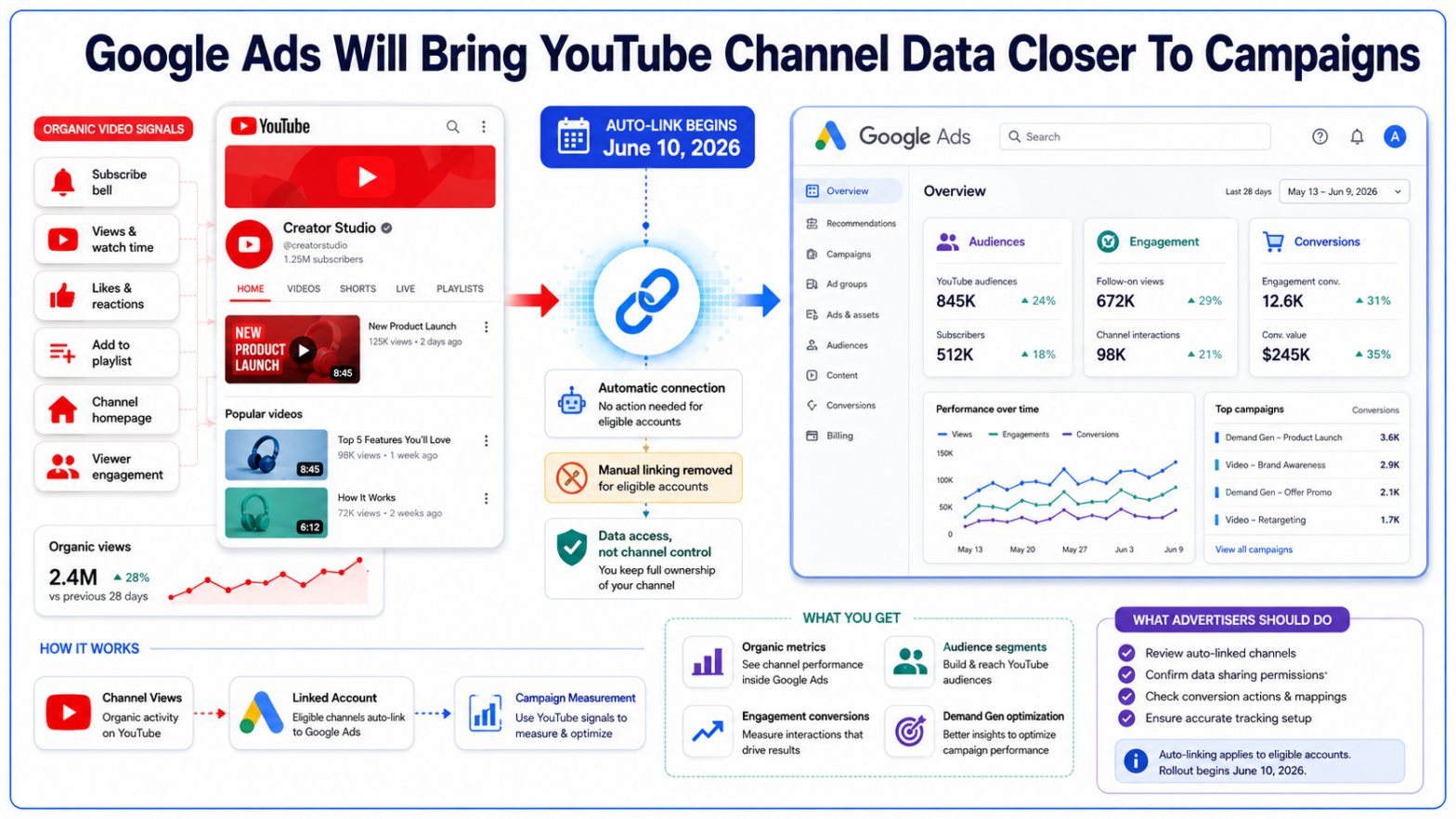
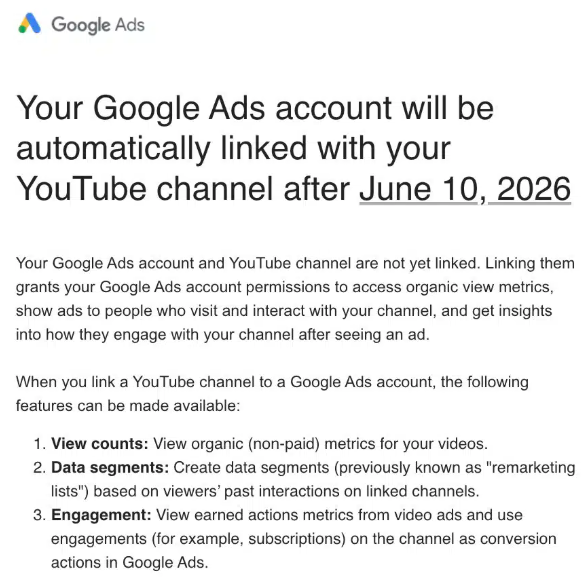
Advertiser notices indicate Google Ads will begin automatically linking eligible Google Ads accounts with associated YouTube channels on June 10, 2026, giving more accounts access to channel-based measurement, audiences, and engagement signals without a manual setup step.
The Manual Link Step Is Being Removed For Some Accounts
Today, linking a YouTube channel to Google Ads is a setup task handled through YouTube Studio or Google Ads Data Manager. Google’s help documentation says a linked account can access organic video metrics, create data segments from channel interactions, and measure how users engage with a channel after seeing ads.
The June 10 change shifts that connection from an optional setup step to an automatic one for accounts that qualify and are not already linked.
That does not make YouTube and Google Ads the same account. Google’s product linking documentation says a YouTube channel owner does not gain control over the Google Ads account, and advertisers cannot add, delete, or modify videos on the linked channel simply because the accounts are connected.
The practical change is access. More advertisers will have YouTube interaction data available inside the ad account by default.
Organic Video Signals Move Into The Ad Account
Once a YouTube channel is linked, Google Ads can show organic view metrics for the channel’s videos when permissions allow it.
That matters because video performance is often split across two views of the same customer journey. YouTube Studio shows channel activity. Google Ads shows paid delivery and campaign results. Linking gives advertisers a closer look at the overlap between the two.
Google’s documentation also says linked accounts can build data segments based on viewers’ past interactions with YouTube content. Those interactions can include viewing videos from a channel, subscribing, visiting a channel homepage, liking a video, or adding a video to a playlist.
For advertisers already using YouTube as a performance or demand-generation channel, that makes organic engagement more usable in paid campaign planning.
Engagement Becomes Easier To Measure
The link also affects conversion measurement.
Google Ads supports YouTube Engagement conversion actions for linked channels, including channel subscriptions and follow-on views. Google defines follow-on views as cases where a user watches organic videos from a YouTube channel after seeing an ad for that channel.
That gives advertisers a way to measure video impact beyond the first paid view or click.
A campaign may not drive an immediate website visit, but it may push a viewer to subscribe or keep watching related videos. With the channel linked, those actions can appear in Google Ads as measurement signals and, in some campaign setups, optimization goals.
The Change Fits Google’s Broader Video Push
Google has been giving advertisers more ways to treat YouTube engagement as a campaign outcome, especially through Demand Gen campaigns.
Its help documentation says YouTube Engagement goals can be used to measure and optimize for subscriptions or follow-on views when the promoted channel is linked to the Google Ads account. The automatic-linking update lowers the setup friction around those features.
That is the bigger shift. YouTube data is moving from a separate content-performance layer into the default advertising workflow.
For smaller advertisers, the change may surface audience and engagement options they had not configured manually. For larger accounts and agencies, it may require a closer review of linked-channel permissions, audience usage, and reporting definitions before June 10.
Advertisers Should Check What Gets Connected
The main operational question is not whether YouTube linking is useful. It often is.
The question is whether advertisers know which channel will be connected, who manages it, and how the resulting data will be used in reports and audience segments.
In practice, marketers should review account links, conversion actions, and YouTube-based data segments before the automatic change takes effect. Teams that separate brand media, creator content, and performance campaigns may need clearer naming and governance so engagement signals are not misread across accounts.
Google Ads will still depend on permissions and account relationships. But after June 10, more advertisers may find YouTube channel data waiting inside Google Ads before anyone on the team manually links it.