
Search intent is not always typed into a box. Sometimes it is the handbag, lamp or jacket sitting inside the image a shopper has already opened.
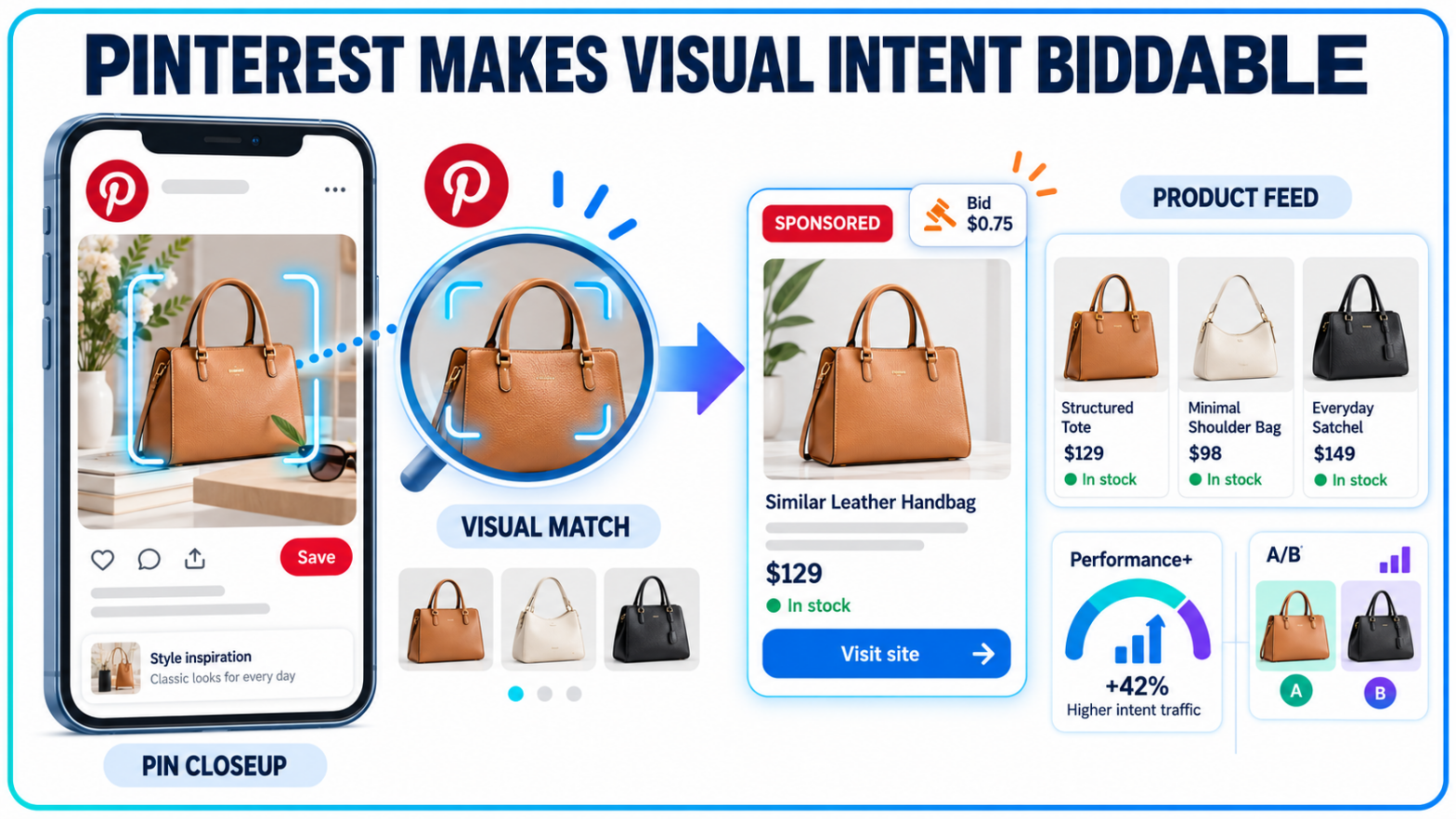
Pinterest is turning that behaviour into paid inventory. Its new Pinterest Visual Search Ads let eligible advertisers bid for prominent positions in Pinterest Search Results and Pin closeups, placing a brand beside the visual reference a user is actively exploring.
Pinterest Visual Search Ads Enter the Pin Closeup
The new format extends performance advertising into two parts of Pinterest’s discovery journey.
An ad can appear within Pinterest Search Results, where a user is browsing a collection of relevant images, or inside a Pin closeup after the user selects a specific image for a closer look. Advertisers can bid for a top response and send the user directly to their website.
That second placement creates a different context from a standard search ad. The user may not have entered an exact brand, product or category term. The selected Pin itself carries information about colour, form, style and the object being considered.
Pinterest says the format pairs keyword relevance with its visual understanding of images, products, taste and intent. The company calls that system Pinterest Intelligence. Its official launch announcement positions the new ads as a lower-funnel format for users who are searching, comparing and moving closer to a decision.
Pinterest reports more than 80 billion searches on the platform each month. According to its internal global data, the vast majority are visual and more than half are commercial. Those figures describe the scale of the surface, not the performance an individual advertiser should expect.
Visual Search Adds Context That Keywords Miss
Conventional paid search starts with words. The advertiser reads a query, matches it to an offer and competes for the click.
Visual search advertising adds another layer. An image can express details that are awkward to name, such as the shape of a chair, the texture of a fabric or the overall look of an outfit. Pinterest can use those visual signals alongside keywords rather than asking the shopper to translate every preference into text.
The advertiser is still buying a response to intent. The difference is where that intent comes from.

This does not remove the role of keyword planning. Pinterest specifically says the format combines keyword relevance with visual understanding. Campaign teams will still need to know which categories, terms and landing pages fit the product. Strong imagery gives the platform more context, but it does not make an irrelevant offer useful.
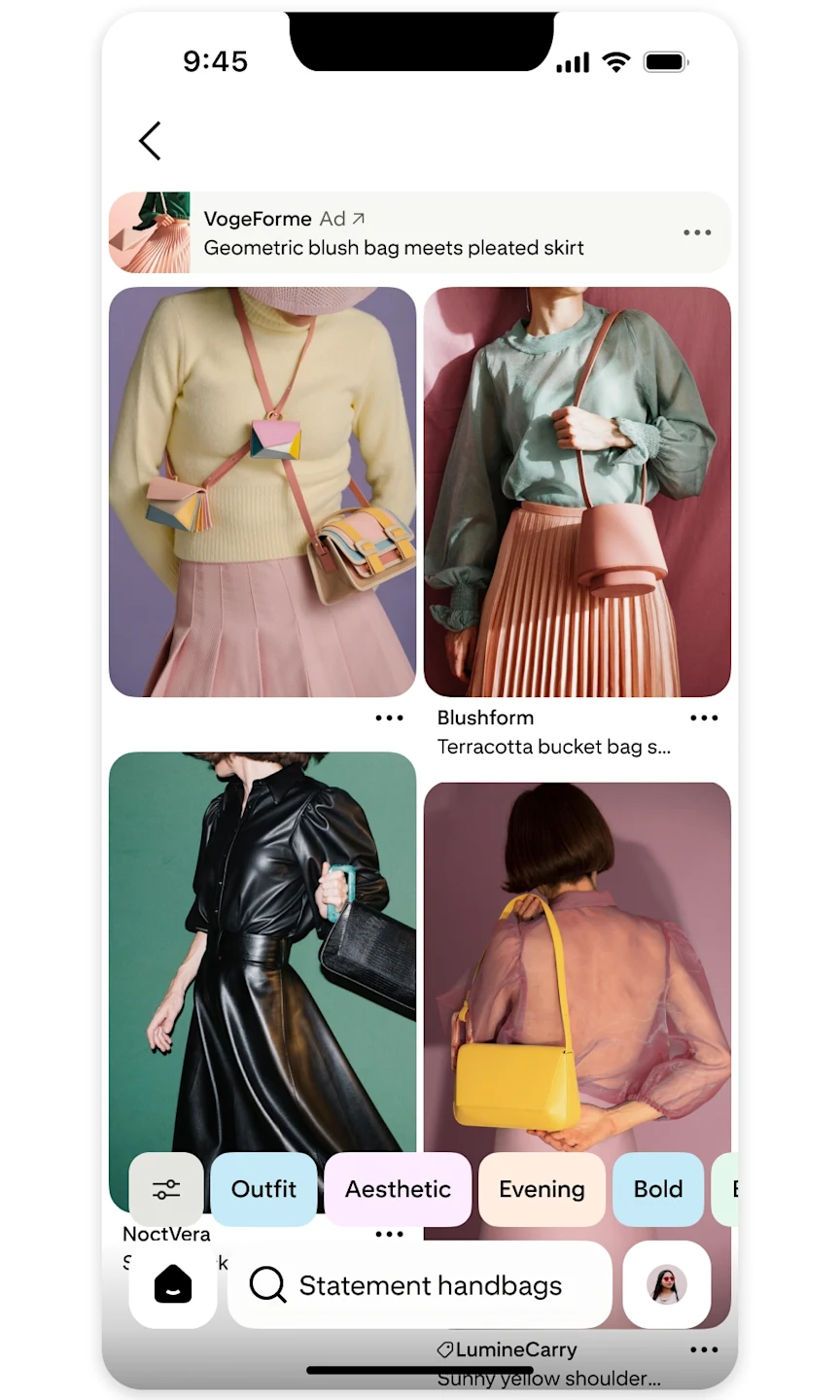
The placement also changes creative competition. A product image has to make sense beside the Pin that triggered the search, not only within a feed of unrelated content. Scale, composition, colour and visible product detail can influence whether the ad feels like a credible next option or an interruption.
Product Feeds Become Part of the Search Strategy
Pinterest’s visual systems need usable product information behind the image. A clear photo may attract attention, but the platform and shopper still need an accurate title, description, price, availability signal and destination page.
That puts product feeds closer to the centre of campaign strategy. Missing attributes, stale pricing or weak category labels can limit how confidently a product is matched to a visual discovery moment. The landing page must also resolve the promise made by the image, especially when the shopper is comparing similar items.
The pattern is appearing across commerce media. Google is also using feed attributes and site context to match shopping ads with broader product research. Pinterest’s distinction is the starting point: the user can move from an image to a paid product response without first producing a detailed text query.
For retailers, creative and feed QA now belong in the same review. The product shown, the attributes supplied and the page reached after the click need to describe the same item. A visually close match that leads to the wrong variant or an unavailable product can waste the high-intent moment the format is designed to capture.
Performance+ Gains Product Control and Testing
Visual Search Ads are compatible with Pinterest Performance+, the platform’s automated performance advertising suite. Pinterest is pairing the new placement with two additions intended to give advertisers more control over that automation.
Priority Products will let brands identify items that deserve extra emphasis during a seasonal launch, promotion or category push. That is a useful distinction for retailers whose commercial priorities do not always match the products an automated system would select from recent conversion data alone.
Pinterest is also introducing self-serve A/B testing across creative, targeting and Performance+ campaigns. Advertisers will be able to compare campaign approaches inside the platform rather than treating a before-and-after result as proof that one change caused the difference.
The testing layer matters because visual-search traffic may behave differently from feed traffic or conventional keyword-led visits. Separate experiments can show whether a creative treatment, product group or targeting decision improves performance without mixing several changes into the same comparison.
Pinterest also announced an App Promotion objective for app-install campaigns. It is in global beta with qualified advertisers, separate from the Visual Search Ads rollout.
The New Inventory Is Broad, but Access Is Still Limited
Pinterest plans to make Visual Search Ads available in beta to eligible advertisers across all Pinterest ad markets in the coming weeks. That is a broad geographic plan, not general availability on launch day.
Campaign teams should confirm account eligibility before building forecasts around the placement. Pinterest has not published universal performance benchmarks for Visual Search Ads, and the volume available to an advertiser will depend on its products, market and the discovery behaviour surrounding them.
In practice, advertisers preparing for the beta can review image clarity, catalogue health, product-to-page consistency and conversion tracking. They can also define how visual-search traffic will be separated in reporting so results are not blended with existing Pinterest placements. Those are standard campaign controls, not assumptions about the format’s eventual return.
Pinterest is making the image itself a stronger commercial signal. The ad opportunity sits between inspiration and a fully formed query, when the shopper has shown what looks right but may not yet know what to call it.