
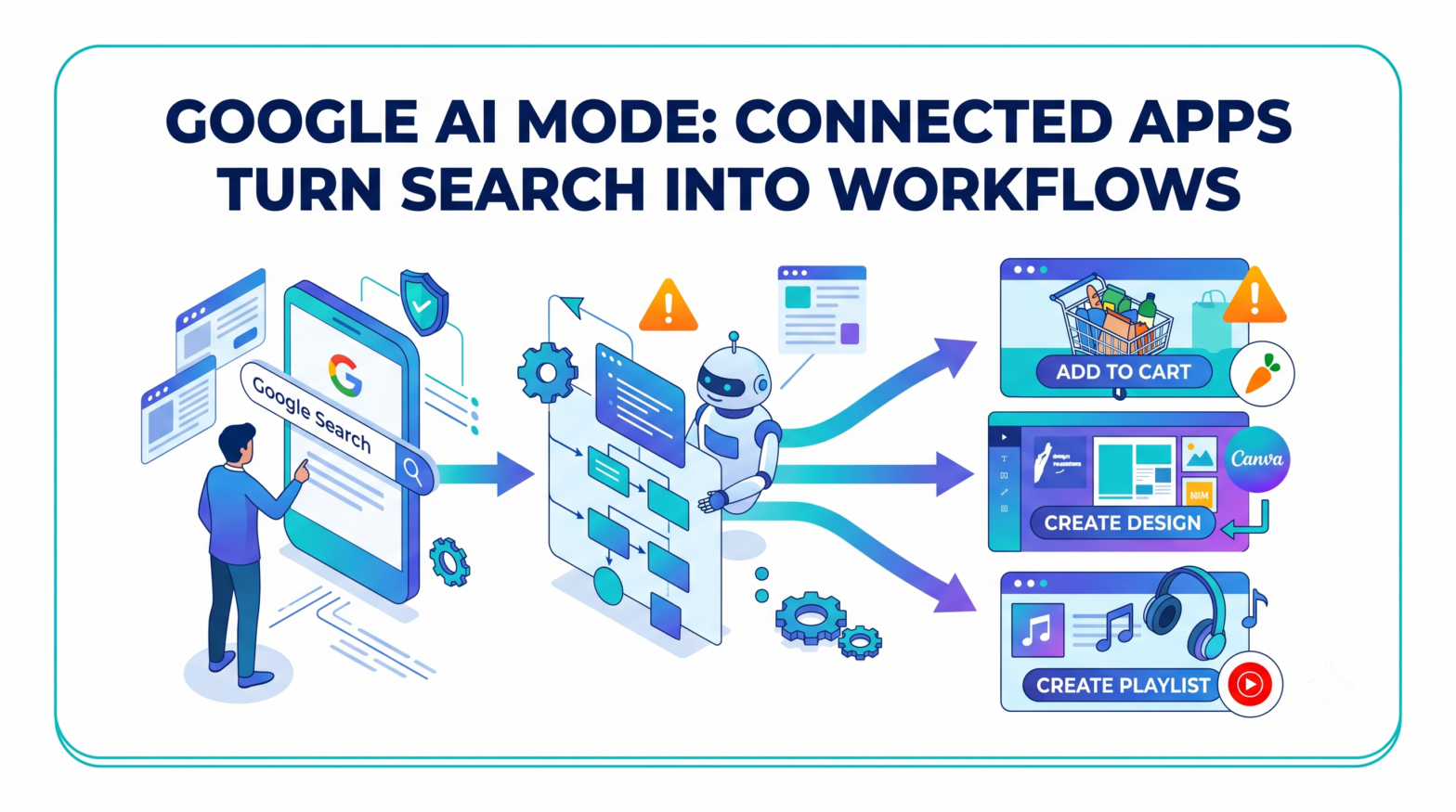
Google Search is no longer satisfied with answering a question. It wants to complete the next step.
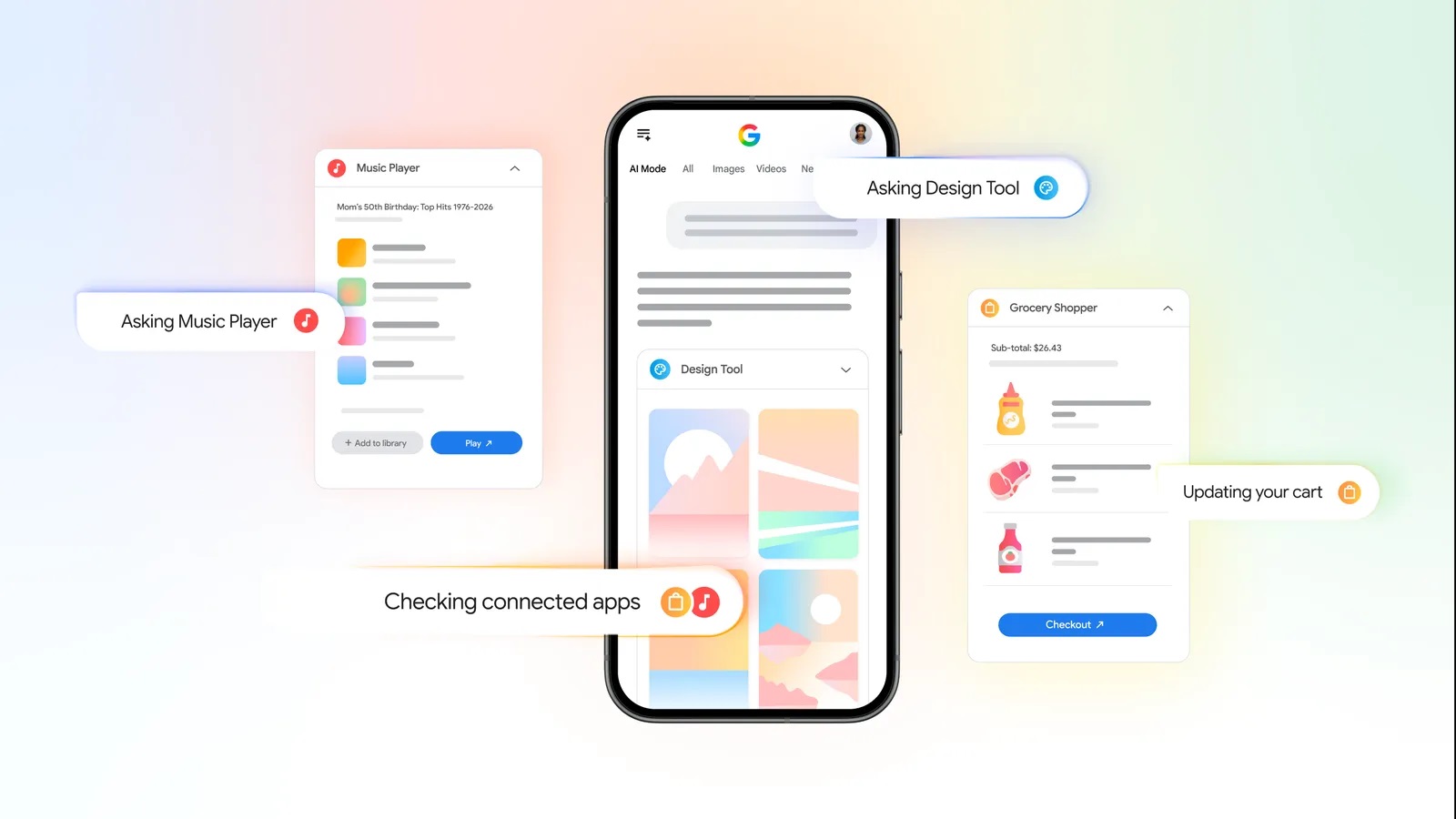
A new connected apps feature in Google AI Mode allows users to build grocery carts, find design templates and create music playlists through natural-language prompts. The initial integrations include Instacart, Canva and YouTube Music, giving Google a direct route from an AI-generated response into a third-party service.
The feature began rolling out in the United States on July 16. It is currently limited to English-language AI Mode experiences, and users must be signed into a Google Account.
Search still provides information. Now, it can also hand the task to an app built to finish the job.
The Search Result Is Becoming a Control Layer
Traditional Google Search directed people toward websites where they could compare options, create an account or complete a transaction. Connected apps shorten that route.
A user planning a barbecue can ask AI Mode to prepare a grocery list and add the ingredients to an Instacart cart. Someone creating promotional material for an event can request template options from Canva. A music query can become a saved YouTube Music playlist without requiring the user to begin again inside the music app.
The final action does not always happen entirely inside Google. Instacart users are sent to the service to check out and manage their orders. Canva users move into the design platform to modify or download their work, while YouTube Music opens the completed playlist for playback.
That boundary matters.
Google AI Mode is not replacing every connected service with a native Search interface. It is positioning itself as the place where a user describes the outcome, chooses a provider and starts the workflow.
The change extends the broader evolution of Google’s AI-powered Search interface, which has been adding more conversational inputs, persistent tools and agent-like functions. Search is gradually becoming less dependent on users translating an intention into a string of keywords.
Connected Apps Introduce a New Kind of Search Visibility
The first group of integrations covers grocery delivery, creative design and music. Google says additional partners will be added, although it has not published a full schedule or confirmed which categories will come next.
For app developers and digital platforms, connected apps create a form of visibility that sits apart from organic rankings and paid listings.
An integrated service can become an available action within an AI Mode response. The user may not need to compare several conventional blue links before choosing a platform. Google can surface an eligible app at the moment a task is being assembled.
It may also remember the service previously used for that type of request. Google’s support documentation says AI Mode can default to the last app selected for a particular task, although users can name a different provider in their prompt where alternatives are available.
That introduces a retention dynamic inside AI search. Winning the first completed action could influence which service appears during a later request.
The current launch is too narrow to establish how provider selection will work in crowded categories. Instacart, Canva and YouTube Music do not yet appear beside long lists of competing apps. Still, the product design shows where Google is placing connected services: between the user’s stated intent and the transaction or creative action that follows.
Personal Intelligence Can Shape the Action
Connected apps can operate alongside Personal Intelligence, Google’s opt-in personalization system for AI experiences.
Google says that combination can produce more tailored responses, adding information from a user’s permitted Google services before passing the task into a connected app.
The distinction between the two systems is important. Personal Intelligence supplies context. Connected apps provide an external destination where something can be created, saved, ordered or played.
Google has already expanded personalized AI experiences across Search, and early testing suggests connected Gmail signals can influence the brands and recommendations shown in AI Mode. The addition of app actions pushes that personalization closer to a measurable commercial or behavioural outcome, a shift examined in TechWyse’s coverage of Gmail signals and AI Mode brand recommendations.
A generic request for meal-planning help could become a grocery cart shaped by previous searches and preferences. A design prompt could lead to templates selected around the project described in the conversation.
The response is no longer determined by the query alone. Account settings, search history, previous app choices and connected services may all affect the path presented to the user.
Users Retain Control, but the Data Path Is Wider
Connected apps are permission-based. Users must link an eligible third-party account to their Google Account before AI Mode can take action through that service.
Connections can be reviewed or removed through Google Account settings. Deleting a link ends Google’s access to that app account and disables features that rely on the connection across signed-in devices.
Google also states that enabling history and personalized recommendations produces a more continuous experience. Without those settings, users can still access AI Mode, but previous searches will not carry into later interactions in the same way.
The company warns that AI-generated responses can contain mistakes. A generated grocery cart, playlist or design recommendation may therefore require review before the user completes the action.
Google says Search interactions and user feedback may be used to develop and improve its generative AI systems. When human reviewers examine data for quality purposes, Google says the information is disconnected from user accounts and automated systems remove identifying and sensitive details.
Connected apps add another permission surface to that environment. The convenience depends on users allowing Google Search to communicate with services that may hold purchase, media or creative-work data.
Marketers Need to Watch the Step After the Answer
For marketers, the immediate impact is concentrated among businesses operating apps or digital services rather than conventional publishers.
The feature does not create a new markup requirement for websites, nor has Google announced a standard method for businesses to submit themselves as AI Mode integrations. Initial access appears to depend on direct platform partnerships.
Still, connected apps change the journey marketers are trying to measure. A search can move from discovery to cart creation, asset selection or playlist generation without the sequence of website visits normally visible in analytics platforms.
Brands that are not integrated may continue to appear as sources or recommendations in an AI response. Integrated providers can occupy a different role: the system used to execute the request.
That deepens the attribution problem already forming around personalized Google AI search. Rankings and citations may explain which brands were mentioned, but they will not fully show which connected service received the action.
Marketers should monitor whether Google opens connected apps to broader partner participation, how alternative providers are displayed and whether reporting becomes available for actions initiated through AI Mode. Those details will determine whether connected app visibility develops into a scalable acquisition channel or remains a limited product-integration layer.
Google has started with three familiar tasks: shop, design and listen.
More integrations are expected. For now, the rollout establishes the larger change clearly. AI Mode is moving beyond generating an answer and into choosing where the user goes to get the work done.