
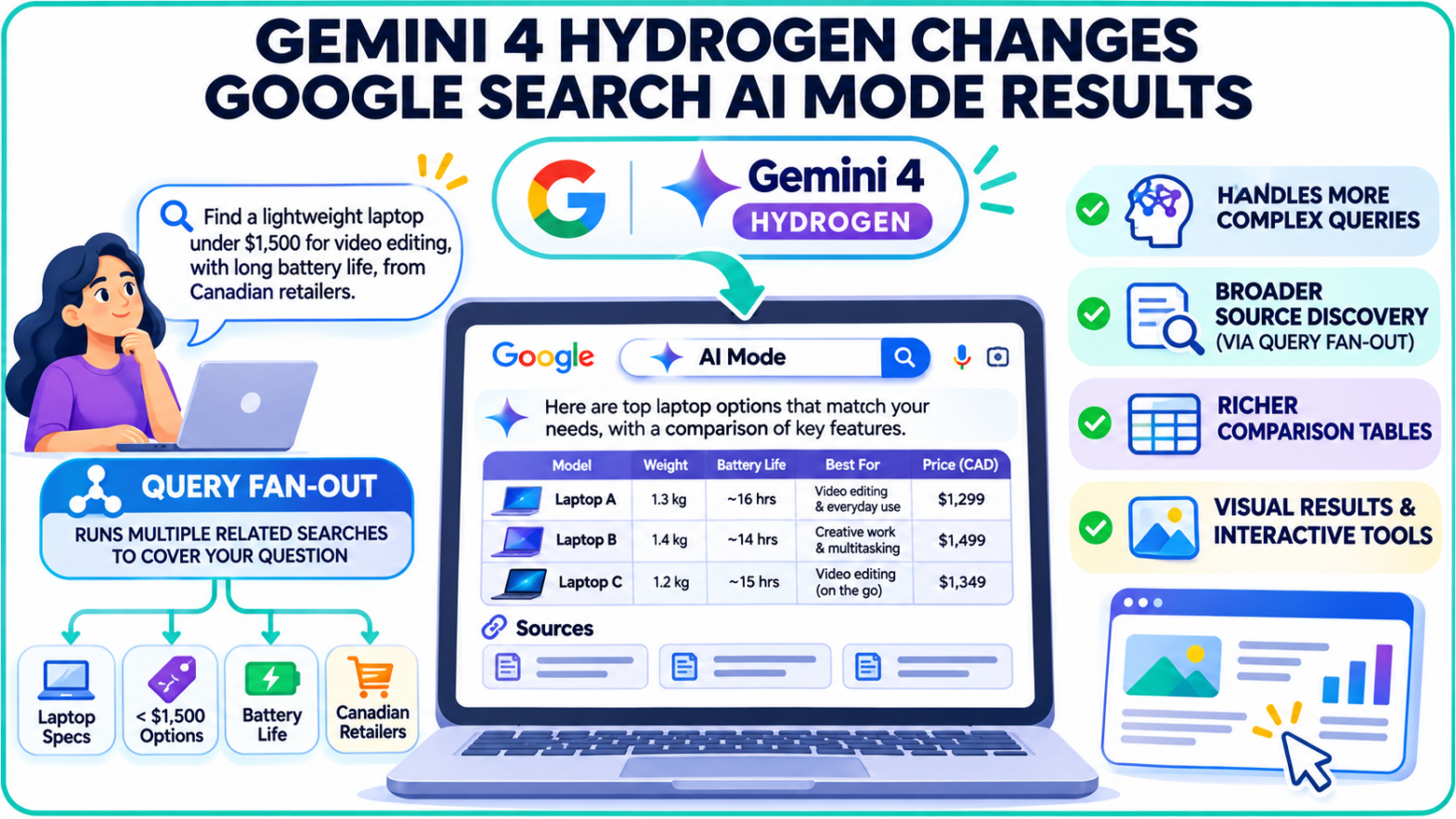
Google Search is getting better at answering questions that once required five or six separate searches. And it's changing how those answers are assembled.
On November 12, 2026, Google introduced Gemini 4 Hydrogen across Search, bringing more advanced reasoning, broader source discovery and richer visual responses to users worldwide. The model can process complicated requests involving several conditions, search related topics simultaneously and organize the findings into comparison tables, images and interactive tools.
For publishers and SEO professionals, the bigger development isn't simply that Google can generate more detailed answers. It's that Search can now investigate more parts of a question before deciding which websites deserve a place in the response.
Google describes Hydrogen as its largest model upgrade to Search so far.
Google AI Mode Can Handle Questions That Previously Required Multiple Searches
Traditional search works best when a person knows how to describe what they're looking for.
Someone researching a product might search for its specifications, check whether it fits their budget, investigate alternatives and then look for reviews. Each stage usually involves entering another query or visiting another website.
Gemini 4 Hydrogen is designed to handle more of that process within a single request.
According to Google's November 12 Search announcement, the model can interpret highly specific instructions, multiple requirements and questions containing difficult-to-understand spelling errors.
Consider someone searching for a lightweight laptop under $1,500 that can handle video editing, has a long battery life and is available from Canadian retailers.
Instead of treating the request as a simple laptop search, the updated system is designed to examine the different requirements and generate a response that addresses them together.
The model's improved instruction-following capabilities also make it better at identifying which details matter to the person asking.
Google says Hydrogen can interpret questions written in a user's natural flow of thought, without requiring them to break the request into carefully worded search phrases.
That's a meaningful distinction for Google AI Mode, where conversational searches and follow-up questions are already central to the experience.
A person can describe a complicated situation, ask for comparisons and refine the requirements without beginning a completely separate search.
The update also extends improved language understanding across the languages currently supported by AI Mode. Google has not described this as support for every language available in conventional Search.
Google's Query Fan-Out Can Surface Websites Beyond the Original Search Terms
One of Hydrogen's most consequential changes happens before the user sees an answer.
Google is upgrading the process known as query fan-out, which allows AI-powered Search to perform multiple related searches while answering one request.
Rather than relying entirely on the original wording, the system investigates relevant subtopics and gathers information from different sources.
The technique isn't new. Google has previously explained how query fan-out supports more complex AI searches by expanding the retrieval process beyond a single query.
Hydrogen adds stronger reasoning to that process.
Imagine someone asking which neighbourhood in Toronto offers affordable housing, convenient transit and reasonable commuting times to downtown.
Answering properly involves several separate considerations: housing costs, transit availability, location and travel patterns.
A conventional search might prioritize pages closely matching the original phrase. An AI response supported by query fan-out can retrieve information across those individual subjects and combine the findings.
Google says Hydrogen's improved retrieval process can connect users with a wider range of relevant websites, including sources they might not have discovered through their original search.
For publishers, that creates another route into Search.
A specialized article addressing one part of a broader question could become relevant to an AI-generated answer, even when the page doesn't target the complete wording of the user's request.
But broader retrieval doesn't guarantee broader traffic.
Google has not released figures showing how many additional websites Hydrogen cites, whether citation diversity has increased or whether the update generates more outbound clicks.
The announcement establishes an improvement in how Google discovers and connects supporting information. Its effect on individual publishers remains to be measured.
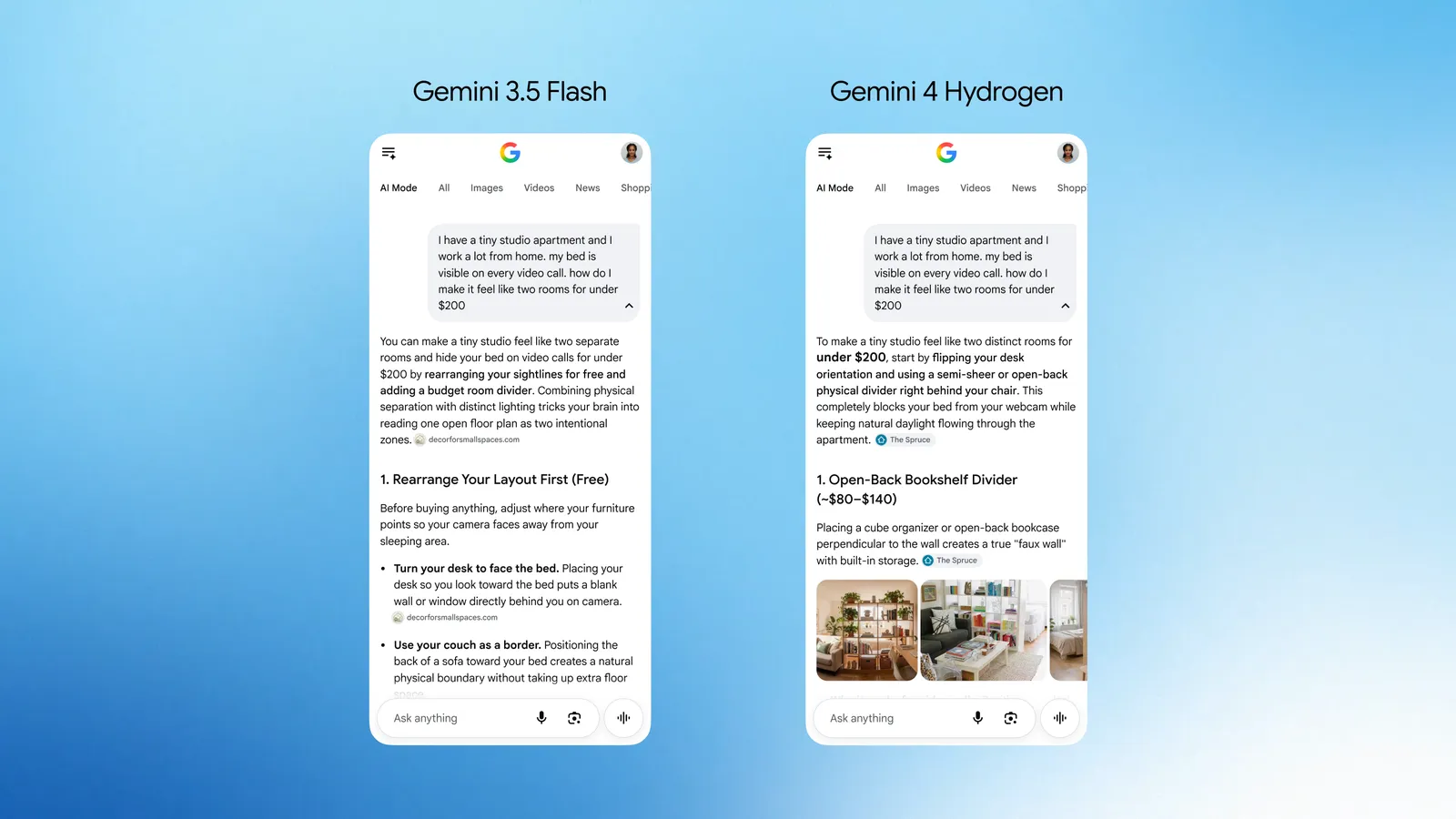
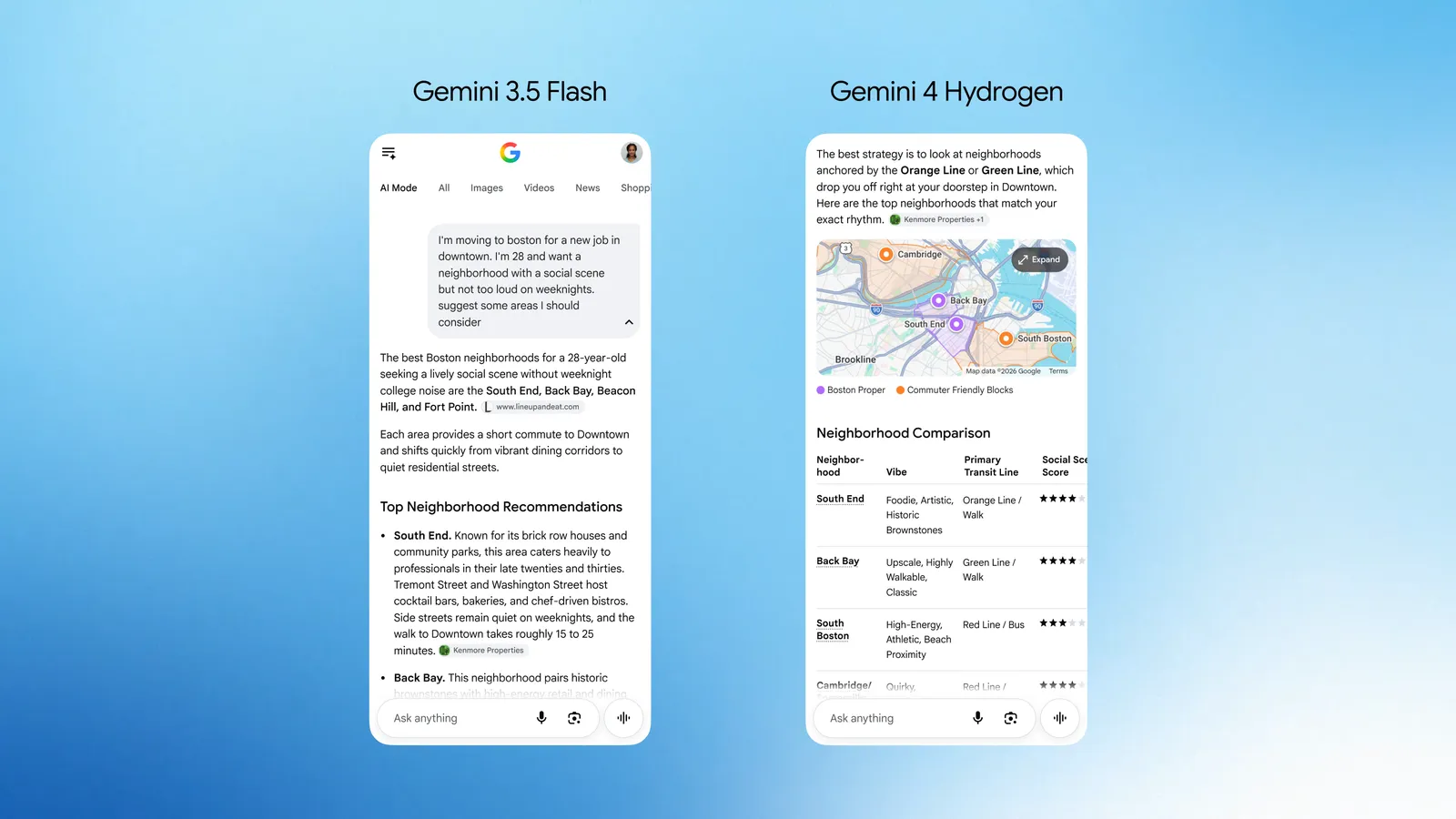
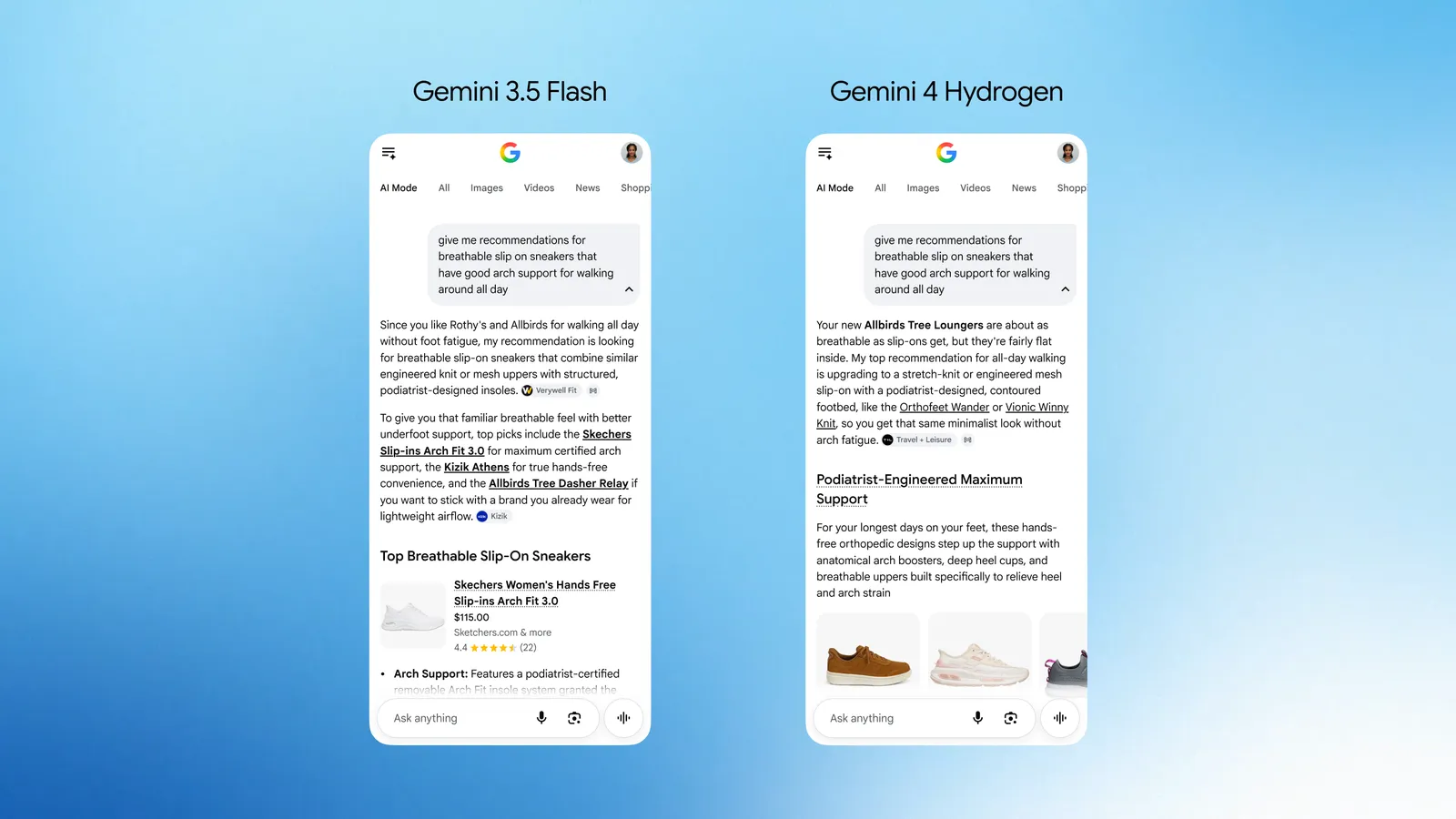
Comparison Tables Bring More of the Research Process Into Search
Google's AI-generated answers are becoming easier to scan, compare and interact with.
Gemini 4 Hydrogen expands the use of structured responses, visual comparisons, images and custom-built tools that adapt to the user's question.
A search about different cities could produce a map alongside a table comparing important characteristics. A product-research question might organize competing options by their features rather than present the information as a long paragraph.
Google demonstrated the model using searches involving apartment improvements, neighbourhood comparisons and footwear recommendations.
The examples illustrate how Search can select a format based on the question instead of relying on one standardized answer layout.
The technology also builds on Google's earlier work with interactive AI Overviews, which introduced generated interfaces and tools directly into search results.
Hydrogen's contribution is stronger reasoning behind those responses, together with more adaptive presentation.
For someone comparing several products or services, a structured table can make the differences easier to understand without manually switching between multiple websites.
That creates a complicated relationship between useful answers and publisher traffic.
Google can display links to supporting websites while simultaneously presenting enough information to resolve part of the user's research.
The presence of a source link doesn't necessarily indicate that a person will need to open it.
There is also a distinction between retrieving information and presenting it accurately. Google hasn't said that the new model eliminates errors in generated comparisons or guarantees that every displayed attribute will be correct.
The company positions Hydrogen as an improvement in reasoning and response quality, not an error-free search system.
Hydrogen Becomes the Default as Google Expands Its Gemini 4 Models
Gemini 4 Hydrogen is part of a broader model rollout, but its role differs from Google's more computation-intensive AI systems.
The company previously introduced Gemini 4 Argon and Carbon for demanding reasoning tasks, with certain Search capabilities restricted to paid subscribers.
Hydrogen is designed for fast, everyday execution.
Google Search Vice President Robby Stein confirmed that Hydrogen is now the default model in AI Mode. It is also being used for particularly difficult questions in AI Overviews.
The distinction matters because the two Search experiences aren't identical.
AI Mode supports extended conversations, complex comparisons and follow-up exploration. AI Overviews appear within conventional search results when Google's systems determine that a generated response would be useful.
Google hasn't specified which AI Overview questions qualify for Hydrogen processing or whether every generated response will use it.
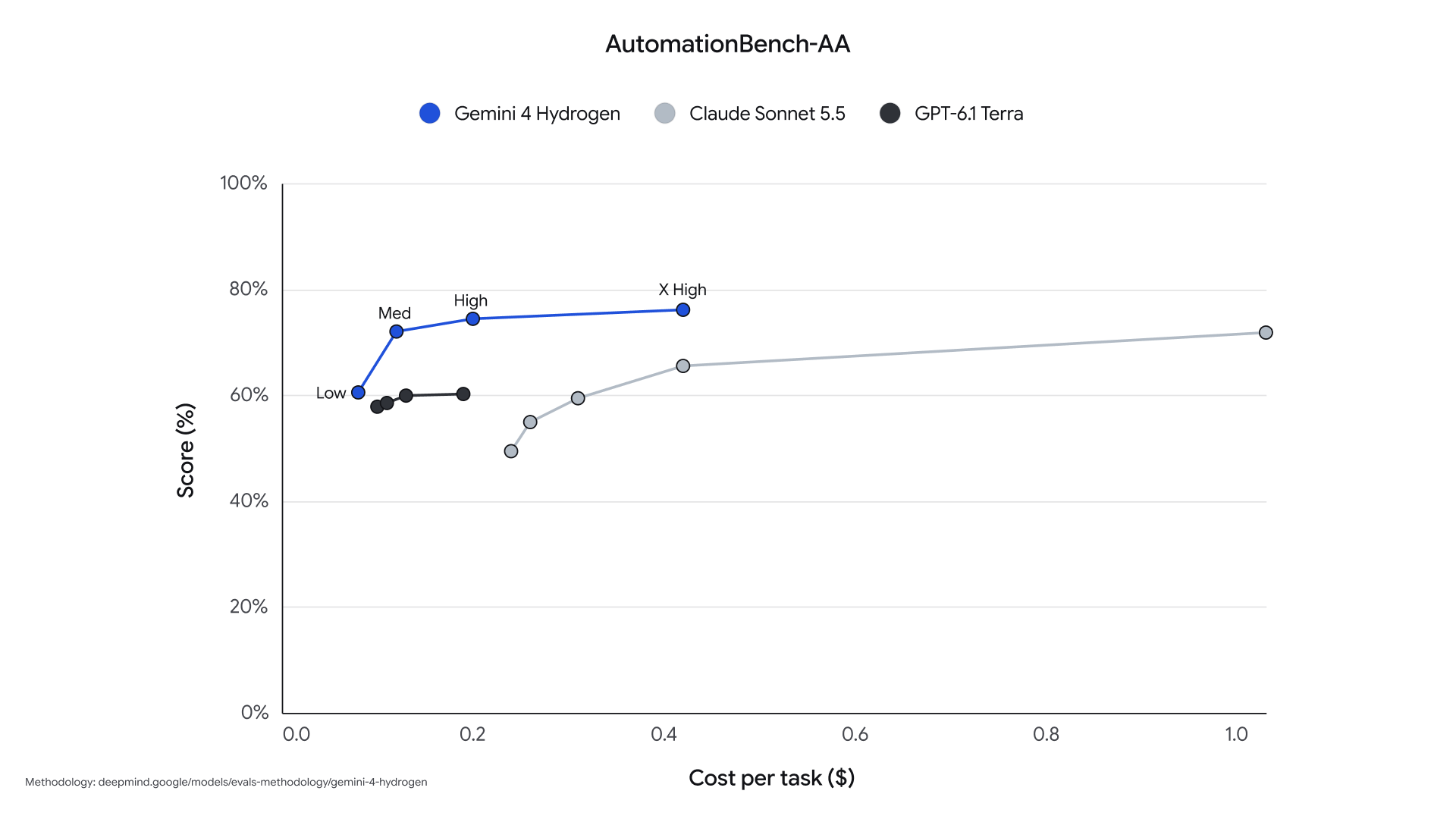
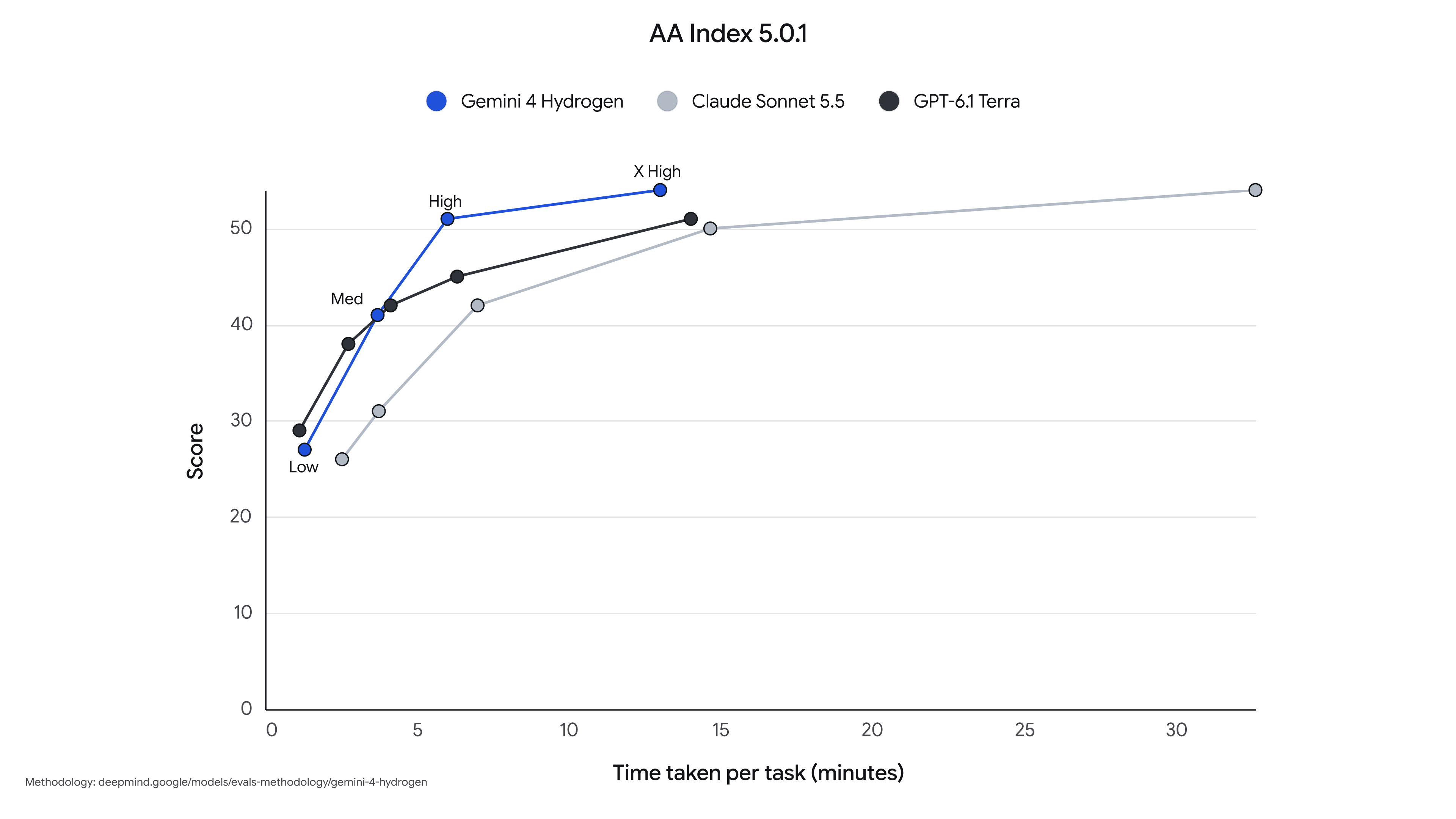
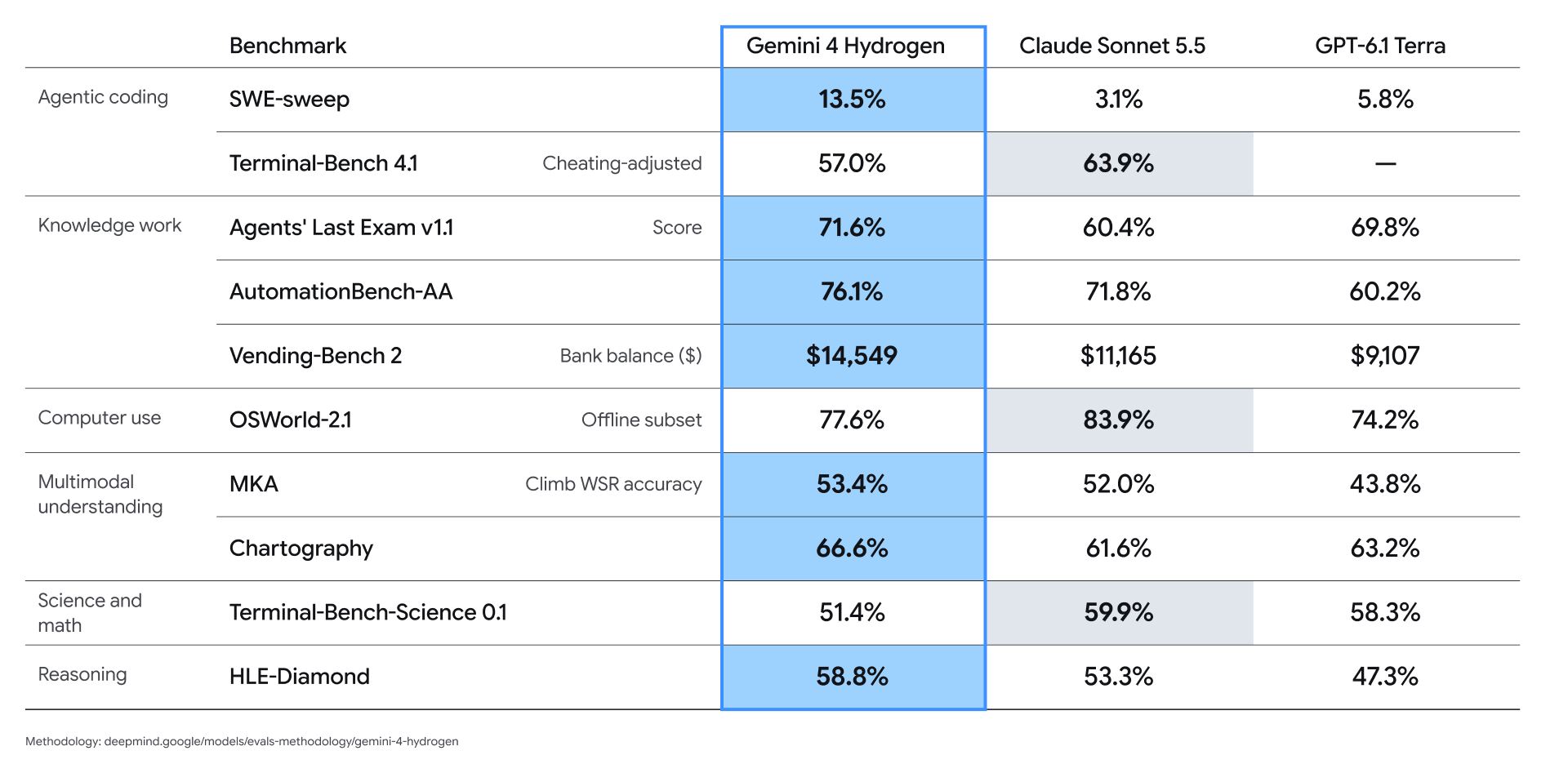
In its broader Gemini 4 Hydrogen model announcement, Google describes Hydrogen as a model optimized for speed and efficiency across everyday tasks.
The company claims it completes tasks 2.5 times faster than Gemini 3.8 Flash at its default high thinking setting in its evaluations. That performance comparison concerns the underlying model and shouldn't be interpreted as a measured reduction in Search response times for every user.
Hydrogen is also available through the Gemini app, Google AI Studio, the Gemini API and supported business products.
For Search users, the November 12 release is a global rollout rather than a feature reserved exclusively for premium subscriptions.
Better AI Answers Don't Introduce New SEO Ranking Requirements
The model upgrade changes how Google processes and presents complex information. It doesn't establish a new ranking factor for conventional organic results.
Google's existing Search Central guidance for AI features continues to state that websites don't need special optimization techniques or additional structured data to appear in AI Mode or AI Overviews.
Pages must be indexed and eligible to appear in Search with a snippet to qualify as supporting links.
Standard SEO practices remain relevant, including crawlable content, clear internal linking, useful information, accurate structured data and accessible text.
Hydrogen does, however, create another variable for teams monitoring AI-generated citations.
A website's position in conventional organic rankings doesn't necessarily describe its visibility within an AI-generated response. Different questions can trigger different supporting searches, source combinations and answer formats.
For marketers, the practical response is to examine whether important product, service and informational pages clearly address the specific questions users ask. Existing AI search visibility reporting can help distinguish changes in AI appearances, clicks and referral patterns from movement in conventional organic performance.
The November 12 model change is also a useful reference point when comparing AI Search performance over time. A change in citations after that date shouldn't automatically be attributed to a website's content or technical configuration.
Google hasn't published data establishing that Hydrogen increases publisher traffic, improves click-through rates or changes conventional ranking systems.
What the company has confirmed is a broader capability to interpret multi-part questions, retrieve supporting material across more subtopics and present the findings through adaptive visual answers.
Gemini 4 Hydrogen began rolling out globally on November 12, with Google identifying AI Mode as its default Search experience for the new model and AI Overviews as another area where Hydrogen will handle complex questions.