Social media platforms spent July taking work away from marketers. Some control went with it.
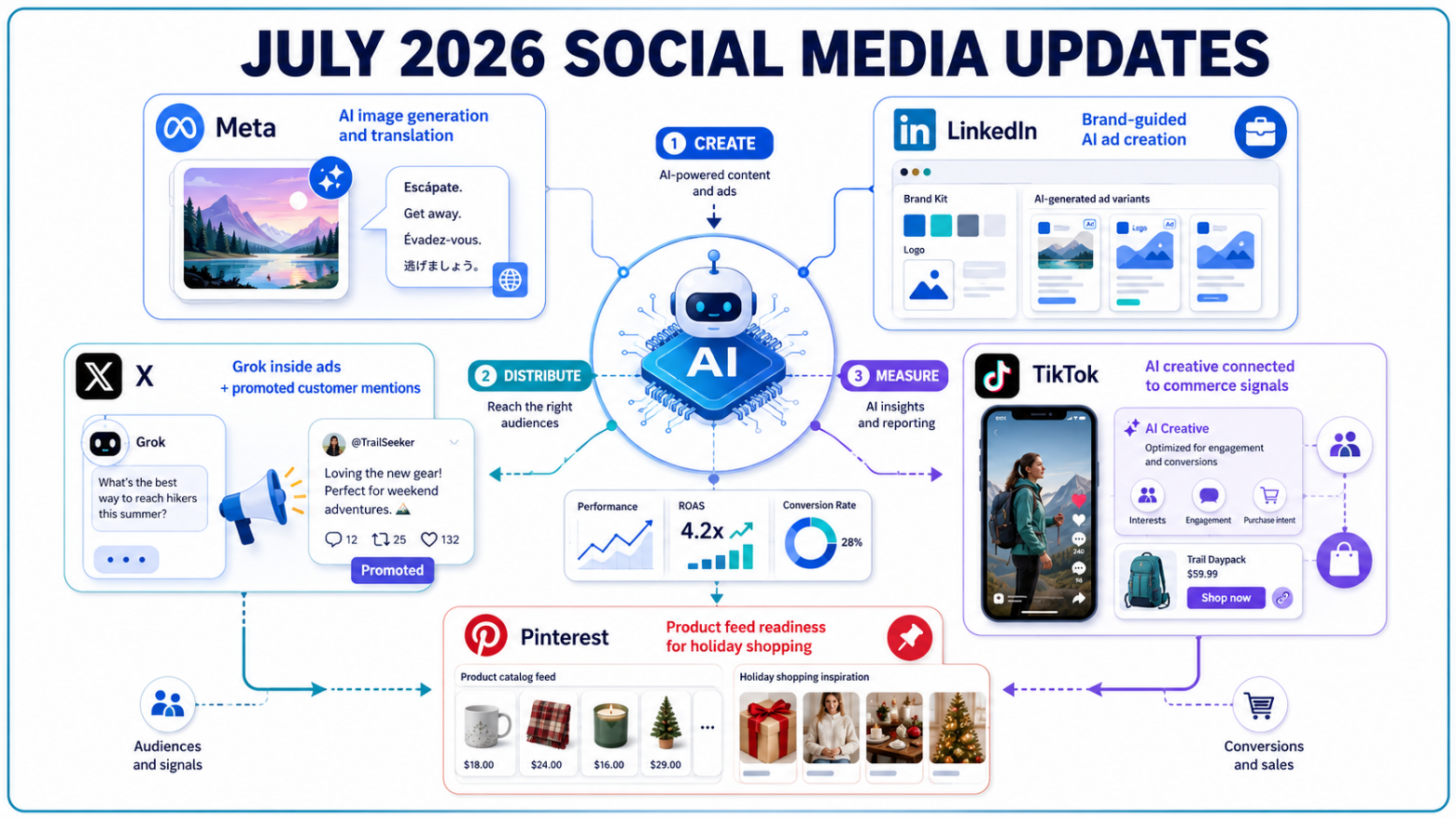
Meta and LinkedIn moved AI deeper into creative production. X began testing Grok inside its advertising dashboard while giving paying brands another way to amplify customer posts. TikTok tightened the connection between AI creative, community signals and in-app shopping. Pinterest was already telling retailers to prepare their product feeds for the holiday rush.
The month’s biggest social media updates were not isolated feature releases. Together, they show social platforms becoming more involved in deciding what gets created, distributed, measured and sold.
Meta Expanded Creation, Translation and Disclosure at Once
Meta’s July updates covered nearly every stage of the content cycle.
On July 7, the company introduced Muse Image, its first image-generation model from Meta Superintelligence Labs. The model can create visuals from prompts, edit uploaded images, combine multiple references and render text inside generated graphics. It is already powering more than 30 effects for Instagram Stories and image creation in WhatsApp, with Meta saying advertiser access through Advantage+ creative will follow.
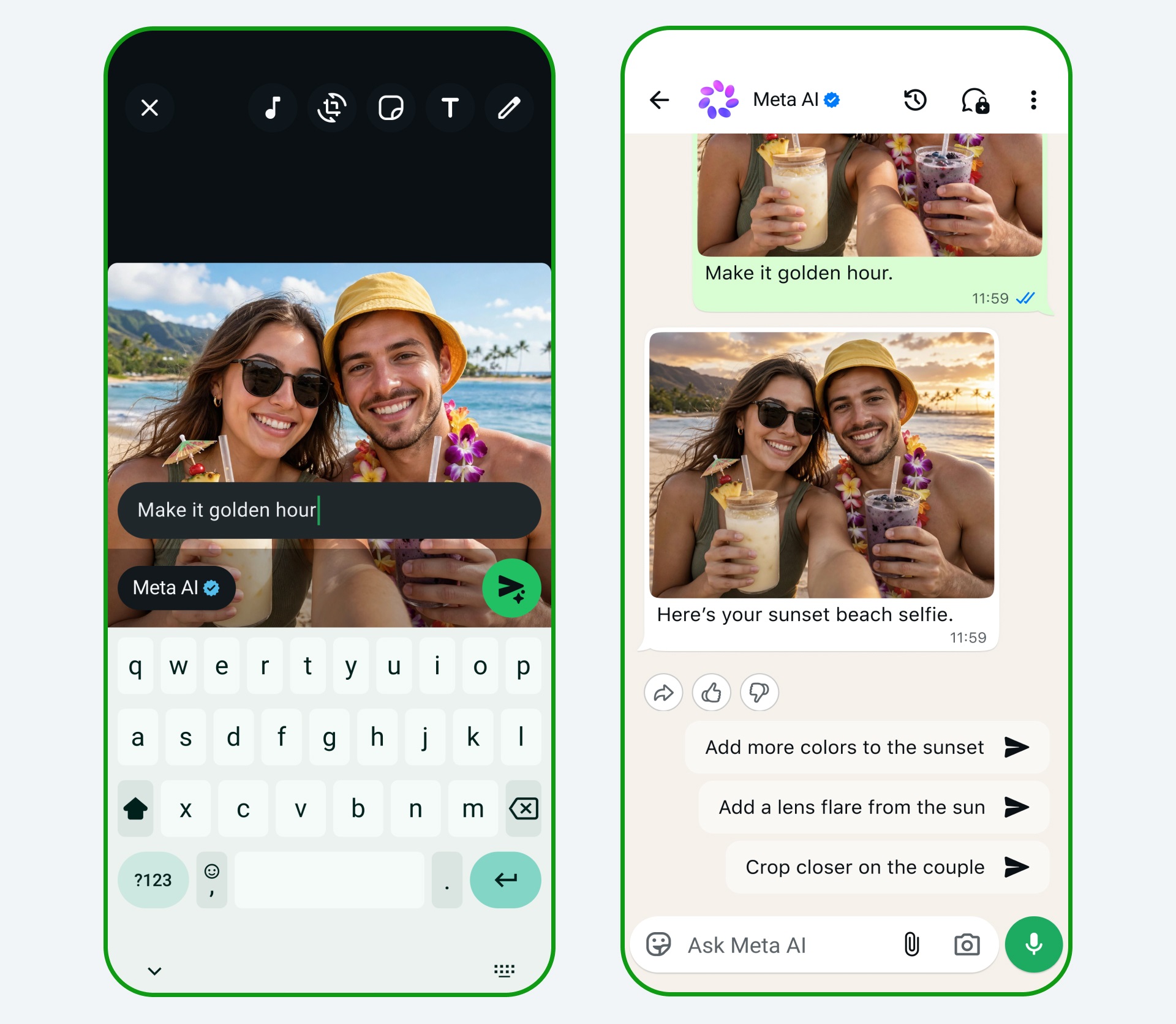
That puts Meta’s newest image model directly in the path of paid social production. Advertisers will not need to move assets between a separate AI generator and Ads Manager before creating variations. The generation layer is coming to the campaign workflow itself.
The expansion arrives while Meta is also tightening its approach to AI disclosure. Its updated advertising transparency framework places “AI info” inside the unified “About this ad” menu and extends detection beyond Meta’s own creative tools. Meta says it can use industry-standard signals to identify ads created or significantly edited with third-party AI systems. Labels can appear beside the Sponsored marker or inside the transparency menu, depending on the type of edit and whether a photorealistic person was generated.
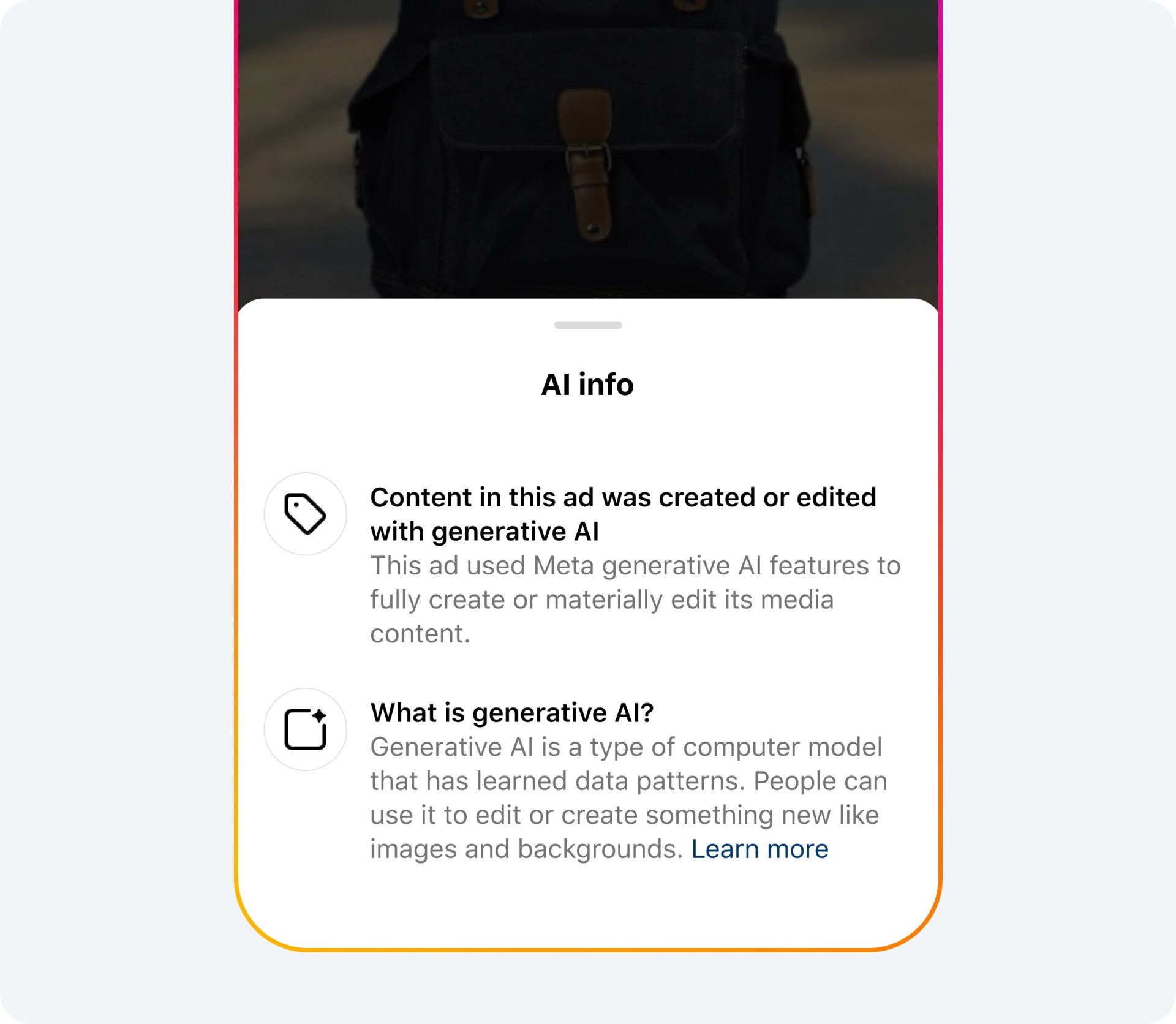
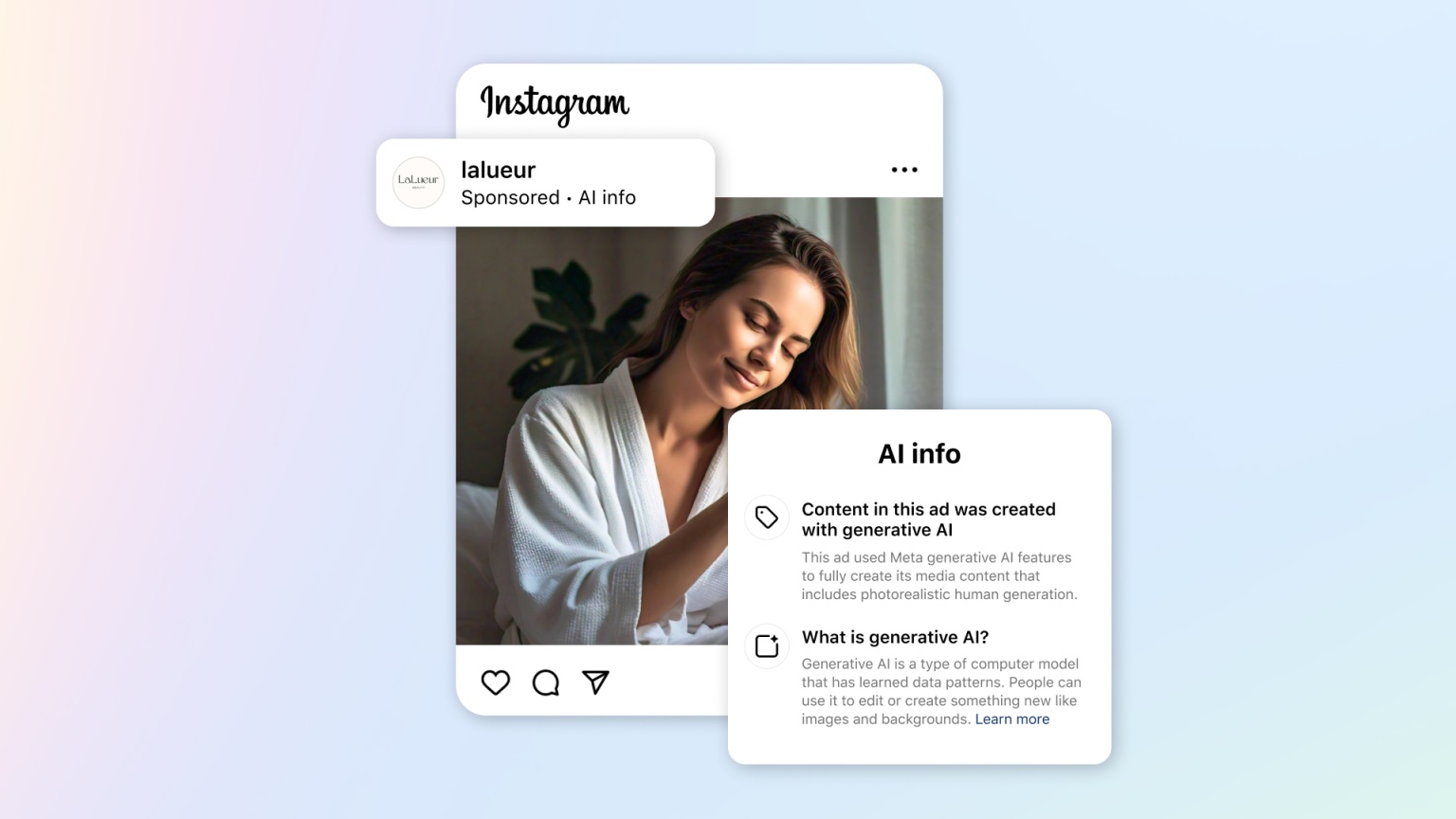
It is not a blanket rule that every AI-assisted ad must carry the same visible label. The treatment varies by the creative, technical signals and regional requirements. Meta added another policy layer on July 28 when it confirmed that it would sign the EU AI Act’s code of practice for transparency around AI-generated content.
The combination creates a familiar tension. Meta is making AI advertising tools easier to use while building more systems to reveal when those tools shaped the finished ad.
Organic measurement is shifting, too.
App researcher Radu Oncescu spotted Facebook testing view counts on standard posts. Despite early descriptions of the feature as a public counter, the observed number is visible only to the person who published the post. The test therefore gives creators another performance signal without adding a public popularity score beside every update.
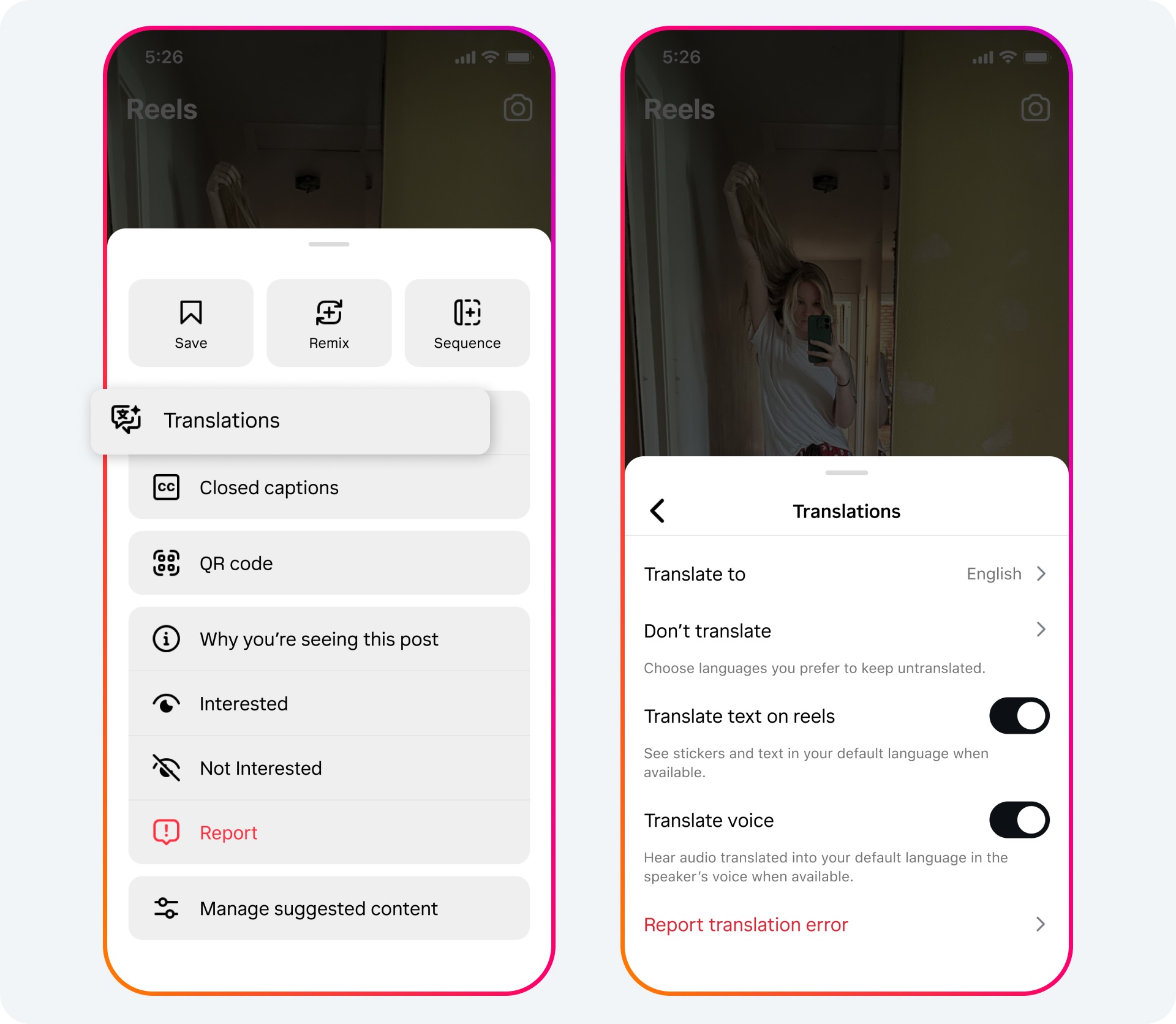
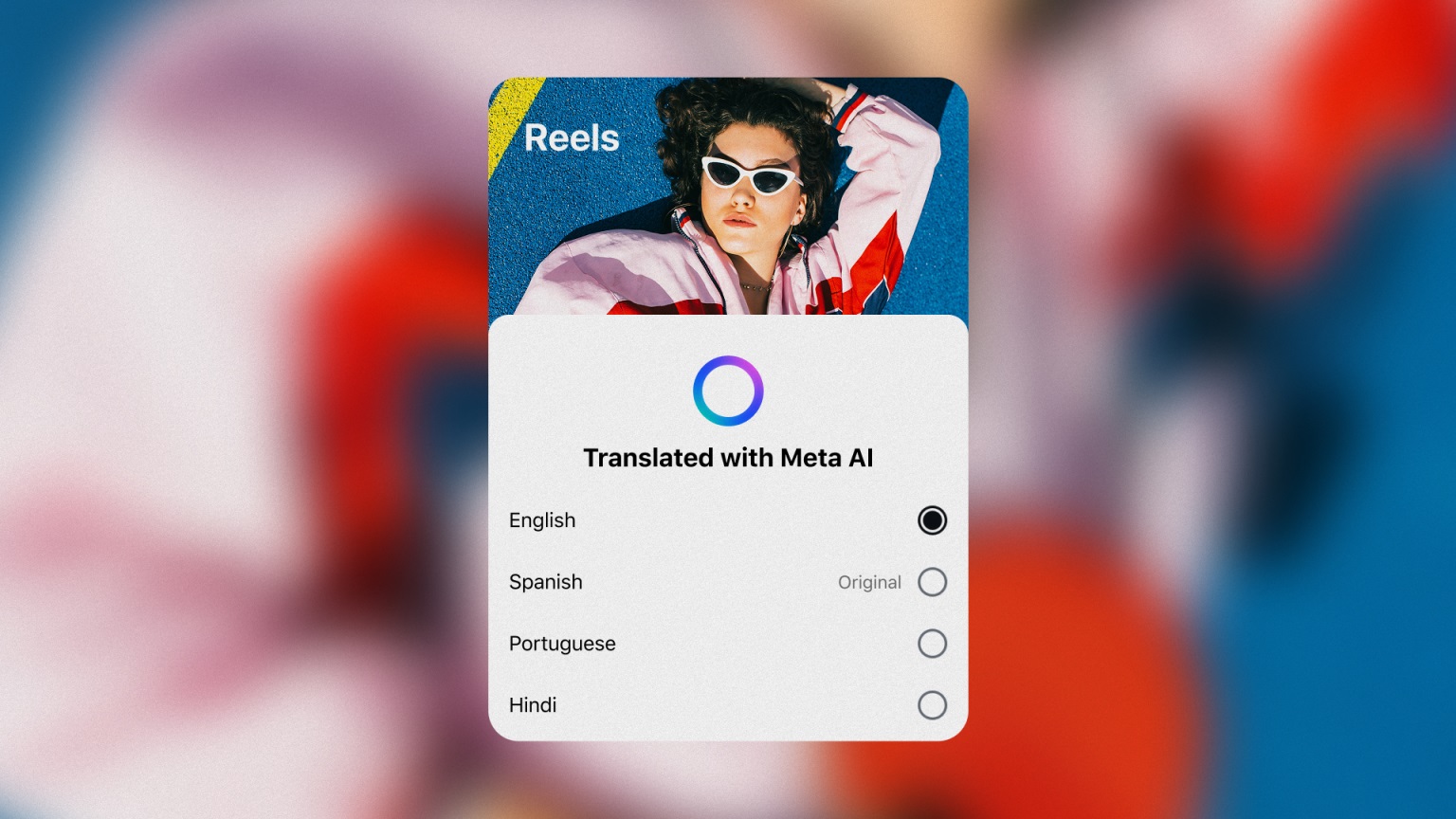
Instagram also expanded Meta AI translations for Reels on July 14. French, German, Italian, Japanese and Korean joined Instagram’s existing language support. The feature translates and dubs a Reel while attempting to retain the creator’s vocal tone, with optional lip syncing and a visible “Translated with Meta AI” label.
For international brands, this reduces the production required to test one short-form video across several language markets. It also raises the importance of reviewing translated product claims, humour and cultural references before localized versions receive wider distribution.
LinkedIn Turned Brand Guidelines Into AI Inputs
LinkedIn approached campaign automation from the opposite direction.
Rather than asking marketers to generate first and correct the branding later, its new creative tools let advertisers give the platform brand rules before it drafts the ad.
LinkedIn’s July 1 Campaign Manager update introduced Brand Kit, Draft with AI, AI ad variants, flexible ad creation and ads personalization. Brand Kit stores colours, fonts, logos, tone of voice and core messages. Draft with AI uses a destination URL, campaign goal and advertiser context to produce initial creative.
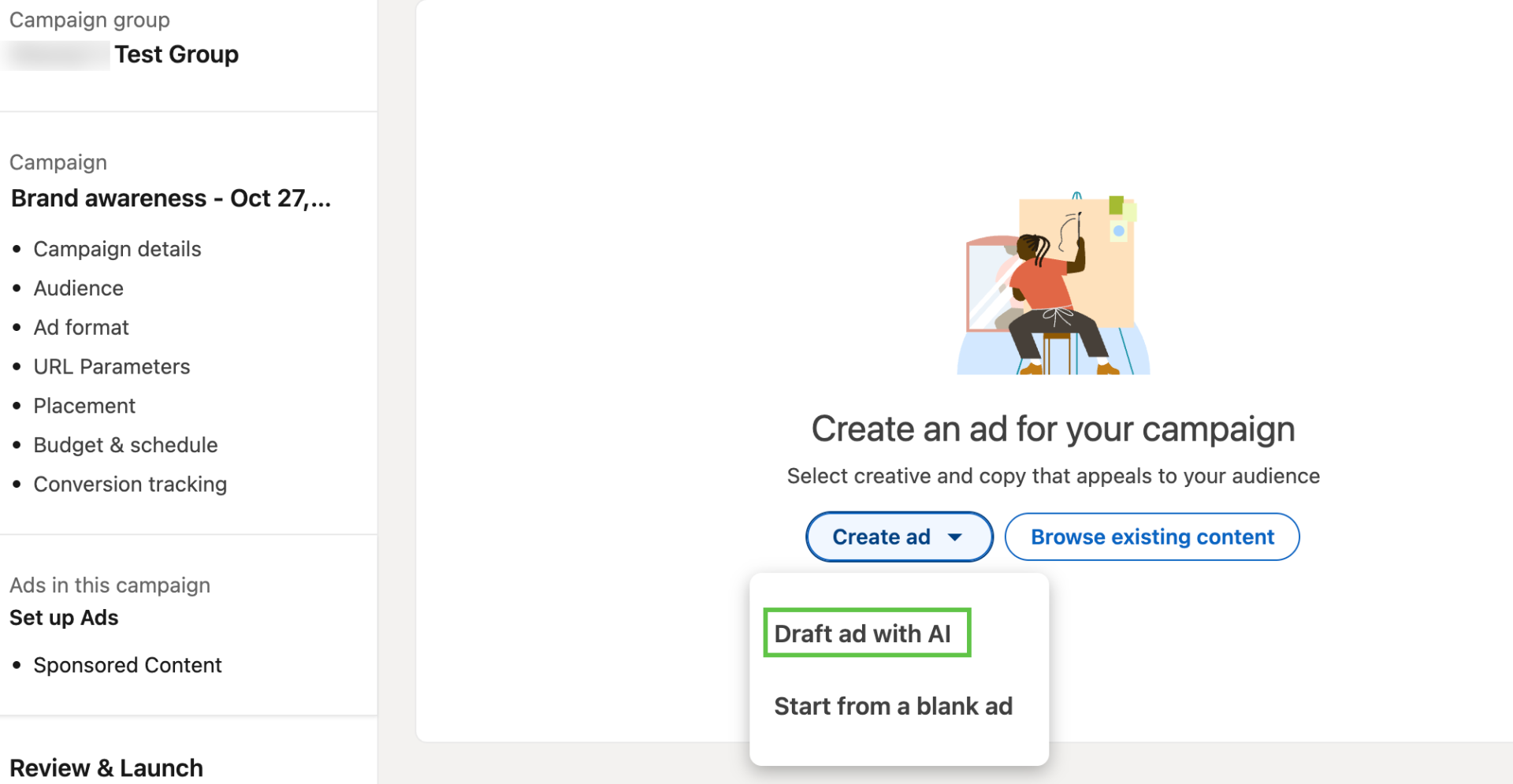
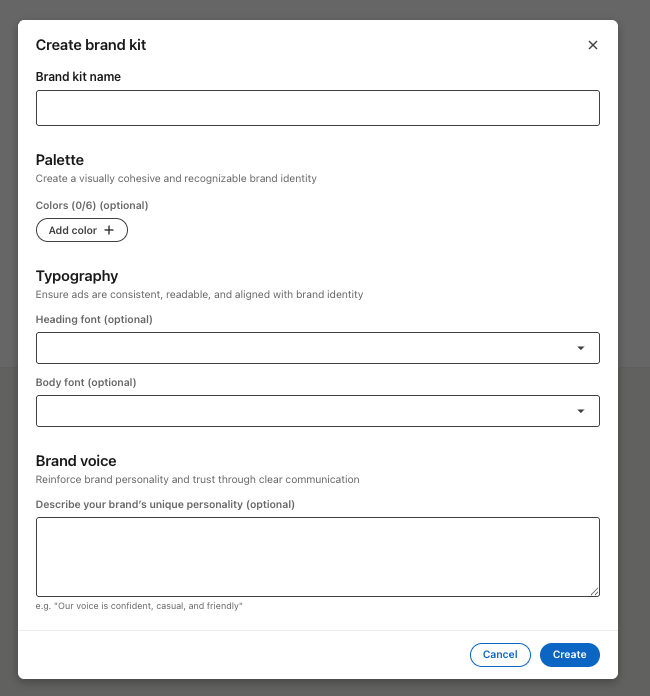
AI ad variants can then produce additional headlines and introductory text from an existing ad. Flexible ad creation mixes supplied images, videos and copy into more combinations, while personalization adjusts messaging using professional details such as industry, company or job title.
The update is designed to increase creative volume inside Campaign Manager.
That does not remove the review stage. It expands it.
A small B2B team that once approved three ads may now receive dozens of possible combinations. Each version can introduce a different product claim, audience reference or tone. Brand Kit may reduce obvious visual inconsistency, but it cannot decide whether a generated statement reflects the company’s current offer, pricing or legal position.
The practical change for LinkedIn advertising is that testing no longer has to begin with a separate production request. Advertisers can generate and vary creative in the same environment where the campaign is configured.
X Used Grok for Guidance and Customer Posts for Creative
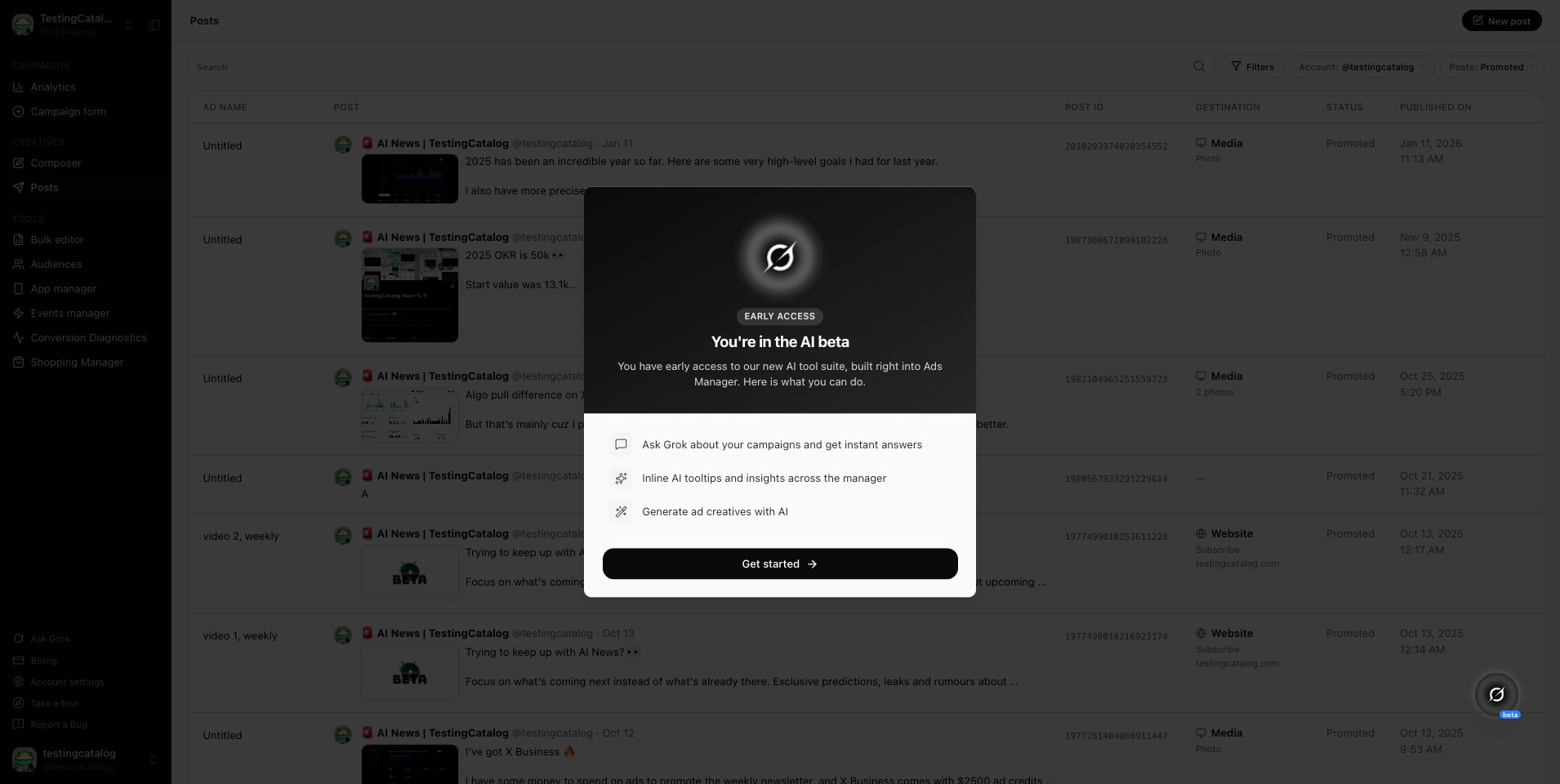
X’s July advertising updates followed two different forms of automation.
The first is still a limited test. Screenshots shared by TestingCatalog show Grok appearing inside X Ads Manager, where selected advertisers can ask for guidance on campaign strategy. The test also includes inline AI tips and prompts related to creative development. X has not published detailed help documentation or a wider release schedule for the integration.
The feature brings X closer to the AI assistant model already appearing across major ad platforms. Instead of leaving Ads Manager to analyze a result or develop another creative angle, an advertiser can ask the platform’s own model while looking at the campaign.
Introducing Mentions Boost for Premium Business subscribers.
— Business (@XBusiness) July 15, 2026
Boost organic mentions and transform authentic conversations into impactful ads with just a few clicks! pic.twitter.com/mpTAy3oCeC
The second update turns existing customer conversations into paid media.
X Business introduced Mention Boosts, allowing Premium Business subscribers to promote eligible posts that mention their brand. Advertisers can add a destination URL and call-to-action button, then set a budget and campaign duration around the original post.
This gives brands a faster path from organic praise to advertising creative. It also creates a consent and context question. A customer may have written a casual product comment without expecting it to become a sponsored endorsement. Brands will need to review whether the post remains accurate, appropriate and sufficiently clear when removed from its original conversational setting.
X also strengthened enforcement against engagement manipulation, although the change is narrower than a general algorithm penalty.
Head of Product Nikita Bier said accounts that repeatedly solicit interactions with posts such as “I’ll follow everyone who replies” can be removed from the creator revenue-sharing program and referred to X’s policy team. He also said improved detection is identifying duplicated posts and altered copies of other creators’ work.
The rule primarily affects monetization eligibility and possible account enforcement. X has not described it as a universal reach penalty for ordinary brand posts. The useful distinction for marketers is between inviting genuine discussion and publishing repetitive prompts whose only purpose is to manufacture activity.
TikTok Connected AI Creative to Commerce Signals
TikTok’s July message was not that brands need more AI-generated videos.
It was that AI needs better inputs.
A TikTok and WARC report published July 14 found that 90% of surveyed marketers use AI as a core creative tool and 88% have increased their creative volume. Only 45% reported a significant improvement in quality. The research drew on responses from 400 global marketing leaders.
TikTok’s proposed answer is what the report calls an “Intelligence Loop,” where audience participation and current community signals feed back into creative development. Tools such as Symphony Agent are positioned as ways to turn platform trends into concepts that look and behave more like native TikTok content.
That is a different pitch from simple generative scale.
A model can produce ten videos quickly. TikTok wants advertisers to use platform behaviour to decide which ten videos deserve to exist.
Commerce is feeding that system with more data. TikTok has already expanded Market Scope with e-commerce and creative insights, while GMV Max can account for costs such as affiliate commissions, coupons and fees when optimizing TikTok Shop campaigns. Its commerce tools increasingly combine catalogues, creator assets, sales data and paid delivery in one system.
Large packaged-food companies are also treating TikTok Shop as more than a channel for viral startup products. In a July interview with TikTok’s head of food, Marketing Dive reported that PepsiCo, Mars and Hershey were increasing their involvement with the marketplace. TikTok said food-category sales on Shop had more than doubled year over year.
The development gives established consumer brands another source of product feedback. Creator videos, comments, affiliate performance and direct sales can reveal how customers describe a product before that language appears in a conventional research report.
It also makes content operations harder to separate from retail operations. A video is no longer only an awareness asset when the same post can carry a product link, earn affiliate revenue and influence inventory demand.
Pinterest Wants Product Feeds Ready Before Holiday Demand Arrives
Pinterest’s July priority was less flashy.
Retailers need to fix their catalogues.
The platform’s official 2026 holiday marketing guidance tells advertisers to begin planning early, upload their product catalogues and confirm that Pinterest tracking is in place. Pinterest is positioning those steps as prerequisites for making product Pins eligible for holiday shopping campaigns.
A product feed on Pinterest determines more than whether an item appears in an ad. It supplies the title, description, image, price and availability information displayed in shoppable Pins.
Pinterest’s catalogue documentation states that feeds should remain available for daily ingestion when hosted online. Manually managed data sources must be updated at least every seven days to retain organic distribution. Products from a feed that has not been updated for 90 days can also lose paid distribution.
That makes the summer preparation window operational rather than seasonal.
A retailer discovering broken image links, outdated prices or rejected product attributes in November may already be behind. Catalogue errors need time for diagnosis, correction, re-ingestion and campaign learning before peak shopping weeks begin.
For marketers, July’s platform changes point to a common workload. Teams need reliable product feeds, documented AI provenance, approved brand inputs and a way to capture the ads and post variations that platforms create or distribute. Measurement also needs context: Facebook views are not the same as interactions, X monetization enforcement is not automatically a reach penalty, and TikTok creative volume does not guarantee creative quality.
The platforms are offering faster production and broader distribution. They are not taking ownership of the information that enters those systems.
By the end of July, the social campaign stack included AI image generation, automated B2B copy, chatbot guidance, translated Reels, promotable customer mentions and commerce systems learning from creator content. The marketer still has to know whether the output is true.