
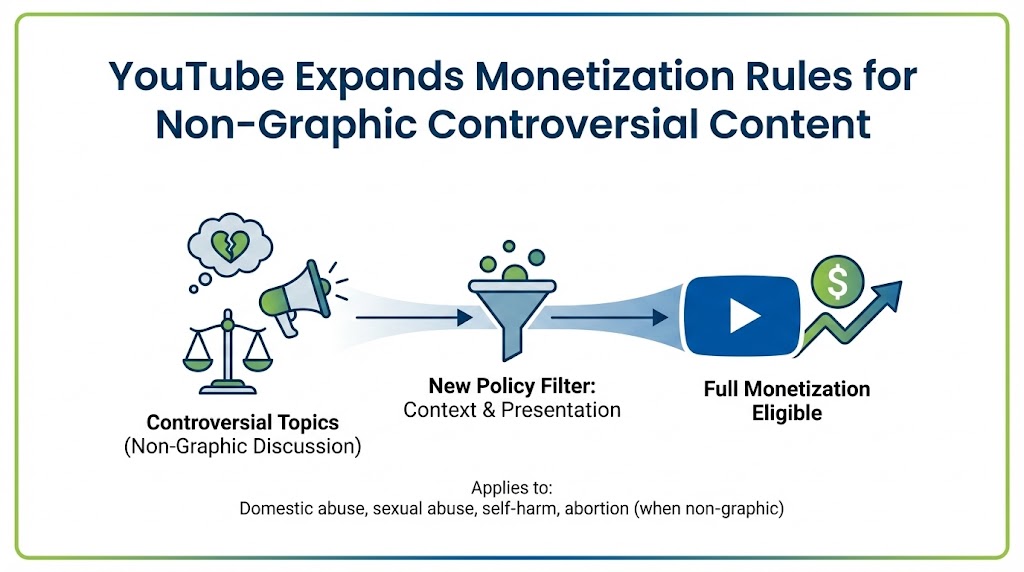
YouTube has updated its advertiser-friendly content guidelines to allow more videos covering certain controversial issues to qualify for full monetization, provided the content is presented in a non-graphic, discussion-based, or dramatized format.
The update was confirmed through a Creator Insider video and corresponding changes to YouTube’s Help Center policy language.
What’s Changed in YouTube’s Monetization Policy
Under the revised guidelines, videos that address controversial topics can now earn full ad revenue when they avoid graphic depictions and focus on explanation, storytelling, or commentary.
Previously, many of these topics faced monetization limits regardless of whether the content was fictional, educational, or non-graphic. YouTube says the older rules were overly restrictive and did not adequately account for context.
The updated policy explicitly allows full monetization for non-graphic, dramatized, or descriptive discussions of certain sensitive subjects.
Topics Now Eligible for Full Monetization
YouTube’s Help Center lists several controversial issues that may now qualify for ads when handled appropriately, including:
-
Domestic abuse
-
Adult sexual abuse and sexual harassment
-
Self-harm and suicide
-
Abortion
The platform clarified that eligibility depends on how the topic is presented, not simply whether it is mentioned.
What Still Remains Restricted
YouTube emphasized that not all controversial topics are treated equally.
Content focused on child abuse or eating disorders remains ineligible for full monetization, even if it is non-graphic or educational. Graphic depictions or highly explicit descriptions across any topic also continue to trigger ad restrictions.
How YouTube Evaluates Context
YouTube distinguishes between content where a controversial issue is the main focus and content where it is referenced briefly.
-
Fleeting references or passing mentions are less likely to trigger monetization limits
-
Sustained discussions or dramatizations are reviewed more closely, with eligibility depending on tone, detail level, and presentation
Signals from the video itself, along with the title and thumbnail, all factor into monetization decisions.
Why This Matters for Creators and Brands
This policy change could materially impact revenue for creators who cover news, education, social commentary, or fictional storytelling involving sensitive topics.
For advertisers, the update reflects YouTube’s attempt to balance brand safety with the realities of long-form discussion and modern content formats.
As with past advertiser-friendly changes, outcomes may vary based on automated review and human moderation, making clear framing and context more important than ever.
What Creators Should Do Next
It’s not yet clear whether previously limited videos will be automatically re-reviewed under the new policy. YouTube has not confirmed whether the change will apply retroactively.
Creators with affected videos may want to proactively submit monetization appeals, particularly for content that is non-graphic and discussion-based.
As YouTube continues refining its advertiser policies, creators should monitor guideline updates closely and ensure that titles, descriptions, and thumbnails accurately reflect the tone and intent of their videos.