

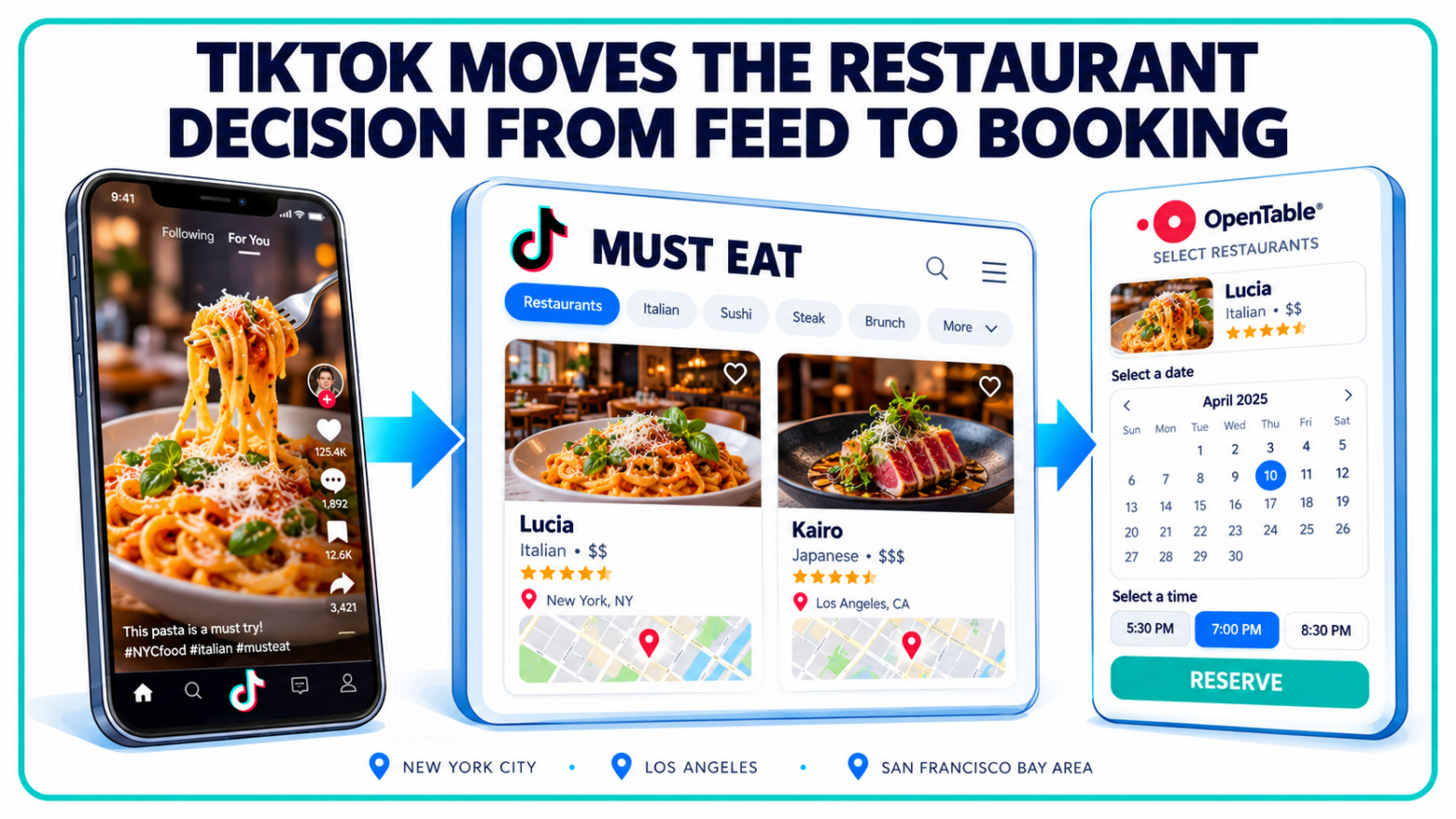
TikTok is bringing restaurant decisions closer to the videos that inspire them. Its new Must Eat guide combines dining recommendations with comparison tools and, at selected restaurants, reservations inside the app.
TikTok USDS Joint Venture lists the feature in its official newsroom, dated October 29. The development moves TikTok beyond showing people an appealing dish towards helping them choose where to eat.
For restaurant marketers, the distinction is between earning attention and appearing where someone compares actual options. A video can introduce a restaurant. A guide adds another place where that interest becomes a decision.
TikTok Must Eat Makes Restaurants Comparable
The initial guide covers New York City, Los Angeles and the San Francisco Bay Area. TikTok says it draws on more than 40 million posts, reviews and comments, according to launch-event coverage.
That figure describes the content informing the guide, not the number of restaurants listed.
Recommendations fall into two categories. Everyday Eats focuses on casual dining and neighbourhood favourites. Elevated Dining covers restaurants suited to celebrations and special occasions.
The separation gives diners a starting point based on the kind of meal they want. A nearby lunch and an anniversary dinner can involve the same cuisine but very different expectations.
The launch scope also matters for Canadian readers. The named markets are American; they do not establish availability in Toronto or elsewhere in Canada.
The TikTok Restaurant Guide Adds Decision Details
Users can browse cities and narrow their choices by cuisine, price, score and location. Individual restaurant pages bring together neighbourhood information, price ranges and relevant TikTok content, as described in coverage of TikTok’s product announcement.
Those details give the TikTok restaurant guide a different role from an individual recommendation video. A clip may show what a dish looks like. Price and location help someone decide whether the restaurant fits their plans.
People can also save restaurants to their existing TikTok collections. That accommodates a less immediate decision: finding somewhere interesting now and returning to it when planning a meal later.
The combination places video alongside practical comparison information. Neither serves exactly the same purpose. Seeing a dining room can help establish atmosphere, while knowing its neighbourhood and price range answers more immediate logistical questions.
Restaurants Cannot Buy Guide Inclusion
TikTok says restaurants cannot pay to appear in Must Eat’s recommendation lists. Independent businesses and local specialities receive priority, and restaurants are reviewed before publication to confirm they are operating and in good standing.
For advertisers, that separates guide inclusion from a paid placement.
The stated selection approach centres on restaurants the community has discovered and returned to. It does not provide a formula that marketing teams can reliably reproduce.
A large volume of conversation is not, by itself, a published ranking methodology. The available launch information does not establish how individual signals are weighted or how frequently a restaurant’s position might change.
There is also an important boundary around the payment claim. Saying restaurants cannot purchase inclusion does not answer every question about how sponsored creator content might be treated among the underlying material.

Restaurant Reservations Bring Discovery Closer to Action
Selected restaurants support OpenTable bookings directly through TikTok. The qualification is important: inclusion in the guide does not establish that every restaurant can accept an in-app reservation.
TechWyse has previously covered restaurant reservations appearing within other discovery interfaces. Must Eat applies that broader connection between finding a business and taking action to TikTok’s food content.
The competitive overlap with Google Maps and Yelp is the restaurant decision itself. Must Eat gives users another place to assess dining options, but its introduction does not demonstrate that people have abandoned established services.
For marketers, the practical implication is familiar: accurate location, pricing and booking information supports customer decisions alongside engaging content. Those details belong to the same local search discipline as maintaining reliable business information elsewhere. Video views, saved restaurants and completed reservations remain different outcomes, rather than interchangeable evidence of revenue.
Must Eat is accessible through TikTok search, the Local feed, place pages and location links attached to videos involving listed restaurants. Diners can therefore encounter the guide while searching deliberately or while watching content about a particular venue.