Google wants the design brief and the design tool to become the same thing.
With Google Pics, a marketer can describe an image, generate it, select individual elements and keep editing without rebuilding the creative from scratch. The new Workspace app pushes Google beyond basic AI image generation and into territory traditionally occupied by visual design platforms such as Canva.
The difference is the interface.
Instead of making users assemble every element manually, Pics puts natural-language prompting at the centre of the creative process while preserving control over individual objects, text and composition.
Google says the new app is now rolling out to eligible Workspace and Google AI customers.
Google Pics Doesn't Stop Once the Image Is Generated
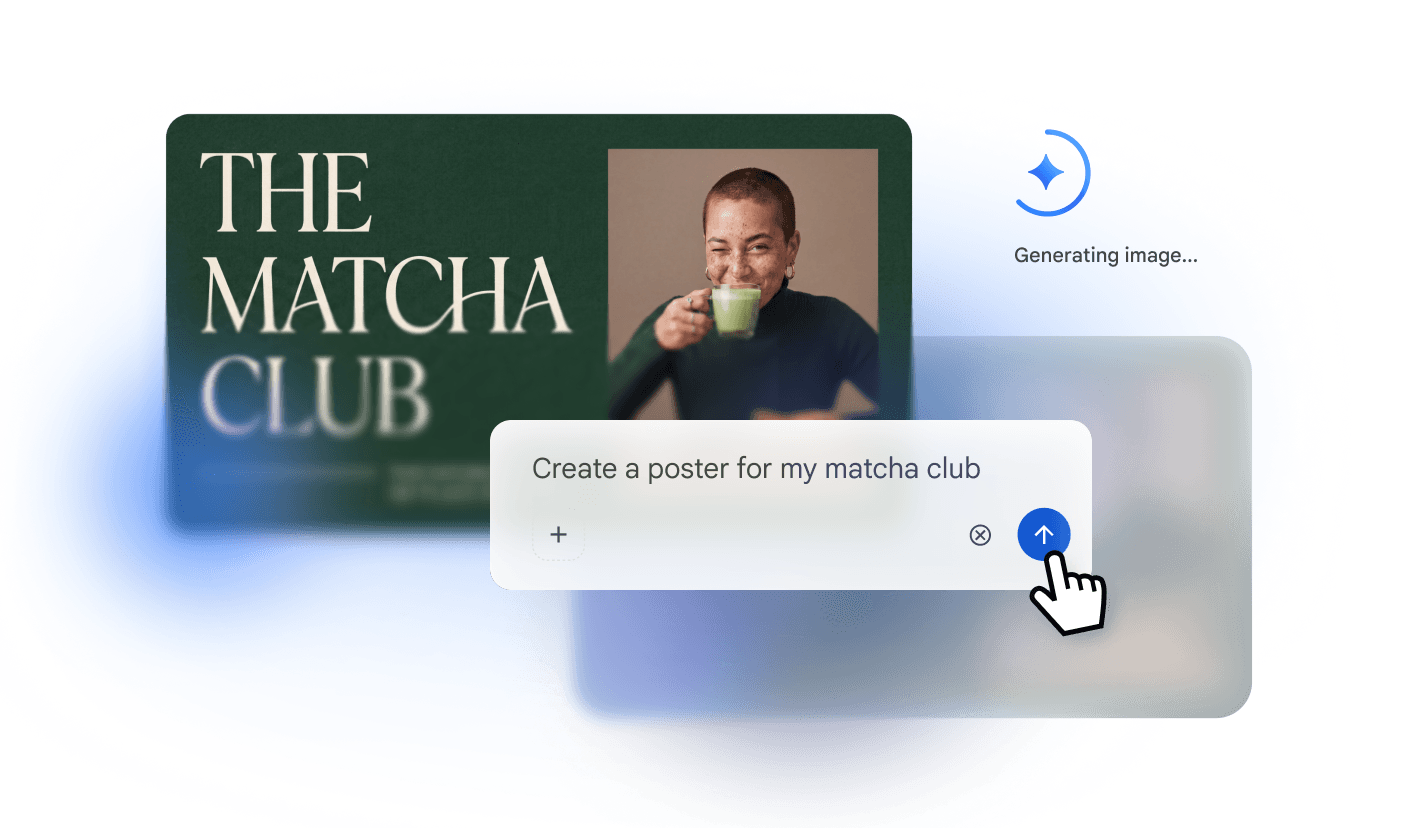
Most generative image tools have followed a familiar workflow: enter a prompt, receive a finished image, then either accept it or generate another version.
Google Pics is built around what happens after that first generation.
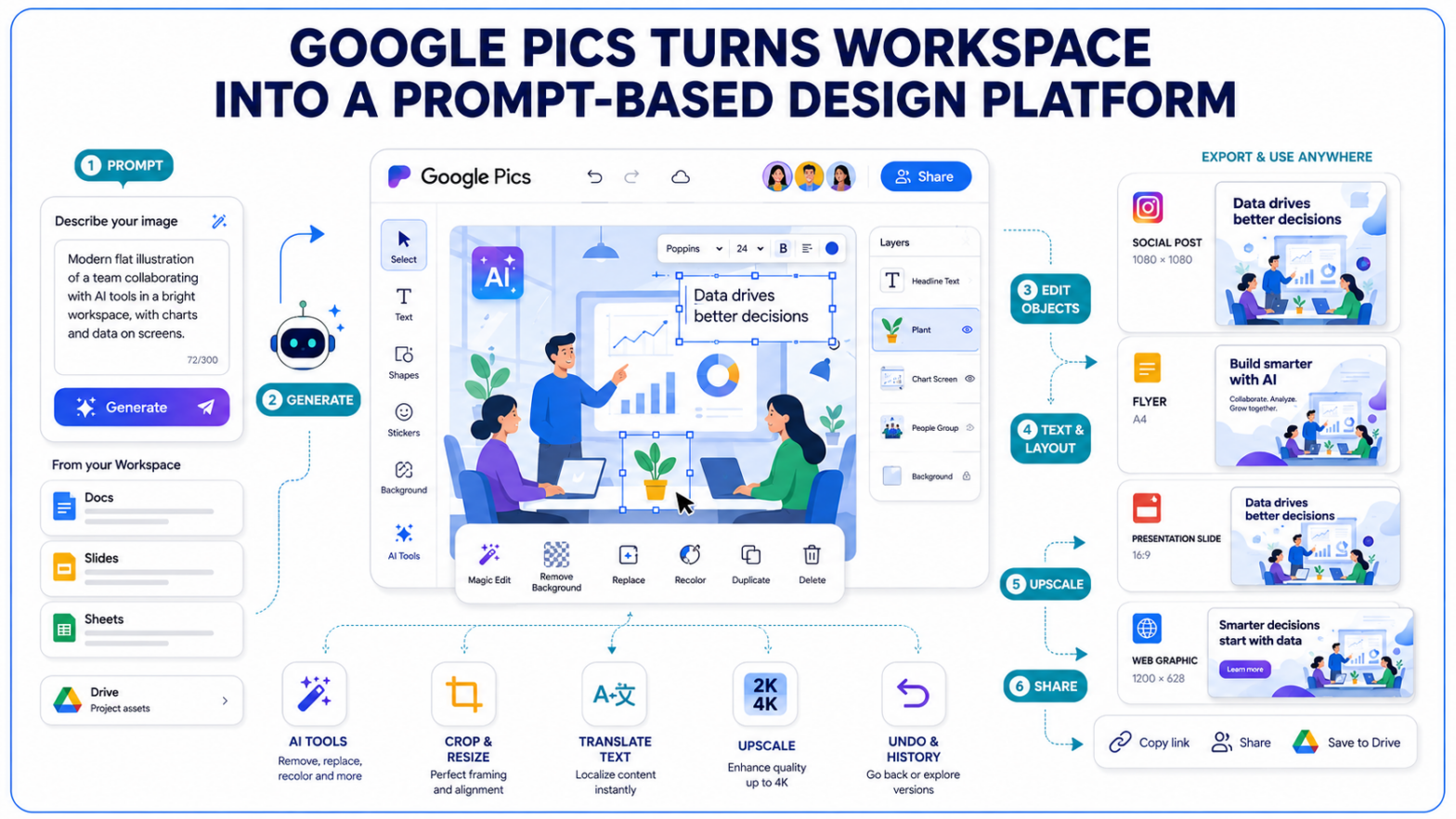
Users can start with a prompt or import an existing image from a computer, Google Drive or Google Photos. Pics produces multiple alternatives from a prompt, but the output is not treated simply as a finished picture. Individual objects can be selected and modified, while separate text elements can be edited, reformatted or translated.
Google's support documentation shows how granular that process can get. A user can click an identified element, such as a floor, and tell Pics to add a rug. They can also select a specific region and describe what should change there. Up to five element-level changes can be queued before the edits are applied.
That's a meaningful departure from regenerating an entire asset because one detail is wrong.
Google is also supporting reference images. A marketer can upload an existing visual and instruct Pics to carry a colour, style or other visual characteristic into a new generation.
The model is closer to conversational art direction than conventional drag-and-drop production.
The Canva Comparison Is Really About Workflow
Google has not positioned Pics publicly as a Canva replacement. The overlap is difficult to miss.
Both products are aimed at people who need finished visual assets without relying on specialist design software for every job. Google specifically lists social and digital assets, web graphics, product concepts, print designs, event collateral, branded merchandise, flyers and business cards among the use cases for Pics.
Where Pics diverges is how users get there.
Traditional design platforms generally expose the canvas first. The user chooses templates, moves objects, adjusts text, imports imagery and controls the hierarchy visually. Google is making the prompt a much larger part of that production layer.
Its guidance for Pics even gives users formulas for constructing detailed image-generation prompts, including the subject, action, setting, composition and visual style.
That reflects a broader shift in AI image generation across Google's products. Image creation is no longer confined to a dedicated Gemini workflow. Google has been adding generation and editing capabilities to Search, Chrome and other surfaces where users are already working.
Pics brings those capabilities into a dedicated business creation environment.
And unlike a one-shot generator, it adds familiar production controls around the generated output. Users can crop for different destinations, upscale assets to 2K or 4K, edit individual text components and reverse unwanted changes.
Workspace Is Google's Biggest Distribution Advantage
The more consequential part of the launch may be where Pics lives.
It is being built directly into Google Workspace, where teams already write documents, prepare presentations, store files and collaborate.
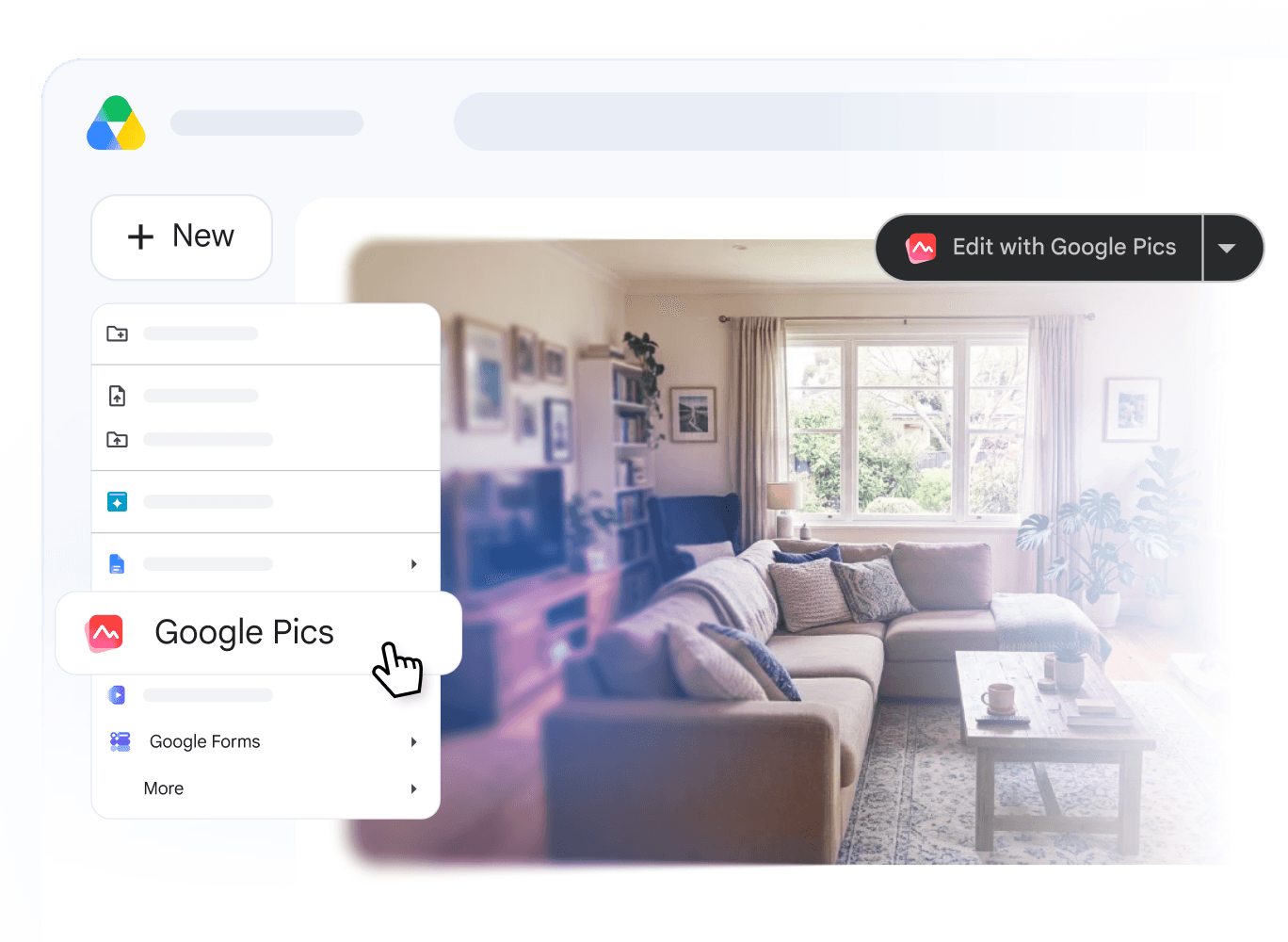
Google Docs and Slides can now hand an image directly to Pics for editing without requiring the user to leave the application. Drive integration is also expanding, with Google saying users will soon be able to open and edit nearly any stored image with Pics in a single click.
Pics also inherits familiar Workspace collaboration mechanics. Teams can share creations through links, invite other people to work on them and manage Pics files through Drive.
That distribution changes the competitive equation.
A marketer preparing a presentation does not necessarily need to open a separate creative platform, export a graphic and then import the result into Slides. The image can be generated or edited inside the same productivity environment where the presentation is being assembled.
Google has been following a similar strategy elsewhere. Gemini capabilities are increasingly appearing inside the application where the work happens rather than requiring a separate trip to an AI chatbot.
The company's earlier Gemini and CapCut integration extended that principle into video production. Pics brings Google much closer to owning the image workflow itself.
Google Is Turning Prompts Into Production Interfaces
Pics also reveals where Google's AI product strategy is heading.
Prompting is becoming less of a standalone chatbot interaction and more of an interface layer sitting on top of conventional software controls.
A user can ask for a change in ordinary language, then move back into direct manipulation when precision is required. That hybrid approach matters for creative work because generative models can get a concept close without necessarily getting every object, word or placement right.
Google is trying to close that gap by letting the user continue working on the generated asset.
The same pattern has already appeared elsewhere in the company's products. Chrome has gained AI-powered image editing, while Google Search now supports image creation and editing directly through AI Mode.
Pics takes the concept further by turning those capabilities into an application designed around repeatable creative production.
Google's Workspace announcement makes the business audience explicit. The company cited marketing campaigns, customer presentations and product storytelling as examples of the work it expects teams to produce with Pics.
Marketers Get Faster Creative Iteration, Not Automatic Brand Control
For marketing teams, the immediate practical change is speed.
Routine graphics, social assets, product mockups and presentation visuals can move from brief to editable draft without the same number of application handoffs. Element-level prompting also makes small revisions more efficient when a generated image is mostly usable but one section needs to change.
That does not remove the need for brand review.
Prompt-generated creative still has to be checked for accuracy, typography, visual consistency, rights considerations and compliance with whatever standards a company applies to customer-facing assets. Google Pics reduces some of the production mechanics. It does not make those editorial decisions for the team.
Access is also not universal.
Google says Pics is rolling out to Workspace customers on Business Standard, Business Plus, Enterprise Standard and Enterprise Plus, along with Google AI Pro and Ultra subscribers and Google AI Pro for Education. Google's product documentation currently lists the tool as desktop-based and notes that availability depends on an eligible plan.
For agencies and in-house teams already living inside Workspace, that puts another piece of the creative stack behind a tab they already have open.
Canva built its position by making design accessible to people who were not designers. Google Pics is testing the next version of that idea: whether those same users would rather describe the asset first and manipulate the canvas second.