
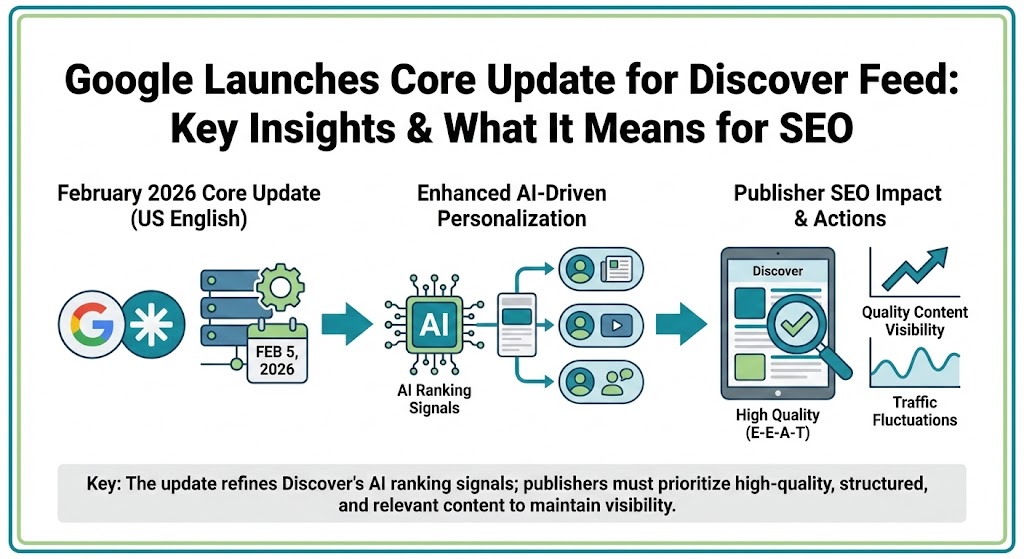
Google has officially rolled out its February 2026 Core Update specifically aimed at enhancing the Google Discover feed. This update, launched on February 5 for English-language users in the U.S., is expected to take up to two weeks for full implementation. Google plans to expand the update to other countries and languages in the near future, signaling a dedicated focus on improving Discover’s ranking signals.
What’s New in the February Core Update?
The focus of this core update is entirely on the Google Discover feed — the feature that surfaces content such as articles, videos, and social posts, tailored to individual users based on their browsing behavior and interests.
This update was officially announced via the Search Central Blog and logged on the Search Status Dashboard, marking it as an important event for webmasters and publishers. Google’s brief description indicates that the update is designed to improve the overall quality of Discover, although no new publisher guidelines have been issued.
Key Details of the Update:
-
Geographic and Language Limitations: Initially, the update is limited to U.S. English-language users, but Google plans to expand it globally in the future. Publishers targeting U.S. readers may see significant changes in their Discover traffic, even if their website caters to audiences outside the U.S.
-
No Immediate Impact on Search: As of now, Google has not confirmed whether this update will affect traditional Search rankings. Publishers should monitor Discover-specific traffic separately from organic search traffic to track any changes directly related to the update.
Why Does This Update Matter?
This core update to Google Discover signals that Google is paying closer attention to how content surfaces within AI-driven search experiences. With the rise of AI search, especially in Google's AI Mode, content visibility and discoverability are becoming more complex, and it’s crucial for webmasters to adapt.
Google’s approach with this update seems to target more personalized content visibility and relevancy signals, especially for content that resides in AI-powered, user-specific feeds. This could mean an increased importance of high-quality, relevant content in Google Discover, rather than relying solely on organic search ranking tactics.
Monitor Discover Traffic in Search Console
To ensure that you’re tracking the impact of the update, it’s important to monitor Discover traffic independently within Google Search Console. If you notice any fluctuations or traffic changes, pay attention to whether they are confined to Discover or reflected in overall search performance as well.
What Should Publishers Do?
Given the importance of content quality and relevance, publishers should:
-
Audit Your Content: Ensure your content is aligned with Google’s E-E-A-T (Expertise, Authoritativeness, and Trustworthiness) standards. Providing clear author credentials and timestamps can help increase visibility in both traditional search results and AI-driven search features like Discover.
-
Stay Up-to-Date: Stay informed about Google’s core updates and AI-driven search features to ensure that your content meets the evolving needs of the Google search ecosystem.
-
Optimize for Mobile: Since Google Discover is often accessed via mobile, ensuring a mobile-optimized website is essential for maintaining visibility.
Looking Ahead: The Future of AI in Discover
As AI continues to shape the search landscape, Google Discover’s role as a personalized content discovery tool will likely grow. For webmasters, the key takeaway from this core update is the need to provide high-quality, structured content that both humans and AI can easily digest and rank.
Google has already indicated that its AI features, such as Google Gemini and AI Mode, will continue to evolve, potentially influencing how Discover surfaces content. Therefore, understanding content structure, semantic markup, and AI-driven ranking factors will be crucial for securing visibility in the future.
Optimizing Content for Google Discover:
-
Focus on Quality Over Quantity: Ensure your content is well-researched, engaging, and provides real value to readers.
-
Use Structured Data: Incorporate Schema.org markup to help Google understand the context of your content more effectively.
-
Improve Content Engagement: Engage users with interactive elements like videos, images, and clear calls to action to enhance user experience.
Final Thoughts
As Google continues to refine how it surfaces content through its Discover feed, staying ahead of these updates and ensuring your content meets high standards for quality, relevance, and AI readability will become increasingly important. While the February 2026 Discover Core Update is a significant shift, it's just one part of the broader evolution of AI-powered search.
Keep an eye on your Discover traffic and continue optimizing for both traditional SEO and emerging AI-driven search features.