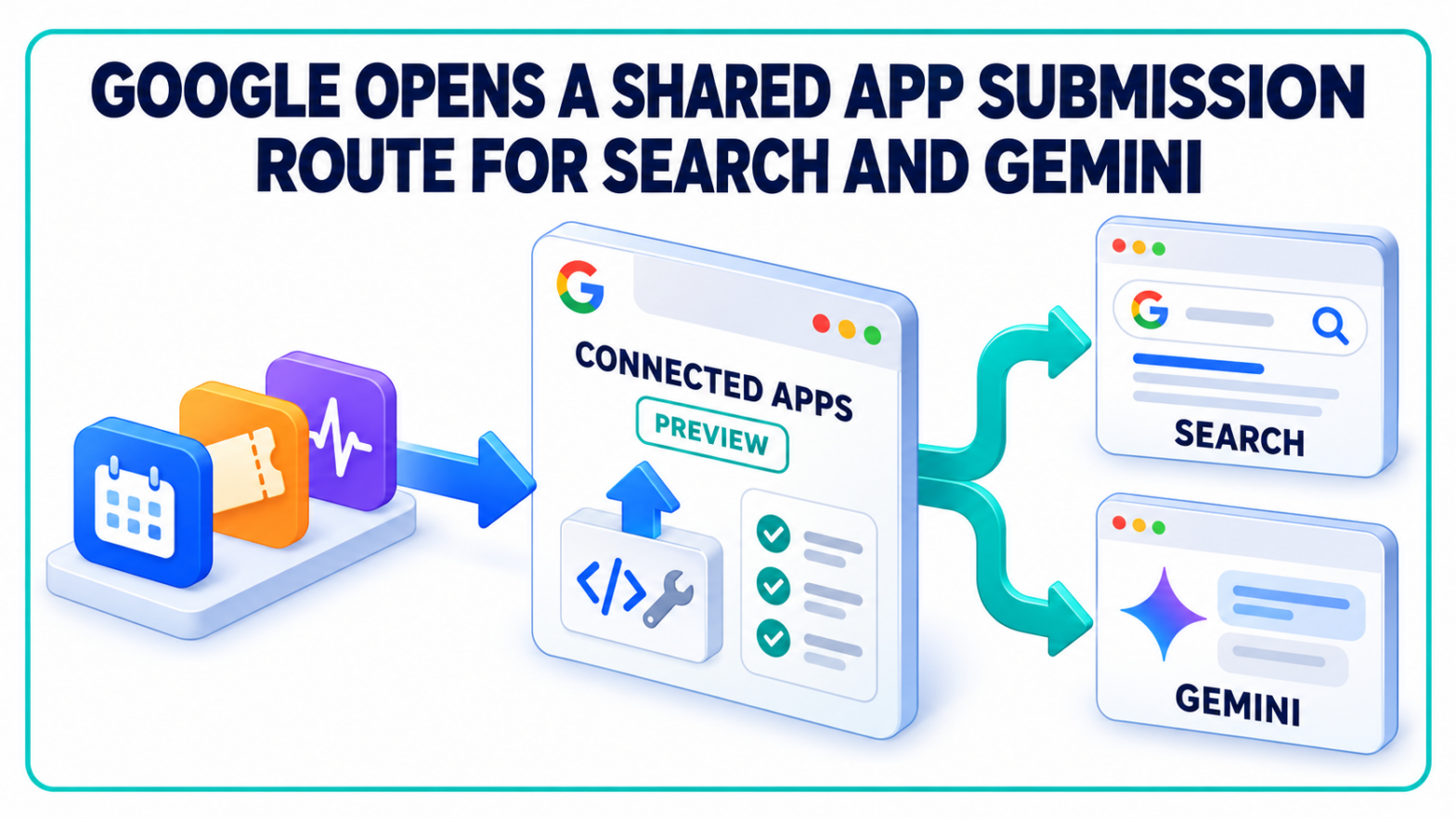
An app’s place in Google is no longer limited to a webpage or an advertisement. Google’s October 28 Connected Apps Platform preview gives developers a shared process for submitting services to Search and the Gemini app, although access is opening in phases.
The platform lets users access live information from a linked service and carry out actions within a conversation. For businesses, the change creates a development and distribution question alongside the familiar search visibility question: can Google use the service, rather than simply describe it?
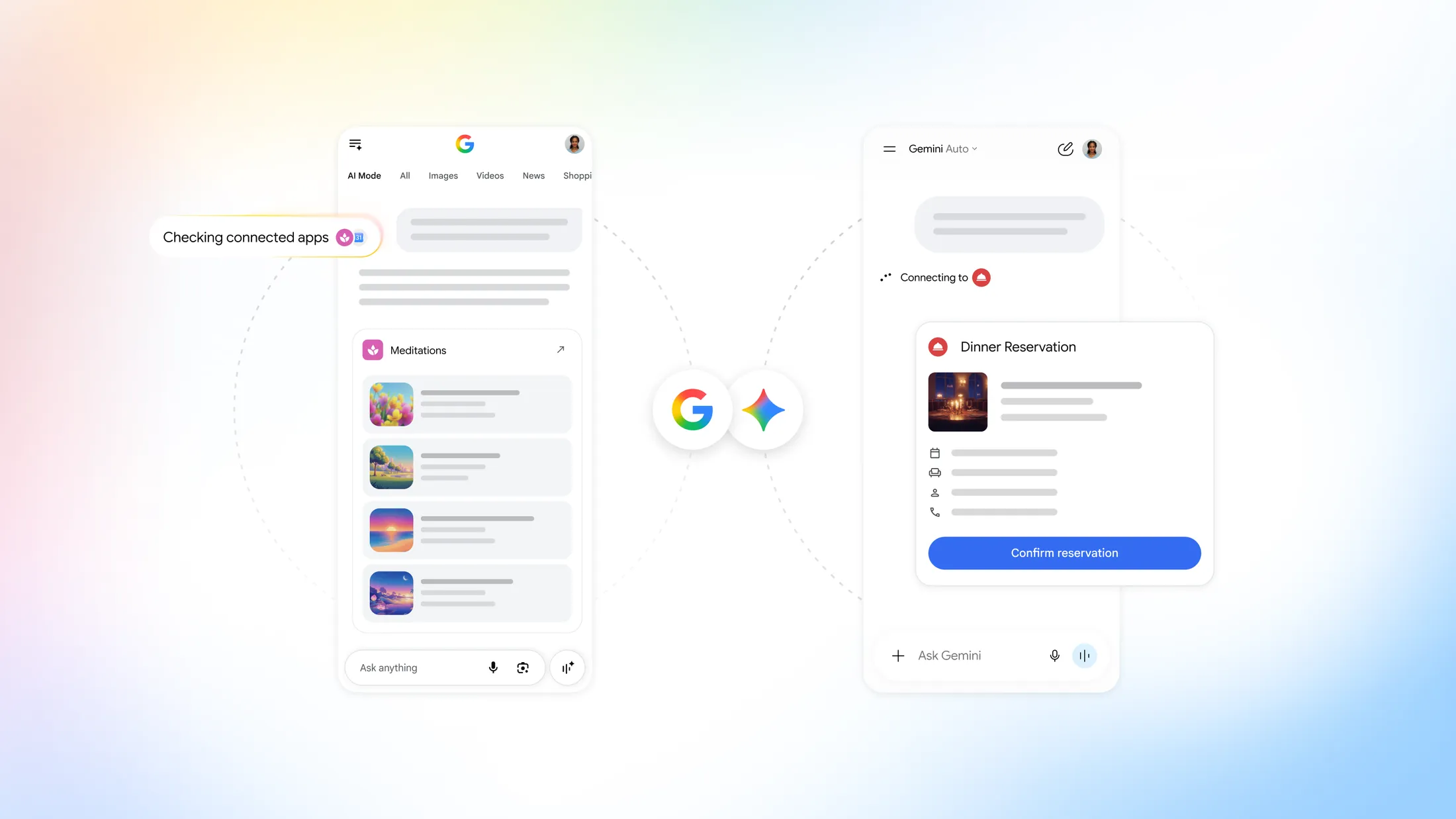
Connected Apps Move Beyond Individual Partner Announcements
Google already offers connected apps in AI Mode. The new announcement concerns how more developers can bring their own services into that environment, rather than the introduction of app actions to Search for the first time.
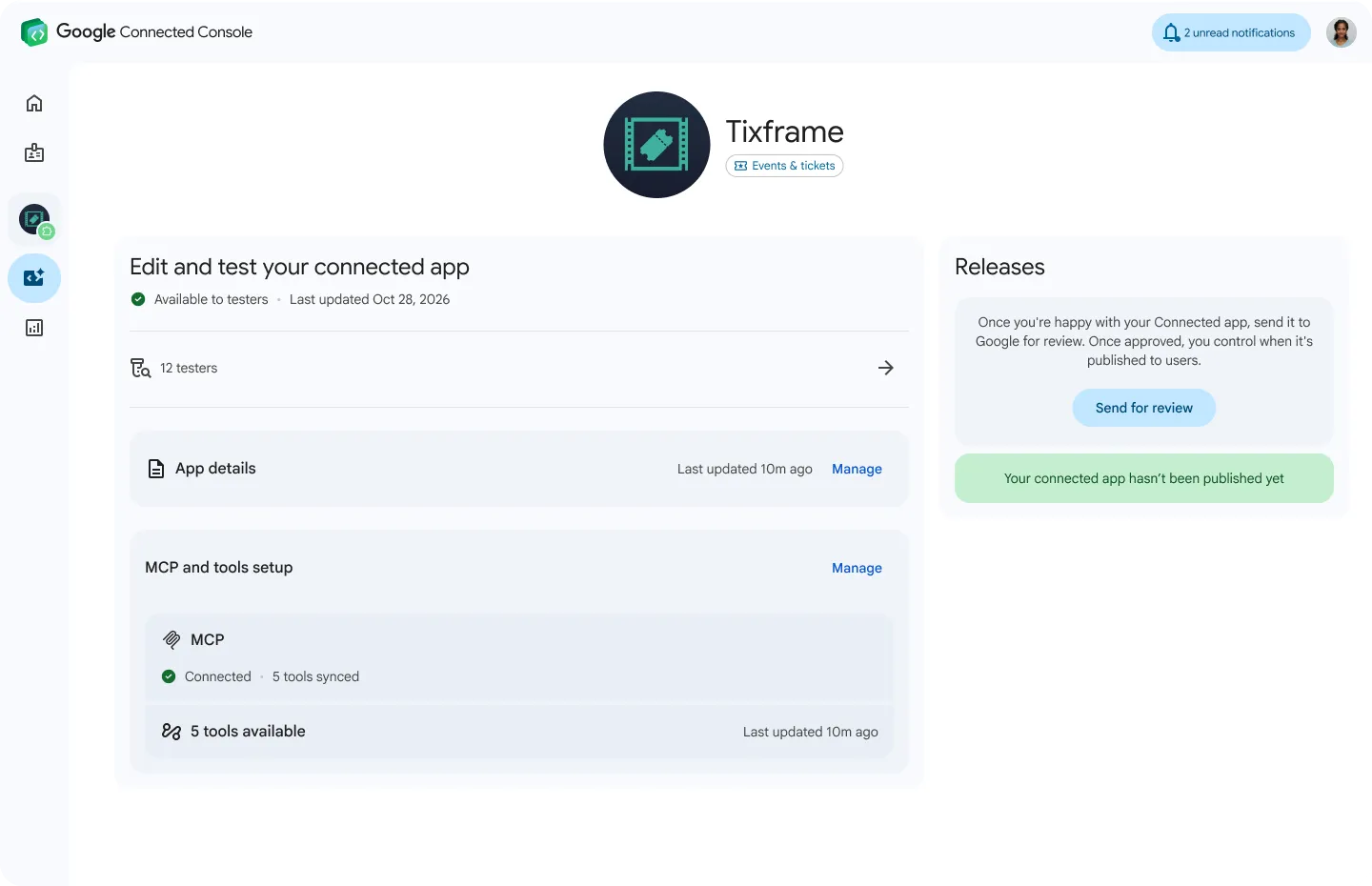
Google’s developer overview describes self-service onboarding through Google Connected Console during the preview. Developers can apply for access and manage registration, usage analysis, review and publishing through the platform.
Participation still requires operational infrastructure. For the server-based route, Google’s prerequisites include a publicly reachable HTTPS endpoint, a registered developer account with the appropriate permissions, and the ability to verify ownership of the server’s domain. An account owner or administrator must also accept the program agreement.
That makes this a product integration, not a listing that a marketing team can create by submitting a website address. The business needs a working service, a defined set of capabilities and developers able to maintain the connection.
Model Context Protocol and Android MCP Have Different Reach
The platform supports a cloud-hosted Model Context Protocol server and an Android route built with AppFunctions. MCP provides a standard way to expose tools and authorized data to compatible AI systems; Android AppFunctions can expose native app features for execution on a user’s device.
The distinction affects distribution. Google’s registration guide says a server-based MCP integration can serve Gemini and Search users across the web, Android and iOS. Android MCP instead exposes on-device capabilities to Gemini on Android. Developers choose one connection type per connected app, and cannot change that choice later.
The shared platform therefore does not make every integration available on every surface. A team choosing the Android route is making a different distribution decision from one operating a remote service.
TechWyse’s coverage of the WordPress MCP Adapter examines the same underlying role of Model Context Protocol: making software capabilities available to an AI agent. Protocol compatibility alone does not establish eligibility for Google’s preview.
Google Connected Console Adds Testing and Release Controls
The submission package also includes public-facing material. Google requires a short description, an app icon, at least three high-value capabilities, example prompts, and links to terms of service and a privacy policy. These details explain the service to prospective users; they sit alongside the technical connection rather than replacing it.
Developers configure the countries or regions, languages and Google products where an app should be available. Unpublished integrations are restricted to designated testers, who must use Gmail accounts. Google then reviews and tests the integration before it can be published to users, according to its registration and publishing guide.
Once an app is live, Google says developers can monitor traffic, latency and error rates, while retaining control of brand details such as verified logos and authenticated accounts.
Release management continues after approval. Published tools and server details cannot simply be edited in place through the console; developers create a new connected app version to submit changes. The documentation also allows a new version to be prepared and tested while the existing release remains live.
Google’s Rules Reject Ads and Misleading Tool Descriptions
Google’s Connected Apps Platform policy draws boundaries around what an integration can deliver. Partners must not serve third-party advertising or promotional material through their integrations, although their own brand elements are allowed. Tools must provide useful functionality rather than act as advertising inventory.
The rules also prohibit overly broad or deceptive capability descriptions intended to influence a model into selecting one app over another. Apps cannot perform undisclosed actions, conceal functionality or return system instructions through their responses. Google requires capabilities and permissions to be described accurately.
Data access is constrained too. Developers must request only the data and permissions needed for active features, disclose how information is handled and provide help explaining how users can manage and delete their data.
For marketers and SEOs, the practical distinction is between visibility and execution. As AI Mode adds more task-oriented features, an app integration introduces a separate measurement task: determining whether an authorized action succeeds and produces a meaningful business outcome. Traffic and technical performance reports do not, by themselves, establish conversion value.
Gemini’s Partner Rollout Is Ahead of Search
Google says it has launched more than 50 Connected Apps between Search and Gemini, spanning categories including productivity, ticketing, health and fitness. That is a combined total, not confirmation that the same catalogue is available in both products.
Adobe, Experian, Localiza and Peloton integrations are live in Gemini, according to the announcement. Google plans to bring those apps to Search in the coming weeks and has also announced a forthcoming Calm integration across both products.
The company says it will admit more developers and expand to additional markets and Google products over the coming months. Its announcement does not specify a Canadian developer-access date or a date for general availability.