
Online reputation builds one review at a time. A bad experience can spread across Google, Yelp, and TikTok before a team responds.
Reviews also move revenue. A Harvard Business School study found that a one-star Yelp increase can raise restaurant revenue by 5-9 percent. Online sentiment becomes money in or out the door.
The volume is the real problem. No team can read every comment arriving across search, marketplaces, and social platforms. AI can compress thousands of opinions into a short account of what customers praise, what frustrates them, and what changed this week. Yet customer reviews and testimonials still carry details that an AI summary can quietly erase.
Speed helps only when the summary stays loyal to the evidence. If it softens a safety concern, misses sarcasm, or buries an unusual billing complaint, leaders receive reassurance when they need a warning.
That gap matters because executives often see only the summary, not the evidence underneath it.
This article explains how review summarization works, where negative feedback gets distorted, what causes those errors, and the practical checks that keep decisions grounded in customers' actual words.
Understanding AI Summarization Technologies
Summarization systems used in reputation management generally work in two flavors: extractive and abstractive. Extractive models pull direct snippets from reviews and stitch them together. Abstractive models paraphrase and generate new sentences. Many modern tools use large language models (LLMs) fine-tuned on customer feedback and paired with topic clustering, so they can group similar complaints and tease out themes like "shipping delays" or "confusing pricing."
Alistair Hinchliffe, Product Manager of GetTerms, a global privacy compliance platform, notes that as companies aggregate customer feedback, they must also ensure that data handling meets compliance standards.
|
"The real power of AI summarization is speed at scale," Hinchliffe says. "A team that once spent days reading through feedback can now surface the dominant themes almost instantly. That efficiency lets businesses respond to their customers while the conversation is still happening." |
Extractive systems preserve wording but may sound choppy. Abstractive systems read naturally, although paraphrasing creates room for factual drift. Maynez and colleagues' faithfulness findings show why fluent output is not always faithful output.
Models rank sentences, estimate sentiment, cluster topics, and remove repetition. Real-time ingestion can expose rising issues within hours, which makes the guide on risks of bad AI-generated content useful alongside automated monitoring.
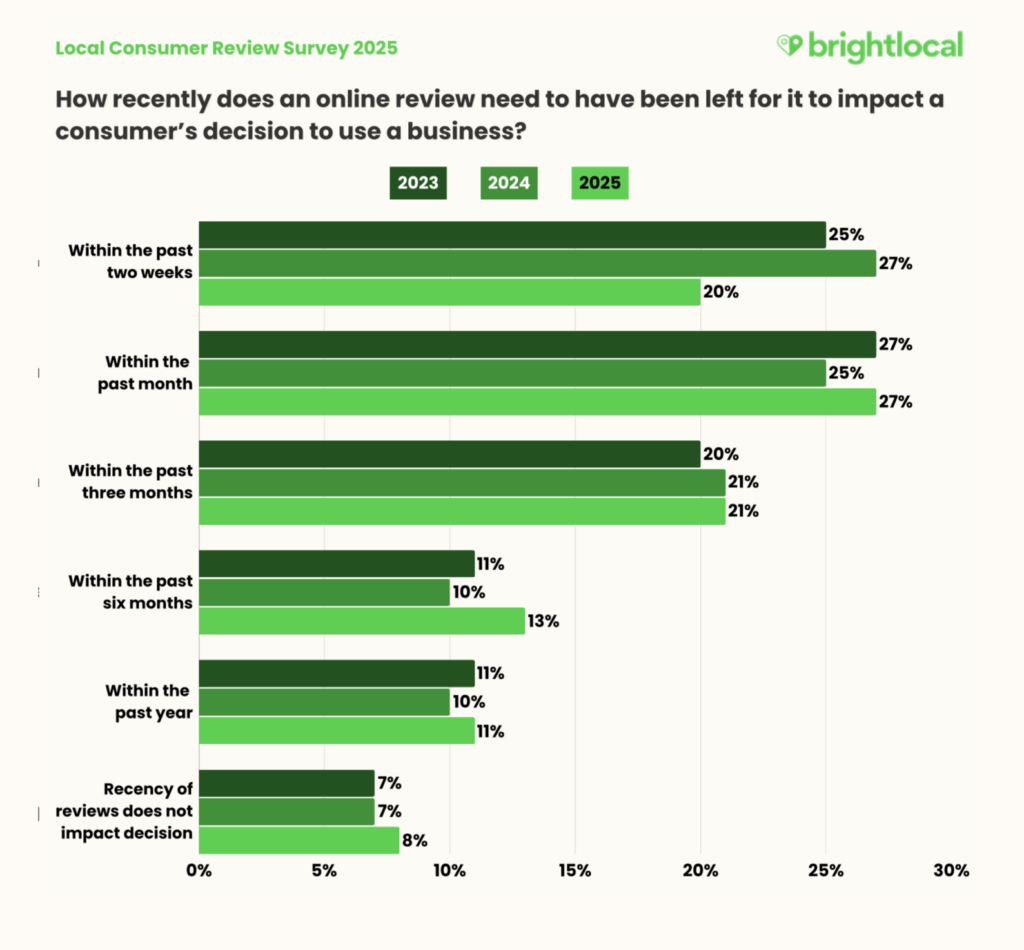
In a BrightLocal's Local Consumer Review Survey 2025, 20% of consumers wanted reviews from the previous two weeks, while 27% looked for reviews from the previous month. The chart shows how quickly older feedback loses influence, making accurate summaries of recent reviews especially important.
Ask whether the model preserved the source, severity, timing, and uncertainty behind each theme.
Keep the raw-review identifier beside every theme, then compare a small sample before a trend reaches reporting or senior leadership.
The Blind Spot: When AI Misrepresents Negative Reviews
A clean, balanced summary can lull you into thinking the coast is clear when it isn't.
Unfortunately, leaders often trust AI summaries without realizing a critical complaint may have been softened or buried.
Tone is one failure point. "Great, another broken order" contains a positive word but means the opposite. A system may score praise while renaming billing errors as harmless "pricing feedback."
Commercial detail can also disappear. Feedback about custom t-shirts may separate print durability, sizing, delivery, and design-tool problems. Combining them as "product concerns" gives teams little to act on.
Outliers need equal care. One report of contamination, fraud, an unsafe product, or an unauthorized charge may vanish beneath ordinary comments. Frequency is not severity.
Use three checks before accepting an AI summary:
- Open the original reviews behind every high-risk theme.
- Compare the model's label with the customer's actual wording.
- Escalate rare safety, legal, fraud, and discrimination concerns automatically.
Prevent compression from turning a sharp warning into a soft average.
Build separate alerts for rarity and severity, because a complaint can matter even when no second customer has reported it.
Causes Of AI Summarization Errors
Why do smart systems stumble when summarizing negative feedback? Several recurring issues can cause models to overlook, soften, or misinterpret important criticism. Below are four common causes of AI summarization errors:
Training data skews positive
Training sets often contain more positive examples than direct criticism. IBM's explanation of imbalanced classification shows why overall accuracy can look strong while recall for serious negatives remains weak.
A model that labels 95% of routine reviews correctly but catches half of safety complaints is not reliable enough.
The tone is messy
Sarcasm, slang, regional phrasing, and cultural context complicate sentiment.
Bryan Henry, president of PeterMD, a telehealth provider, reminds that in a medical setting, clear human review helps protect patients when automated summaries influence high-stakes decisions.
|
"Language carries meaning that lives between the words. A review that says 'great, another broken order' is dripping with frustration, but a model trained on surface patterns may read the word 'great' and log it as praise. Tone is where these systems still stumble." |
Feedback may soften embarrassment or describe outcomes without the proper context. A customer review language process keeps those expressions connected to context.
Abstraction can blur specifics
Abstractive systems may replace details with broad language or imply agreement reviews never established. The FRANK factuality benchmark tests consistency with source material.
Test with sarcasm, negation, mixed sentiment, industry vocabulary, and isolated high-risk reports. Difficult examples expose weaknesses quickly.
During testing, create challenge sets by error type. Report each category separately, so an excellent average cannot conceal weak handling of sarcasm or risk signals.
Real-World Implications
Big platforms have already tested AI summaries of product reviews.
When Amazon rolled out AI-generated review highlights in 2023, some observers quickly noted that abstractions could miss nuance or overstate a consensus, particularly on edge cases where a product had a critical flaw for a subset of buyers.
The same risk shapes smaller decisions. A restaurant may expand a menu after praise hides regulars' complaints. A retailer may keep promoting an item although comments describe breakage.
In the service industry, someone comparing a Clearwater bathroom remodelling company may care about schedules, cleanup, communication, and workmanship. Merging those details into "mixed service feedback" hides what needs attention.
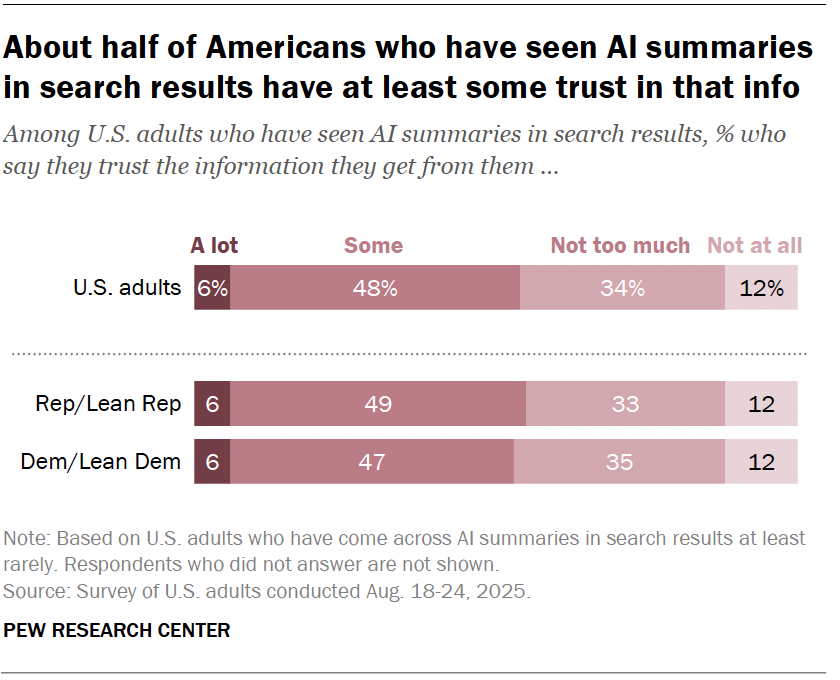
According to Pew Research Center, among Americans who encounter AI-generated search summaries, only 6% trust the information “a lot,” while 46% have little or no trust in it. This trust gap shows why businesses should verify AI-generated summaries against original customer reviews before using them to guide reputation decisions.
Damage does not require a scandal. Missed shipping complaints send buyers elsewhere, while hidden recurring charges or accessibility concerns can signal wider failures.
Ask: "What decision changes if this review is fully visible?" If safety, money, trust, or retention is involved, read the source.
For every adverse theme, clearly record its owner, customer impact, corrective action, and verification date.
Solutions And Best Practices For Accurate AI Summarization
You do not have to choose between using only AI or relying entirely on analysts. The most reliable approach combines automated processing with human review, clear evidence, and regular improvements. Below are five practical ways to improve the accuracy and trustworthiness of AI-generated summaries:
1. Audit and measure
Weekly, compare sampled reviews with summaries. Track sarcasm, negation, incorrect severity, missing entities, and invented claims. Measure recall for critical negatives.
2. Prioritize critical feedback
Create a "do not compress" rule for safety, legal, fraud, privacy, and billing issues. Attach the source and assign a deadline.
3. Keep people involved
When summaries affect decisions, monitoring your online reputation routine gives analysts a defined queue instead of requiring complete rereads.
Require evidence links for generated claims, including comments, dates, ratings, and confidence scores. AWS-targeted sentiment guidance connects sentiment to specific products or attributes.
4. Train for context
Test with customer language, including slang, code-switching, technical terms, indirect complaints, and mixed praise. Preserve one evaluation set for comparison.
5. Close the loop
After escalation, connect the complaint, response, and outcome. That history supplies better examples of real resolution.
Use a simple audit sheet with the review ID, summary claim, error type, severity, correction, owner, and completion date. Patterns become visible quickly across teams.
Future Directions: Improving AI For Reputation Management
The research pipeline is moving fast in ways that matter here. Retrieval-augmented generation is making summaries more grounded by tethering claims to source text. Multilingual and code-switch-aware models are getting better at reading the way people actually speak online. Evaluation is catching up, with more benchmarks that stress nuance and faithfulness, not just brevity.
Expect citations, confidence scores, traceable clusters, and explanations. The NIST AI Risk Management Framework discusses measurement, management, and accountability.
Local teams can also revisit local SEO in 2025 when updating their review and visibility checklist.
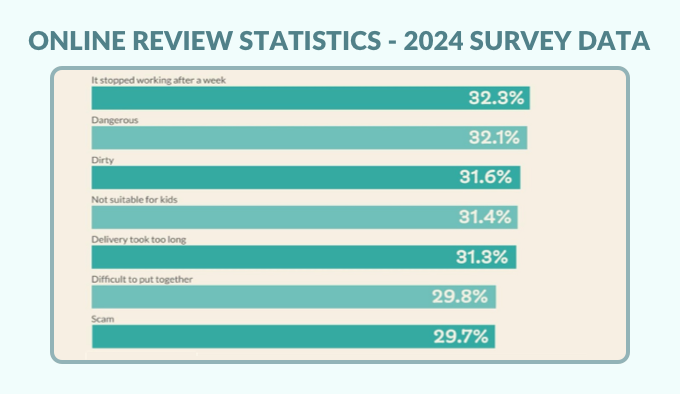
A CouponBirds 2024 survey of 1,014 US shoppers found that 32.3% were deterred by "It stopped working after a week," closely followed by "Dangerous" at 32.1%. The visual ranks specific negative phrases, showing why a vague summary can hide the exact language that changes purchase decisions.
Preserve source links, monitor errors by language and category, and require human approval for high-impact decisions.
Have version prompts, model settings, and taxonomies so investigators can explain why an output changed later.
What This Means For Your Business
AI summarization is a gift when you're swamped with feedback. It spots patterns you might miss and gets you from raw noise to usable insight fast. But speed without context creates a blind spot, especially around the sharp, negative edges that most need your attention.
Weekly, compare summaries with source reviews, record misses, and update escalation rules. Ask: Did it preserve severity? Did it separate fact from inference? Can a decision-maker open the evidence?
Keep the workflow simple:
- Let AI group, rank, and compress routine feedback.
- Let people verify unusual, severe, or ambiguous complaints.
- Track corrections so the same error becomes less likely next time.
Reward dashboards for exposing problems early, supporting evidence-based responses, and protecting customer trust.
This balance keeps automation fast without making accountability optional anywhere.
For more practical guidance on review strategy, AI oversight, and reputation measurement, explore the latest resources from TechWyse.