


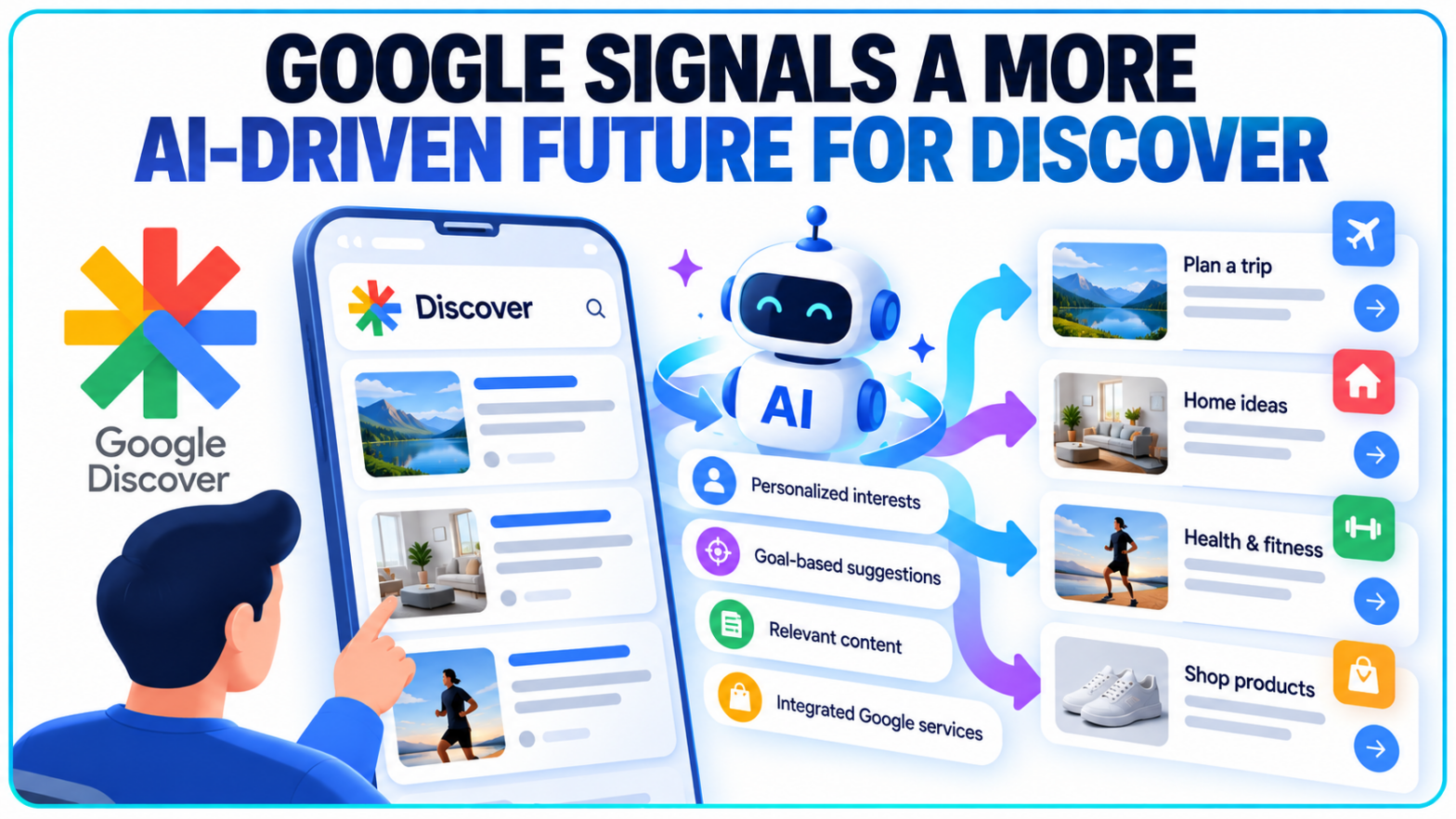
Google Discover has spent years recommending articles based on what people might want to read next. Now, Google is signalling a bigger ambition: helping users decide what to do next.
A newly published senior design position reveals plans for a more interactive, AI-driven Discover experience that moves beyond conventional content recommendations. For publishers and marketers, the central question is whether that experience will continue directing readers to external websites or increasingly keep their attention within Google's own products.
Google Wants Discover to Do More Than Recommend Content
Google's Principal, UX, Search Discover job listing describes a substantial shift in the company's ambitions for its personalized content feed.
The position, based in Mountain View or New York, sits at the Director+ level and carries responsibility for leading Discover's user experience strategy.
The job description calls for a leader who can:
“transform Discover into a proactive, hyper-personalized concierge experience that helps users make progress on their goals.”
That wording points to a broader role for Discover.
Today, the feed primarily surfaces content that Google believes matches a person's interests. Those recommendations can include news articles, videos and social posts, with personalization informed partly by activity across Google products.
The proposed direction adds another layer. Rather than simply identifying an interesting subject, Google wants Discover to help people pursue related goals.
The listing also calls for changes to feed interactions, content formats and AI-driven exploration. The successful candidate would oversee design work aimed at creating a more engaging experience across Google's consumer products.
It's a different design problem from deciding which headline or video should appear next.
The language also suggests Google is reconsidering how people move through Discover, not merely adjusting which content its recommendation systems select.
There are limits to what the listing establishes, however.
Google has not formally announced a comprehensive Discover redesign, disclosed a launch schedule or confirmed which proposed capabilities will reach users.
The document outlines the responsibilities and strategic priorities of a leadership position. It is not a product release announcement.
An AI-Powered Discover Feed Could Change the User Journey
The clearest indication of Google's intended direction appears in how the company describes the relationship between discovering information and taking action.
The job listing calls for experiences that help users progress “moving seamlessly from inspiration to action.”
Traditional Discover recommendations generally begin with an inferred interest.
Someone who regularly reads about home renovations might receive articles about kitchen design. A user following technology news might see coverage of new devices or software developments.
Those examples reflect the existing interest-based recommendation model.
A more goal-oriented interface could introduce additional steps after that initial discovery, helping users explore related information or services rather than treating each recommended article as a separate destination.
Google has not demonstrated how such a workflow would operate in the proposed redesign. Features such as personalized task suggestions, integrated shopping assistance or AI-generated recommendations remain possibilities rather than confirmed Discover capabilities.
Still, the emphasis on helping users accomplish goals aligns with Google's broader investment in AI experiences that combine information retrieval with practical actions.
The new position also focuses on developing AI-enabled content formats and new engagement mechanisms.
Those responsibilities suggest the company is examining how information is presented and how users interact with it.
For publishers, that distinction matters.
Discover has traditionally provided opportunities to reach audiences who weren't actively searching for a particular publication or website. An article could appear because its subject matched a user's interests.
An experience built around broader user goals introduces additional questions about where publisher content fits into that process.
Google has not explained whether the proposed design would change how often external links appear, how publishers are credited or how people navigate from Discover to original sources.
Google Is Connecting Discover With More of Its Ecosystem
The hiring requirements point to another priority: bringing Discover into closer alignment with Google's other consumer products.
The successful candidate would work with leadership across YouTube, Shopping, Chrome and Android.
That cross-product focus is notable because Discover already appears across multiple Google surfaces, but its recommendations have historically centred on content consumption.
Google appears interested in designing a more unified experience across those environments.
Some of that work is already visible.
In September 2025, Google introduced expanded creator and publisher features in Discover.
Those changes brought additional content formats into the feed, including social posts from X and Instagram and YouTube Shorts. Google also added ways for users to follow preferred publishers and creators.
The expansion gave users more control over which sources they wanted to encounter while broadening the types of content competing for attention.
The new leadership role continues that emphasis on engagement and content diversity.
It also calls for balancing AI functionality with human perspectives and original sources.
That requirement is significant for a product increasingly connected to automated recommendations and AI-generated experiences.
Google is not describing a feed composed exclusively of machine-generated content. The hiring language explicitly includes creators, publishers and human contributions in its design priorities.
The preferred qualifications also mention experience developing consumer products for younger audiences, suggesting Google is considering how Discover competes within an environment dominated by personalized social and video feeds.
The company has not announced any specific audience-targeting changes associated with the position.
Google's Existing Discover Experiments Show Where AI Fits
The proposed changes do not arrive in isolation.
Google has already begun experimenting with AI experiences that alter how people explore information inside Discover.
In September 2026, the company started testing a feature called Dive Deeper, which introduces an AI-generated topic overview accessible from selected Discover content.
As TechWyse previously reported, Google's Discover Dive Deeper experiment allows users to explore related stories, community reactions and original reporting within an expanded interface.
The initial experiment focuses on videos.
Rather than immediately opening an external website, users can encounter additional context and source links within a Google-hosted experience.
That test offers a concrete example of how Discover can move beyond recommending individual pieces of content.
It also introduces a distinction between content visibility and referral traffic.
A publisher might appear in an AI-generated overview without receiving the same type of direct visit associated with a conventional Discover article card.
Google has not released evidence showing that the proposed redesign would reduce publisher clicks. The existence of additional AI interfaces does not establish how users will respond to them.
Google has, however, expanded the tools available to measure content exposure within these experiences.
In June 2026, Google announced dedicated generative AI performance reports in Search Console, including reporting for AI features in Discover. The company subsequently confirmed that the insights had reached websites worldwide by August 31.
The reports provide information about impressions, pages, countries and dates.
That visibility is separate from understanding exactly how individual AI interactions translate into visits.
Meanwhile, Google's expansion of social and video reporting has introduced additional ways for creators to monitor content beyond their websites.
TechWyse previously covered how Search Console platform properties expanded reporting for social and video content, including appearances across Search and Discover.
Together, these developments show that Google is expanding both the content available in Discover and the ways users can engage with it.
The newly advertised leadership position addresses how those elements might be brought together in a longer-term product experience.
Discover Traffic Remains Unpredictable for Publishers
The potential redesign comes during a year in which Google has already made significant changes to Discover's content-ranking systems.
On February 5, 2026, Google launched a Discover-specific core update designed to improve the relevance and quality of articles appearing in the feed.
The update focused on locally relevant content, reducing sensationalism and rewarding original, timely reporting from sources demonstrating subject expertise.
Google also stated that its systems assess expertise by topic rather than assuming every section of a website has the same level of authority.
TechWyse covered the February 2026 Google Discover core update and its implications for content visibility.
Those ranking changes are separate from the newly disclosed UX priorities. Google has not indicated that the hiring plans introduce another core update or new eligibility requirements.
For publishers and SEO teams, the immediate practical consideration remains measurement. Google's official Discover guidance describes referral traffic from the feed as less predictable than keyword-driven search traffic. Publishers can examine Discover clicks, impressions and click-through rates in Search Console while comparing those figures with available AI visibility reporting. Maintaining that distinction helps separate changes in content exposure from changes in actual website visits.
No new technical optimization requirements have been announced for the proposed experience.
Google's current guidance continues to emphasize useful, original content, accurate headlines, relevant high-quality imagery and compliance with Discover policies.
The company has also not indicated whether existing publisher-following features, source preferences or Search Console reporting structures will change under the proposed design.
The active job listing establishes Google's interest in a more proactive, personalized Discover experience, with AI and human-created content both part of the plan.
What remains unconfirmed is the final interface, the distribution of publisher content within it and how much of the user's journey will continue beyond Google's own surfaces.