Creator campaigns often stall before an ad enters the auction. Finding the right partner is only the first step; permissions, content reviews, approvals and asset handoffs can consume the time that was meant for testing.
Meta is moving more of that work into one system. The company has launched its Creator Marketing Hub globally, bringing creator discovery, communication and partnership-ad activation into a shared workspace as brands prepare campaigns for the final quarter of 2026.
Meta’s Creator Marketing Hub Replaces a Split Workflow
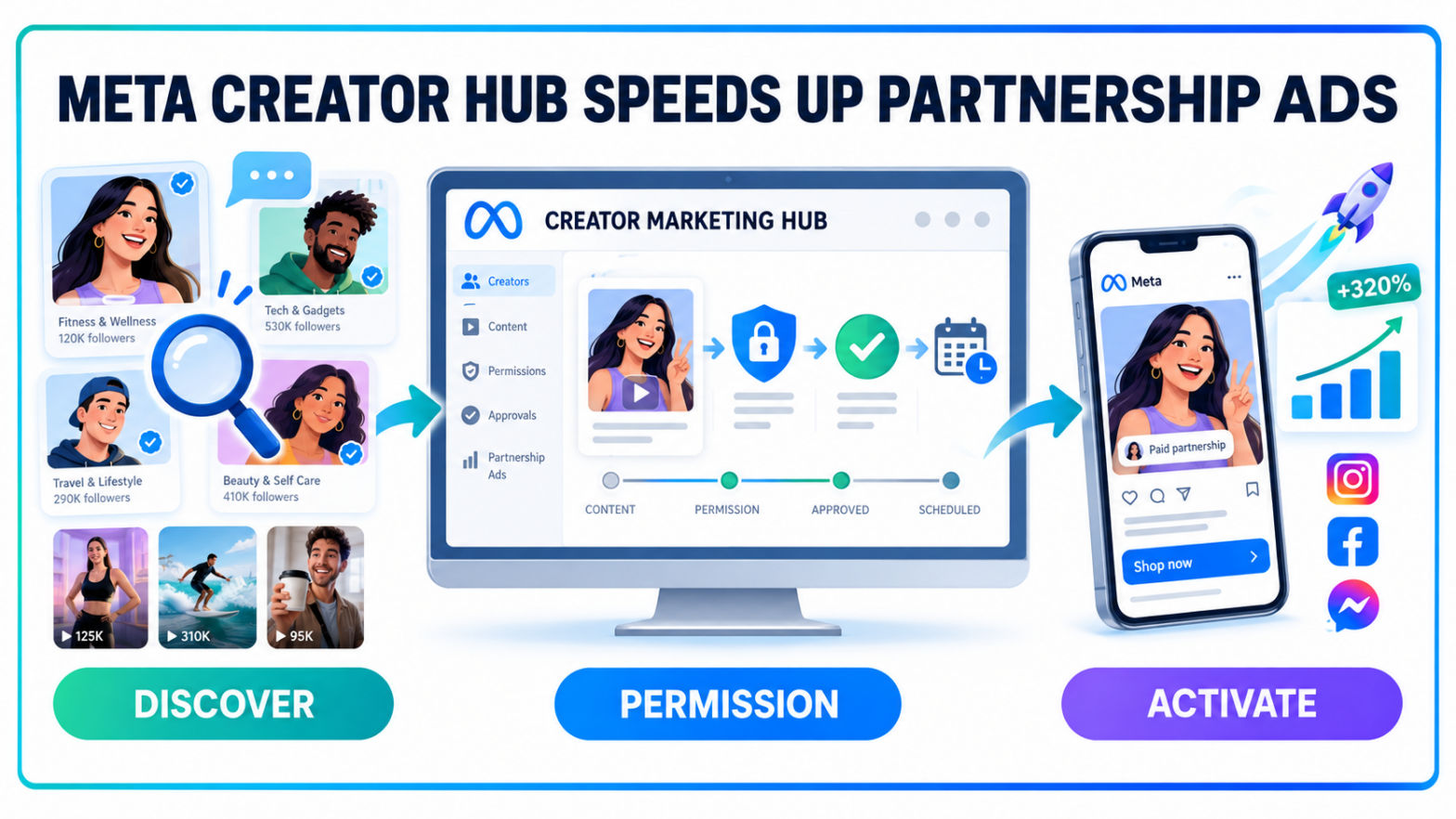
The Meta Creator Marketing Hub combines two surfaces that previously handled different parts of a collaboration: Creator Marketplace and the Partnership Ads Hub.
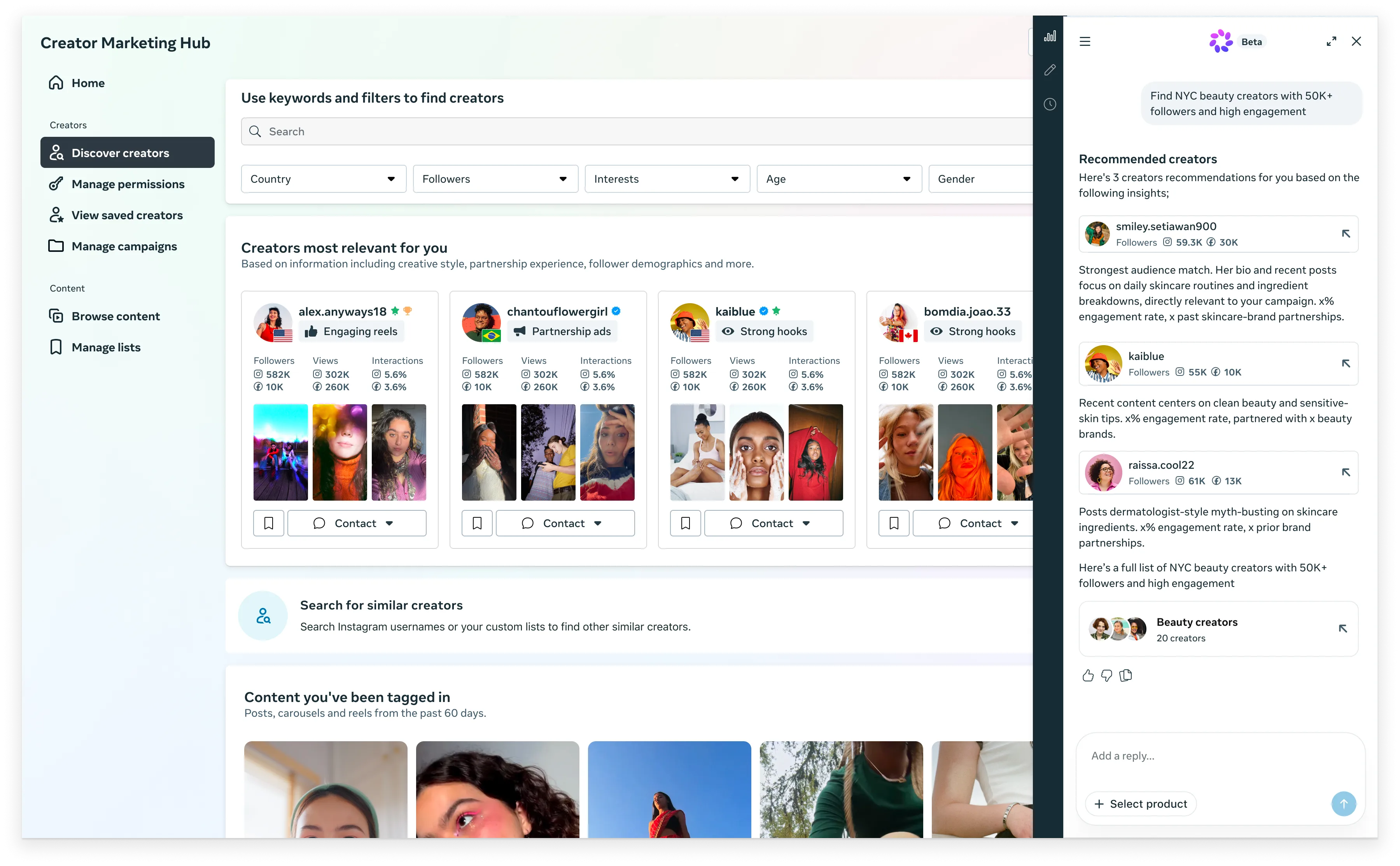
Meta’s announcement from IAB Global Creator Week describes a workflow in which advertisers can discover creators, identify relevant organic content and turn approved posts into ads without moving between separate tools. The hub also brings partnership messaging into the same environment.
That consolidation addresses a practical problem. Creator programs usually cross several owners, including social, paid media, legal, brand and the creator or talent manager. A campaign can be delayed even when the creative is ready because one permission has expired, a message sits in another inbox or the paid team cannot confirm whether a post is eligible for advertising.
Meta is not removing those approval steps. It is giving them a common operating layer.
Facebook Creators Join the API Discovery Pool
The update expands discovery beyond the visible hub. Facebook creators are being added to Meta’s Creator Marketplace API, which previously covered Instagram creators. Advertisers and technology partners using the API will be able to search across both creator pools through one integration.
Meta is also expanding its Content Discovery API. The new functions include additional filters, keyword search, performance insights and recommendations for organic creator posts that may suit a brand. The system can also identify user-generated content that is ready to run as an ad, reducing the time spent checking assets individually.
For brands, the operational change is less about having a longer list of names. Search, evaluation and content selection can feed an existing workflow through APIs instead of depending entirely on manual browsing and spreadsheets.
That makes creator marketing easier to treat as a repeatable media process. A retailer can build a wider prospect list, compare available creator content and move suitable assets into review while preserving the human decision about brand fit.
Permissions Move Closer to Ad Creation
Paid creator campaigns depend on clear authorization. The brand needs permission to use the creator’s identity and content, while the creator needs visibility into what can be promoted and for how long.
Meta’s hub adds content-level permissions and permission expiry dates, giving both sides a more specific record of what is available for paid use. Advertisers are also gaining one-click ad creation and editing tools designed to prepare creator content for ad activation.
The industry often calls this influencer whitelisting. Meta’s own product language is built around partnership permissions and partnership ads, where approved creator content can be promoted through the advertiser’s campaign setup.
That distinction matters. A creator’s organic post is not automatically a reusable ad asset. Usage terms, dates, placements and edits still need agreement. The new tools can shorten the administrative route, but they do not replace contracts, disclosure requirements or a brand’s content review.
Meta is adding messaging within the hub and a Messaging API for businesses that manage collaborations through other systems. Fewer handoffs can reduce the chance that an approval request is separated from the content and campaign it belongs to.
AI Agents Enter Partnership Ad Management
Meta is also connecting its AI business assistant to the hub. Advertisers will be able to use chat to search for creators and ask for explanations behind recommendations, extending AI from campaign analysis into the planning stage of a creator program.
Partnership Ads are also being supported through Meta’s Ads Model Context Protocol connector. That connection is intended to let advertisers and agencies create and manage partnership campaigns from a compatible AI agent rather than relying on the native interface for every step.
The direction matches Meta’s wider effort to put conversational tools over advertising data. TechWyse previously reported how Meta Ads performance can now be examined through Meta AI, including creative comparisons and budget questions. The Creator Marketing Hub adds discovery and collaboration data to that operating model.
Automation will not settle every decision. Creator recommendations still need to be checked against audience relevance, content quality, brand suitability and business results outside Meta. An efficient workflow can increase the volume of campaigns moving through review; it cannot establish whether those partnerships are commercially sound.
The Q4 Opportunity Comes With a Rollout Caveat
The timing makes the launch relevant to ecommerce and lifestyle brands building holiday campaigns. A larger creator pool, central permissions and faster ad activation can help teams test more approved content before promotional calendars become fixed.
Instagram Live video ads add another format to that mix. Meta says the format will become generally available on Instagram beginning September 29, allowing a creator’s live content to be amplified as a Partnership Ad. The format was already available on Facebook.
Not every announced hub feature will necessarily be available to every advertiser at once. Meta says the additions will continue rolling out through the remainder of 2026. Account access, market availability and API support should be confirmed before a holiday media plan assumes a specific function is ready.
For TechWyse’s ecommerce and lifestyle clients, the practical service angle is a Creator Collab Expansion. The Paid Social team can map creator discovery, partnership permissions, content approvals and campaign reporting into one operating process, then identify which steps the new hub can replace or accelerate. The aim is to expand creator-led ad testing without letting access requests, expiring permissions or scattered performance data become the bottleneck.
Meta’s creator tools are moving closer to the campaign engine, but the final control still sits with the advertiser and creator. The useful measure of the hub will be whether approved content reaches testing faster while its permissions, edits and results remain traceable.