
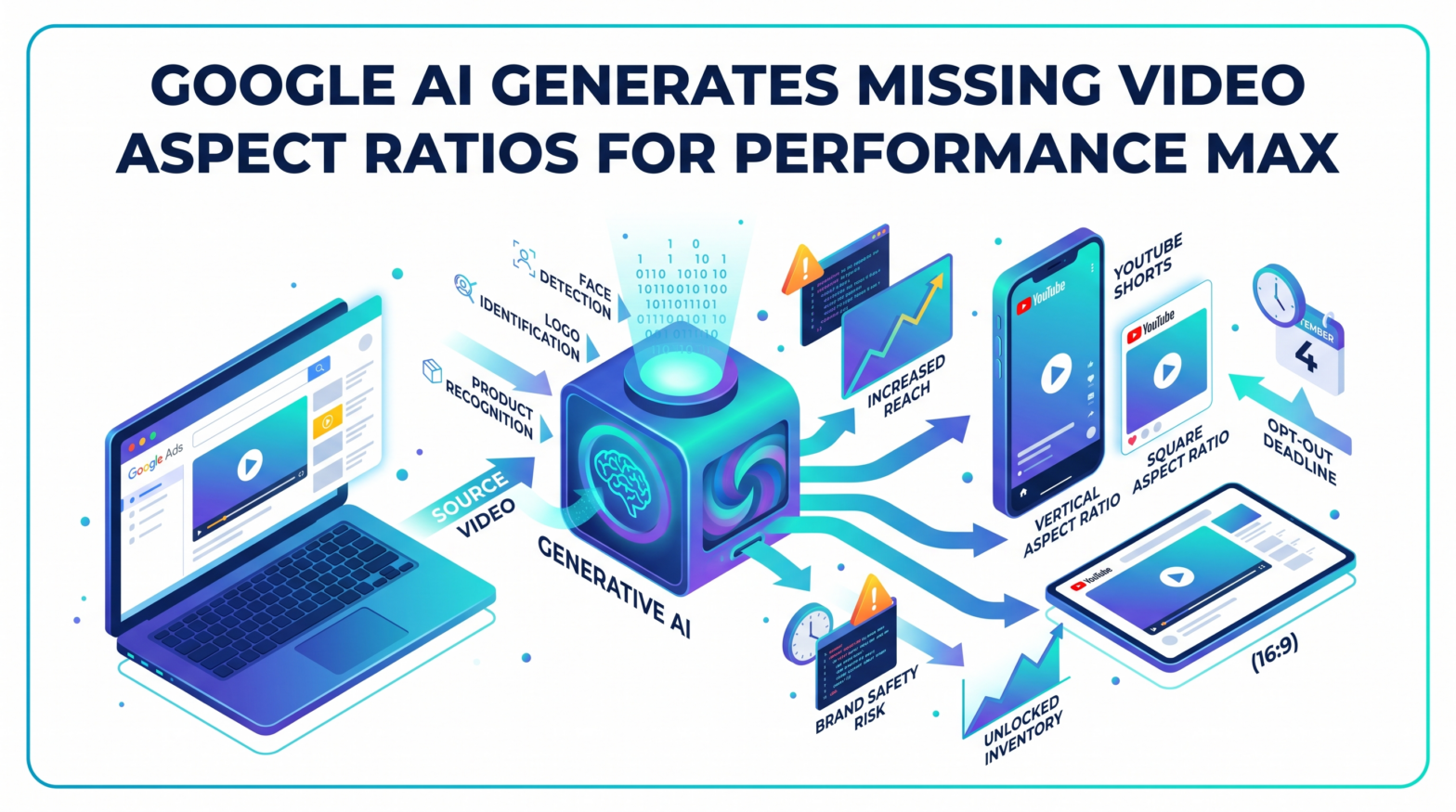
Google is expanding how Performance Max campaigns handle video creative, with generative AI now set to automatically produce versions of existing video ads in missing aspect ratios. Google confirmed the capability at Google Marketing Live 2025, describing it in the Google Ads Help documentation as a globally available feature that extends videos based on the existing scene, automatically resizing the video into any other missing aspect ratio.
What the Feature Does
Video enhancements use Google AI to automatically create additional versions of a video to improve campaign performance, for example, by generating a vertical video from a horizontal video to better fit on vertical screens. The new generative AI capability builds on that existing framework. Where earlier enhancements converted horizontal videos into vertical and square formats through reformatting, the AI now reformats horizontal videos in 16:9 into vertical 9:16 and square 1:1 versions, with the model identifying important visual elements, faces, logos, product objects, and text, and reframing the composition accordingly.
After creative assets are uploaded, horizontal videos may be scaled to square (1:1) or vertical (9:16) aspect ratios for YouTube Instream and YouTube Shorts, and Google will review each video to ensure that quality isn't lost.
Inventory Implications
The practical effect for advertisers is broader placement eligibility without additional production. The video enhancements allow Google AI to automatically create more versions of existing videos to unlock additional YouTube inventory and performance opportunities. Placements such as YouTube Shorts, which require vertical 9:16 creative, become accessible to advertisers who have only uploaded horizontal assets.
Advertisers may also upload a YouTube Shorts-eligible video, vertical format, between 10 and 60 seconds in length, which may be eligible to serve on YouTube Shorts. For advertisers who have not produced that format, the generative AI enhancement fills that gap automatically.
Brand Accuracy Risks
The feature operates by default, and not every automated output will meet brand standards. The model identifies important visual elements such as faces, logos, product objects, and text, and reframes the composition accordingly, but automated reframing introduces risk when videos contain on-screen text, legal disclaimers, or subjects positioned near frame edges. An AI-generated vertical crop of a horizontal ad could cut off text overlays, warp logo placement, or remove a product from frame.
Google notes that Performance Max campaigns using auto-generated videos may show customers who visit a landing page a different product than the one featured in the video. This distinction is relevant for advertisers in retail, finance, or regulated industries where visual accuracy and compliance matter.
All enhanced videos go through extensive quality evaluation before being approved and eligible for serving, according to Google's documentation, though that review is automated, not a human brand approval process.
Opt-Out and Campaign Controls
The feature is enabled by default. Google is rolling out default asset optimization for existing and new campaigns, automatically adapting creatives to fit various aspect ratios starting September 4, and advertisers can opt out before that launch date. Advertisers who prefer not to have Google apply generative AI to their video assets can contact their account management team or submit Google's opt-out form by September 4.
Advertisers can opt out of video enhancements from a campaign's settings by going to Campaign settings, selecting Asset optimization, choosing "Video," and unchecking Enhancement. Video settings can also be adjusted at any time from within a Google Ads account after the rollout date.
Advertisers can also remove individual automatically enhanced assets in reporting and proactively control text and video assets via campaign-level controls, giving a more selective option for those who want to keep the enhancement pipeline active but remove specific outputs that do not meet brand requirements.
Practical Implications for Advertisers
For Performance Max advertisers, the default-on nature of the feature means generative AI-adapted video versions may begin serving without a manual review step. Marketers running campaigns with on-screen text, edge-positioned products, regulatory disclaimers, or tightly controlled brand guidelines should audit their video assets before the September 4 deadline and determine whether the opt-out applies. Those with center-framed footage and no text overlays are the most likely candidates to benefit from the expanded reach without manual intervention.
Google's suggested assets documentation notes that video capabilities will include different aspect ratios of existing videos, shorter versions of existing videos, and newly generated videos. The September 4 activation date gives advertisers a defined window to review their campaigns, assess which video assets are eligible for enhancement, and decide whether automated creative adaptation aligns with their brand standards before the feature becomes active across their accounts.