

A Google Ads campaign can target another country in minutes. Knowing which advertising standards apply there takes longer.
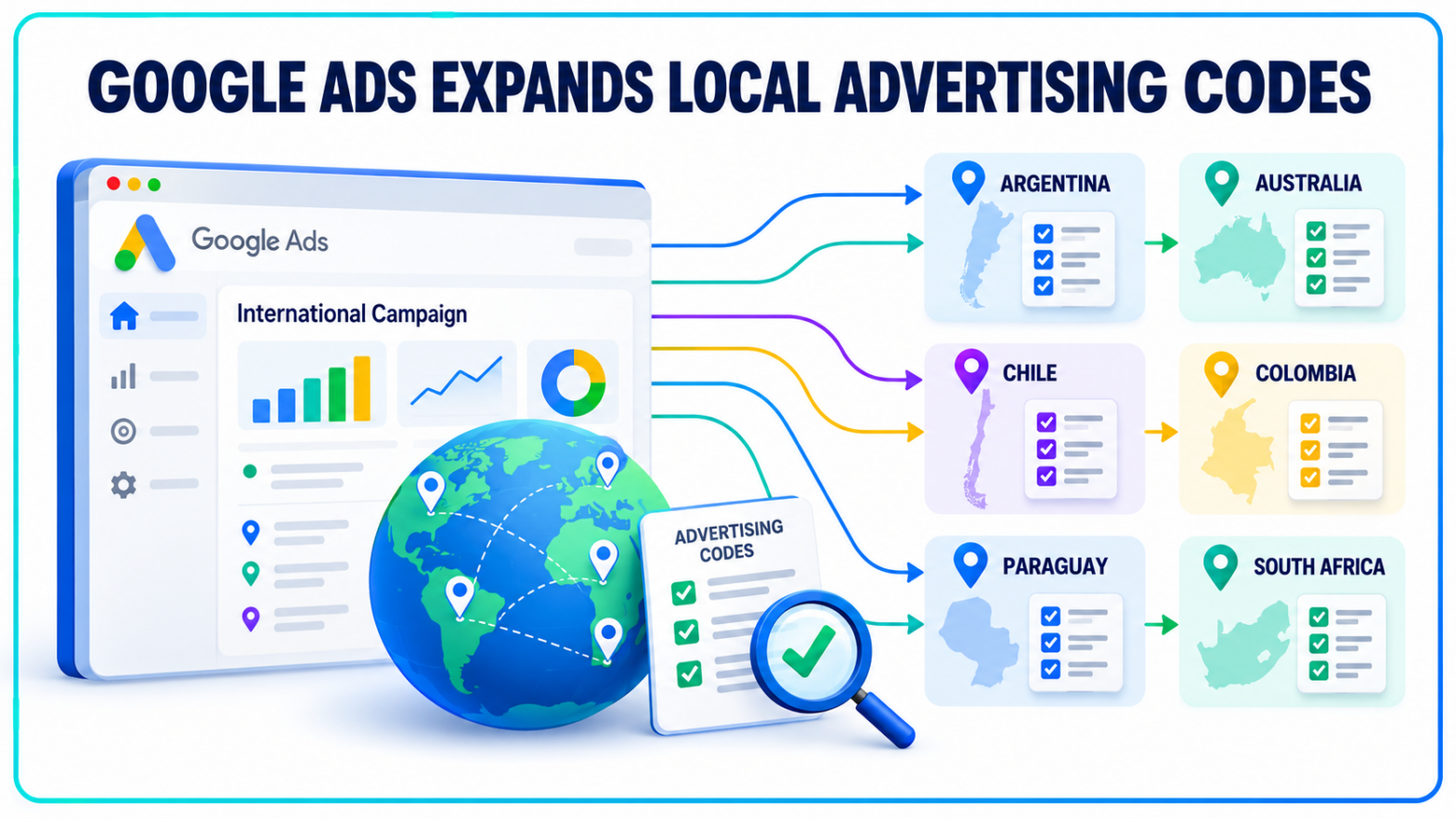
Google has updated its list of local advertising codes to include additional references for Argentina, Australia, Chile, Colombia, Paraguay and South Africa. The September 22 notice changes the policy resource advertisers can consult, while leaving a familiar obligation in place: campaigns must comply with the rules of the places they target.
The distinction matters for agencies and businesses running cross-border advertising. A campaign may meet Google’s platform-wide policies and still need a separate review against local laws and relevant industry codes.
Six Markets Get More Detail on Google’s Code List
In its September policy notice, Google says it updated its list to reflect additional codes in the six countries. The advertising codes directory identifies the issuing organizations and links advertisers to their material.
The entries span different bodies. The Argentina listing points to CONAR Argentina’s advertising ethics and self-regulation code; Chile’s points to CONAR Chile’s ethics code. Colombia links to Autocontrol’s codes, Paraguay to its CONAR code and South Africa to the Advertising Regulatory Board’s codes of practice.
Australia illustrates why a country entry is more than a single checkbox. Google’s directory links to both Australian Ad Standards’ advertising codes and the Alcohol Beverages Advertising Code. An advertiser reviewing an alcohol campaign there would need to distinguish the relevant industry code from a general advertising standard, then check what each requires for the campaign at hand.
Google describes the directory as a list of some applicable codes. It does not say that every local rule is represented or that every listed code applies to every advertiser in a country.
The Target Location Sets the Compliance Question
The advertiser’s home address is only part of the picture. Google’s legal requirements policy says ads must comply with local laws and regulations in any area they target, alongside Google Ads policies. Advertisers are expected to research those requirements themselves.
Consider a Canadian company expanding an existing campaign into Australia or South Africa. The new targeting setting changes where people can see its ads, but it does not automatically tell the creative team whether the claims, disclosures or product category need a local review. The added directory links offer a starting point for that work. They do not replace it.
The update reaches beyond businesses with offices in the six countries. A multinational retailer, software company or agency could encounter the same question when it targets one of those markets from elsewhere. Whether a particular self-regulatory code applies depends on the location, the advertiser and the ad’s subject matter.
That distinction also separates the latest change from Google’s recent Local Services Ads requirements update, which dealt with the rules for that ad product. The advertising code directory sits under Google’s broader legal requirements policy. It is relevant to advertisers assessing the rules for their targeted markets, rather than a new Local Services Ads feature.
A Reference Update Is Not a New National Ban
The wording of Google’s notice is narrow. It says the list has been updated to reflect additional codes. It does not announce that the six countries have introduced new laws, that every advertiser must obtain a new certification, or that a separate September enforcement programme is beginning.
Nor should the directory be read as a universal approval list. Google’s policy states that its explanation of local legal requirements is not exhaustive. An advertiser could comply with a code linked from the directory and still need to meet another local requirement that the page does not cover.
There are consequences for breaches of the underlying legal requirements. Google says some violations of local law may, in limited circumstances, be treated as egregious and lead to account suspension. That is an existing provision in the legal requirements policy, not a newly stated penalty attached to the September list update.
The directory itself includes countries outside the six named in the notice, including Canada. Google links the Canadian entry to the Canadian Code of Advertising Standards. Its presence helps illustrate the broader purpose of the page: a country-by-country reference that points advertisers toward standards issued outside Google.
Cross-Border Campaign Reviews Need Local Inputs
For paid media teams, the immediate task is to compare campaign targeting with the six updated country entries. Where a code is relevant, the review may involve the ad’s claims, the product category, the landing page and any local disclosure requirements. Google has not provided a list of newly prohibited ad types in its notice, so the directory is a prompt to consult the applicable issuing body, not a substitute for reading its code.
The practical issue becomes sharper when campaigns share creative across regions. A single English-language message may be reused in several markets, but the applicable standards are tied to where the ad is shown. Account structure, translated copy and central approval processes do not remove that location-specific responsibility.
Google’s location asset guidance covers a different part of local advertising: whether the business information attached to an ad is accurate. This policy update concerns the rules behind the advertising message itself. An advertiser targeting a new market has to consider both, but the September notice addresses only the code directory.
The Directory Remains a Starting Point
Google has published the six-country update and linked the relevant organizations from its policy page. It has not set a new compliance deadline in the notice.
Advertisers remain responsible for checking the laws and codes relevant to each place their ads target. The directory now gives them more references for six markets, while Google’s broader legal requirements policy continues to place the research obligation on the advertiser.