

Voice search used to be a shortcut.
Ask a question. Get a clipped answer. Move on.
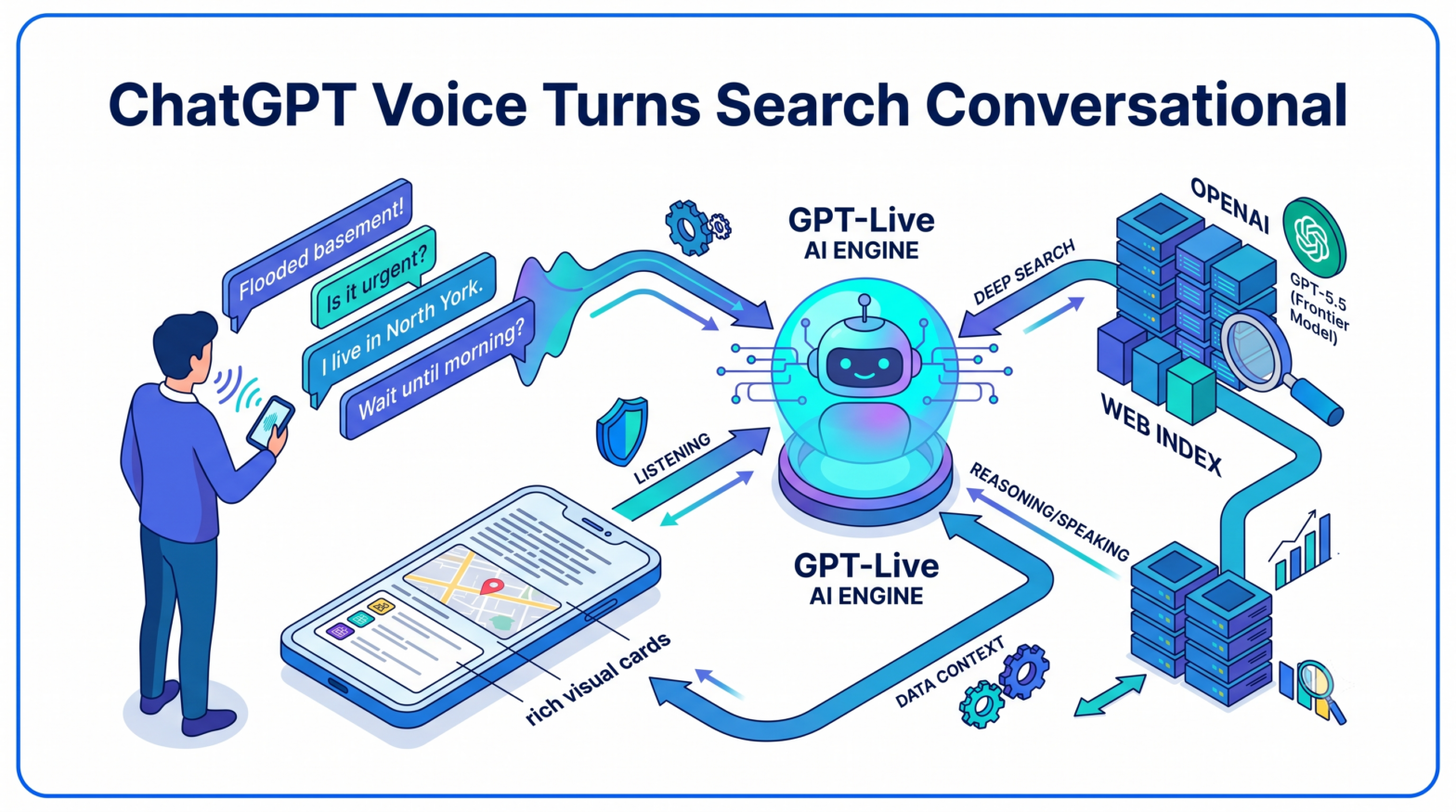
OpenAI is now pushing it into something closer to a live research session, with ChatGPT Voice gaining a new model layer that can listen, respond, search, reason, and keep the conversation moving while more complex work happens in the background. For marketers watching the rise of answer engines, that shift matters because the query is no longer just typed into a box. It is spoken, revised, interrupted, clarified, and shaped in real time.
OpenAI introduced GPT-Live on July 8, 2026, describing it as a new generation of voice models built for more natural human-AI interaction and now powering ChatGPT Voice. The company says the system uses a full-duplex architecture, allowing it to listen and speak at the same time rather than waiting for clean conversational turns.
The Search Query Is Becoming A Conversation
The important change is not only that ChatGPT Voice sounds more natural.
It is that voice now has access to the same kind of deeper search and reasoning behaviour that has made AI search difficult for brands to measure. OpenAI says GPT-Live can delegate questions requiring web search, deeper reasoning, or more complex work to a frontier model in the background, while keeping the live conversation active. At launch, OpenAI says GPT-Live uses GPT-5.5 behind the scenes.
That changes the shape of discovery.
A user may not ask, “best emergency plumber Toronto.” They may say, “My basement drain is backing up and I don’t know if this is urgent.” Then they may interrupt. Add that they live in North York. Ask whether it can wait until morning. Ask what to check before calling someone. Ask which signs point to a sewer line problem.
That is still search.
It just does not look like the old keyword model.
For AI search, the visible query is only part of the retrieval problem. The assistant has to interpret the user’s situation, decide what information is needed, retrieve supporting material, and compress it into a spoken answer that may never produce a traditional click.
GPT-Live Moves Voice Beyond One-And-Done Answers
Older voice search systems were built around clean commands. The user asked a question. The system answered, often by pulling a short result from a search engine, knowledge panel, or app integration.
GPT-Live is designed for messier behaviour.
OpenAI says previous ChatGPT Voice experiences used either cascaded systems, where speech-to-text, language model, and text-to-speech components worked in sequence, or turn-based voice models that waited for the user to stop speaking before responding. GPT-Live is built to process input continuously while generating output, allowing it to pause, listen, interrupt, or invoke a tool many times per second.
That matters for conversational search.
Search intent has never been fixed. Users refine intent as they learn. Traditional SEO usually captures that refinement across multiple searches: one broad query, then a comparison query, then a branded query, then a local or transactional query.
In live voice, those steps can collapse into one conversation.
The assistant may hold context across follow-up questions, remember what the user already said, and change the answer without the user restating the full query. Content that only targets isolated keywords may struggle in that environment because the retrieval layer is trying to resolve a complete scenario, not match a phrase.
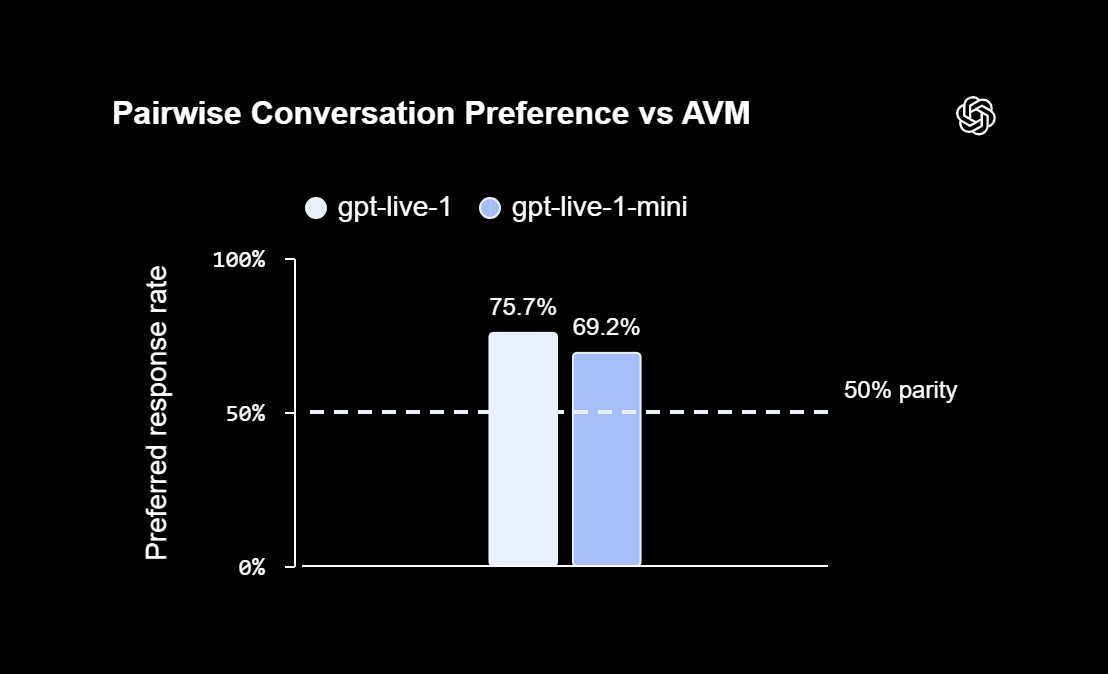
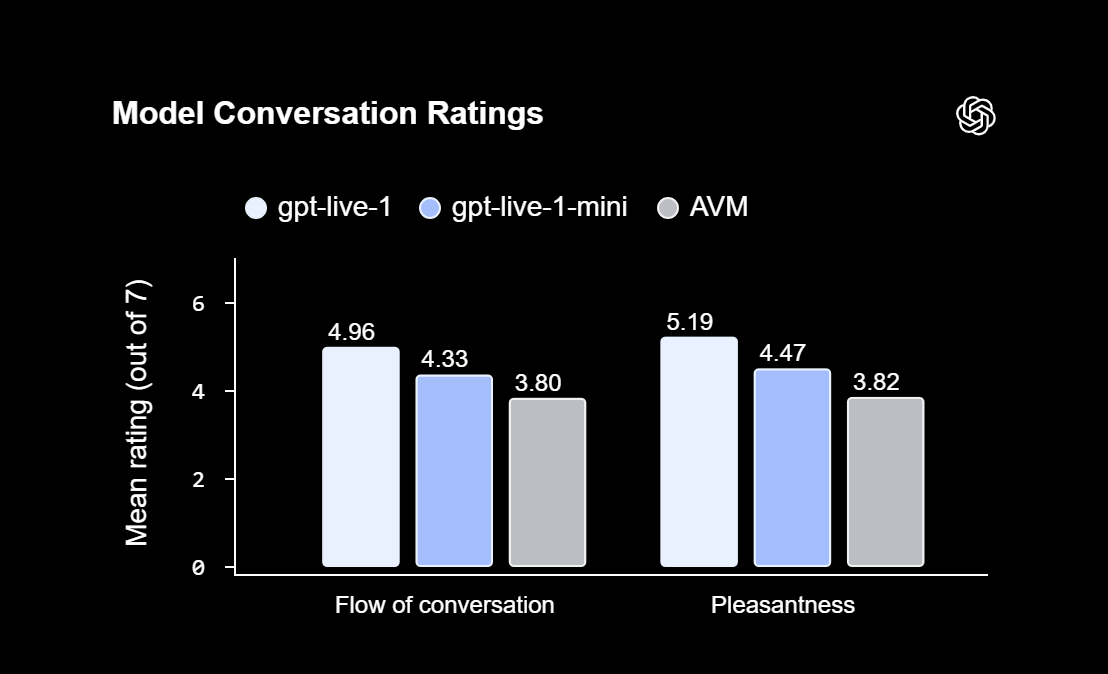
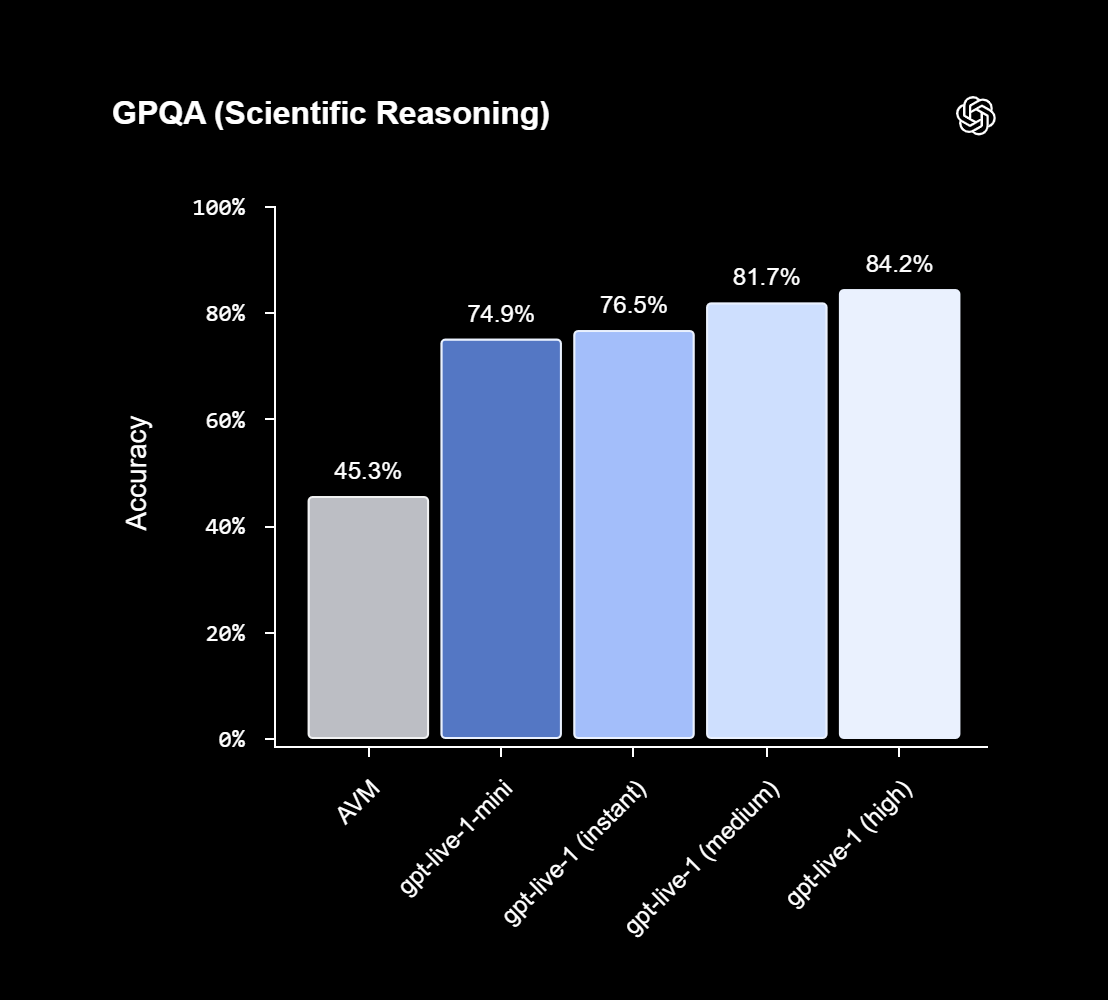
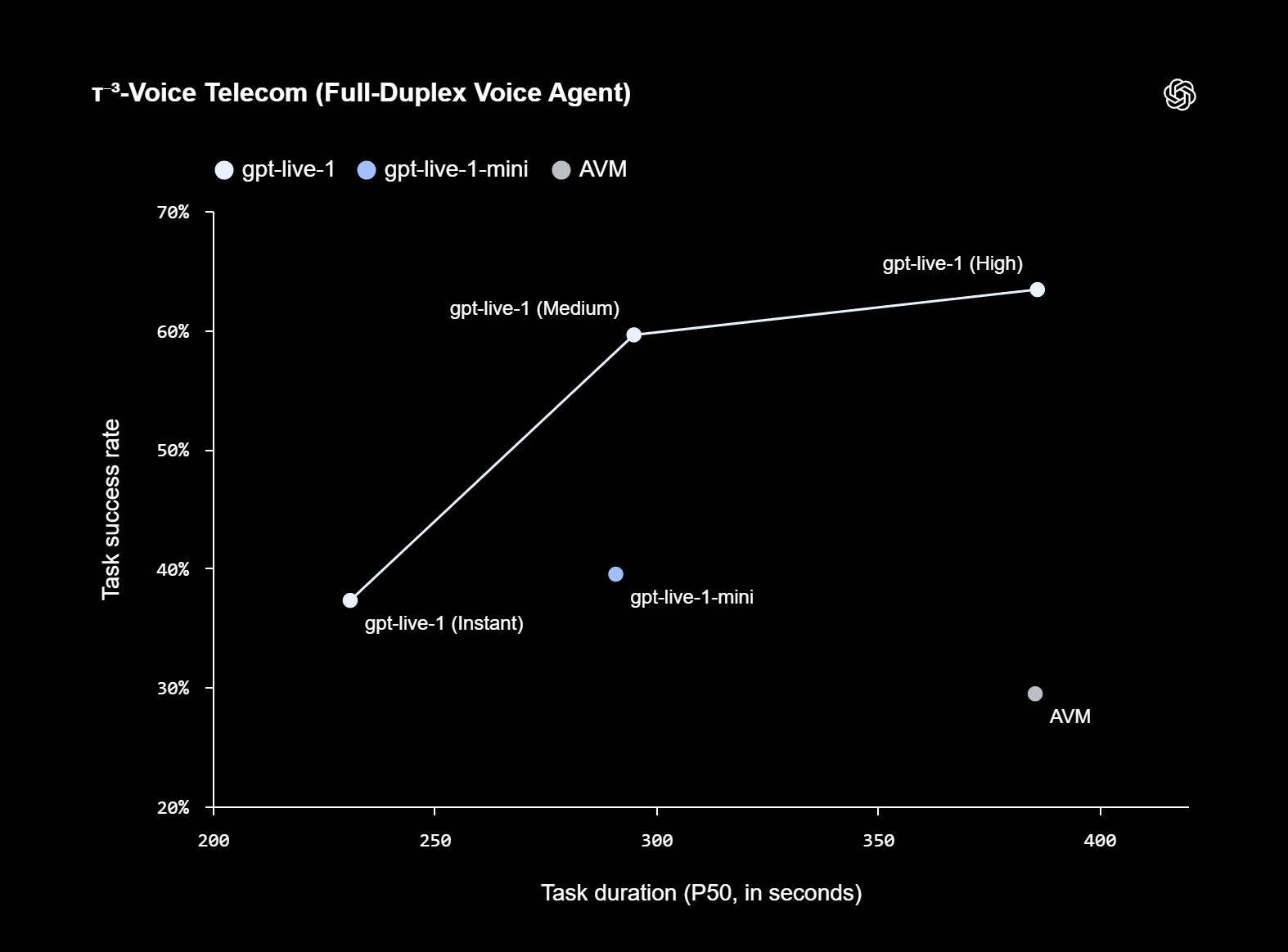
OpenAI also shared performance charts for GPT Live:
 |
 |
 |
 |
AEO Now Has To Account For Spoken Intent
This is where the AEO alert gets loud.
Answer Engine Optimization has already pushed marketers to think beyond rankings and page-one listings. Pages need clear entities, direct answers, structured information, source consistency, and enough authority signals to be used inside AI-generated responses.
Voice raises the bar.
In spoken search, users are more likely to use natural phrasing, incomplete sentences, local context, and follow-up questions. They may not say the service keyword at all. They may describe the problem instead.
That puts pressure on content architecture. A service page, FAQ, article, or product page needs to answer the real-world question behind the query, not just repeat the target phrase. For example, a page about drain cleaning should not only say “drain cleaning” in headings. It should explain symptoms, urgency, risks, service options, cost factors, and when a homeowner should stop using the fixture.
That is the type of material an answer engine can use when forming a response.
For answer engine optimization, the practical challenge is making brand information retrievable, trustworthy, and easy to summarize. The page has to work for humans, crawlers, and AI systems that may extract a direct answer without sending the user to the site first.
Visual Cards Add Another Layer To Voice Search
ChatGPT Voice is not becoming audio-only search.
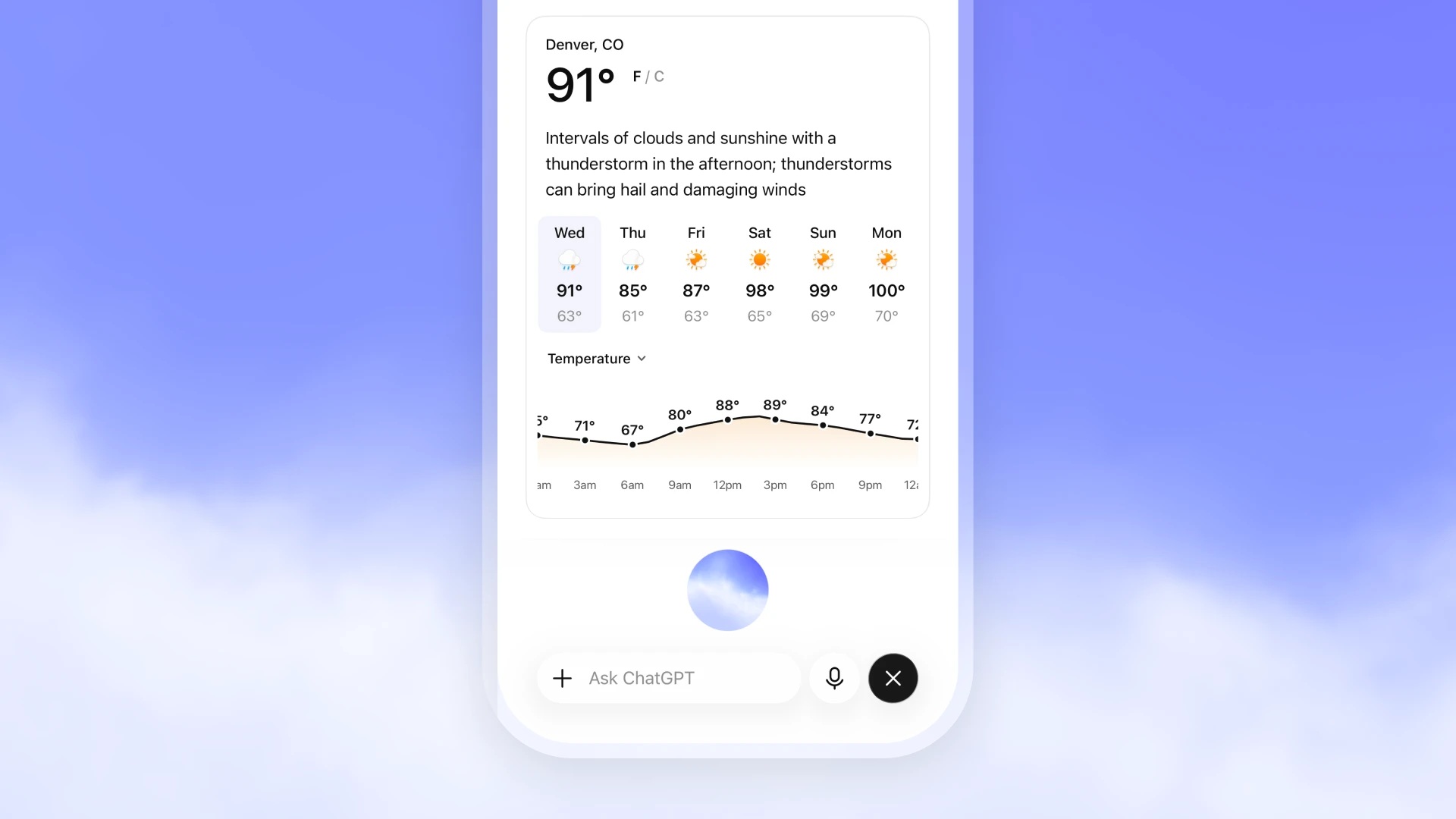
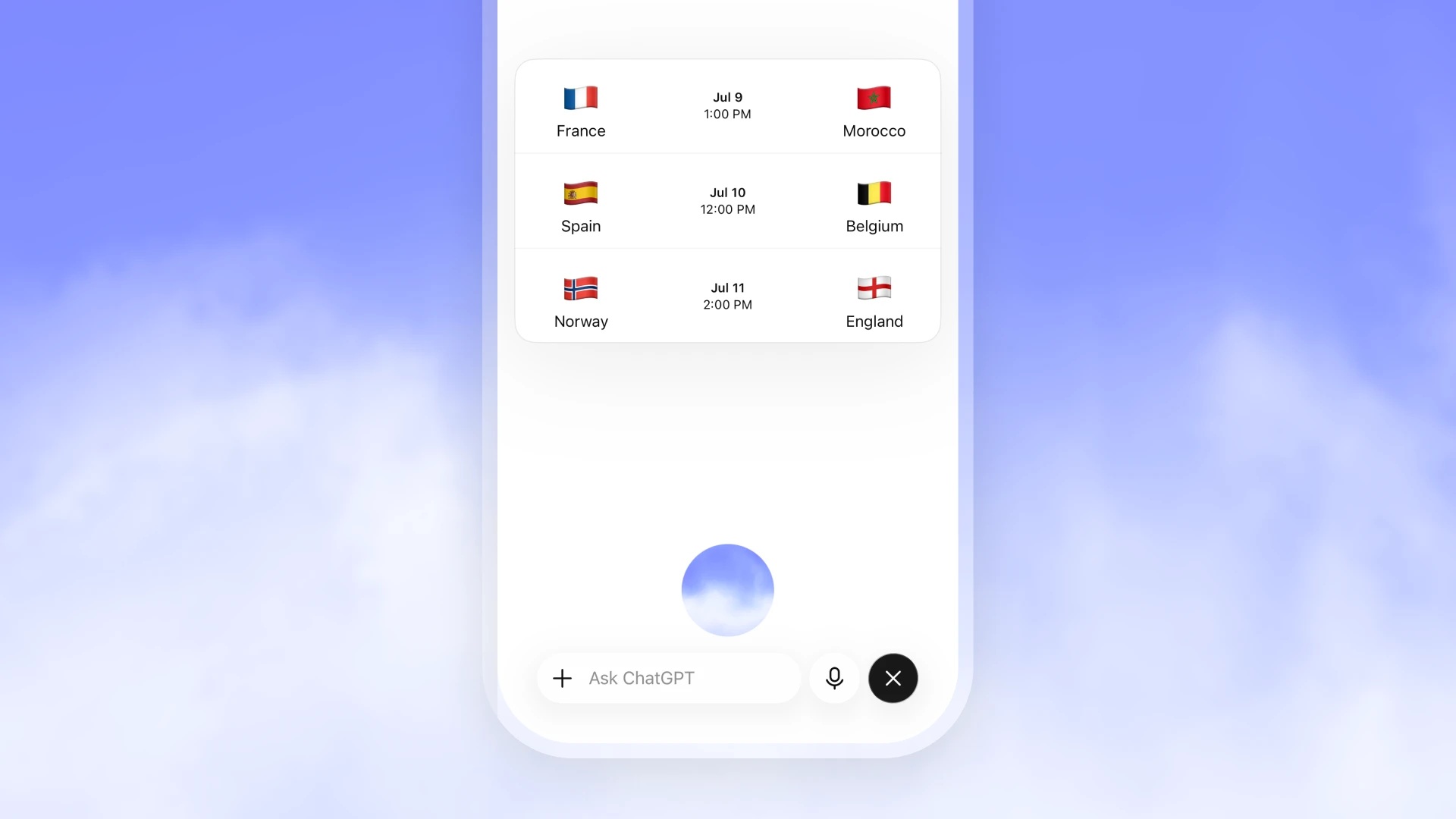
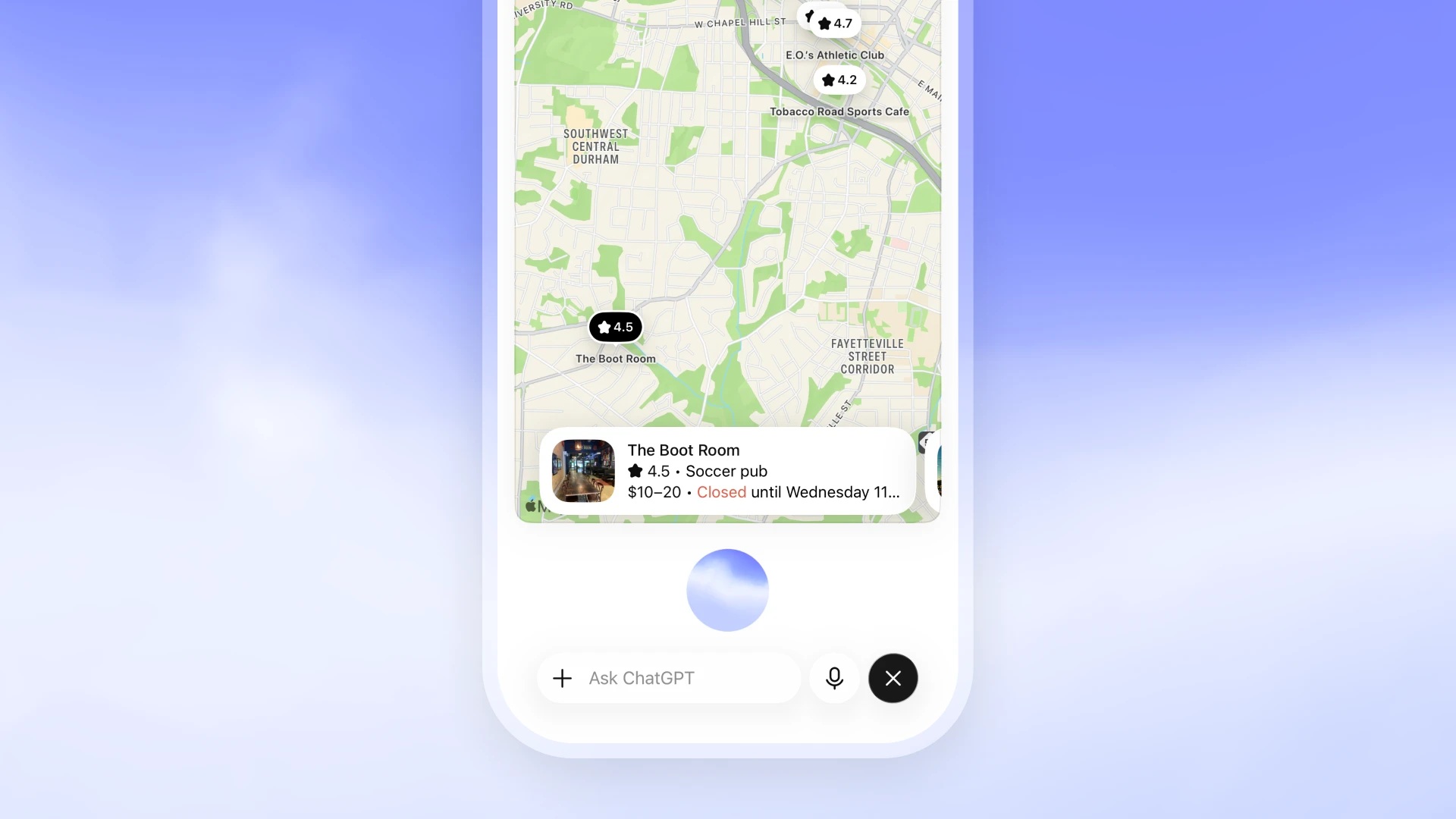
OpenAI says the new experience can show rich visual cards while the user is talking, including cards for weather, stocks, sports, and other topics. The company also says Voice continues to support search, memory, images, and file uploads.
That blend matters because the user journey may become split between spoken guidance and visual confirmation.
A local search could begin as a voice question, continue through a spoken comparison, and then show cards, maps, source links, or structured answers. A product search could move from “Which one should I buy?” to “Show me the cheaper options with better reviews.” A B2B query could become a back-and-forth about pricing, integrations, compliance, and vendor fit.
The interface is no longer just a results page.
For ChatGPT search, that creates a more layered visibility problem. Brands may appear as cited sources, named recommendations, visual cards, follow-up suggestions, or downstream branded searches. Some visibility will be measurable through referral traffic. Some may show up later as branded demand. Some may not be visible in analytics at all.
Marketers Need To Optimize For The Follow-Up Question
The biggest operational change is not that marketers need to write “voice search content.”
That phrase has been around for years, and often it produced shallow FAQ pages built around awkward question keywords.
The stronger move is to build content around decision paths.
If a user asks about a service, what do they usually need to know next? If they ask about a symptom, what causes it? What makes it urgent? What should they avoid doing? What does the provider actually do? What information will the user need before booking? What local constraints, price factors, or eligibility rules change the answer?
Those follow-up questions are now part of the search surface.
Practical implications for marketers and SEOs are straightforward. Content should be structured to answer full user situations, not just rank for isolated keywords. Service pages, FAQs, comparison content, schema markup, author credentials, business details, and clear source-of-truth pages all matter more when AI systems are deciding what to retrieve and summarize. The same fundamentals still apply, but the output is different: being cited, summarized, or recommended inside a voice answer may carry value even when the session does not produce a conventional organic click.
The Rollout Is Global, But Measurement Will Lag
OpenAI says GPT-Live is rolling out globally across iOS, Android, and ChatGPT.com. GPT-Live-1 will become the default model for ChatGPT Voice on Go, Plus, and Pro plans, while GPT-Live-1 mini will become the default for Free users. The company also says developers and enterprises will get API access later.
There are limits at launch. OpenAI says GPT-Live does not yet support voice with video or screen sharing in ChatGPT, though those capabilities are planned. The company also notes that performance may vary by language, including non-native accents or fluency gaps in some cases.
That makes the near-term impact uneven.
English-language markets, mobile-heavy users, local service searches, travel queries, shopping research, health-adjacent informational searches, and hands-free use cases are likely to feel the shift first. Measurement will be harder. Analytics platforms were built around sessions, clicks, landing pages, and referrers, not spoken multi-turn conversations where an AI assistant may retrieve, synthesize, and answer without a visit.
Search is not disappearing into voice.
It is being absorbed into a live interface where the user can ask, interrupt, clarify, and keep going. For brands, the next visibility fight is not only whether a page ranks. It is whether the answer engine can understand it well enough to speak it back.