Email marketing is one of the most effective ways to attract and convert leads in your sales pipeline. In fact, email marketers typically generate $40 for every $1 spent on their campaigns.
Businesses in any industry, from tech to marketing, can benefit significantly from email marketing campaigns. In particular, SaaS companies can use email marketing to attract, convert, and retain customers while driving long-term recurring revenue growth.
The challenge is knowing how to build and scale a successful campaign from scratch.
Fortunately, we've put together this guide to help you understand everything there is to know about running a successful SaaS email marketing campaign.
What is a SaaS Email Marketing Strategy?
A SaaS email marketing strategy is a plan of action for software-as-a-service (SaaS) companies. In principle, email marketing campaigns look the same across different industries.
However, the details of these campaigns may vary from industry to industry. For SaaS companies, an email marketing campaign is designed not just to convert clients but also to keep them satisfied in the long term.
With email marketing, SaaS company leaders can nurture leads with demand-generation content until they are ready to buy. Once that happens, they can remain on the email list for potential cross-selling and upselling opportunities.
Here's a great example from Grammarly about upgrading to the premium version of the app.
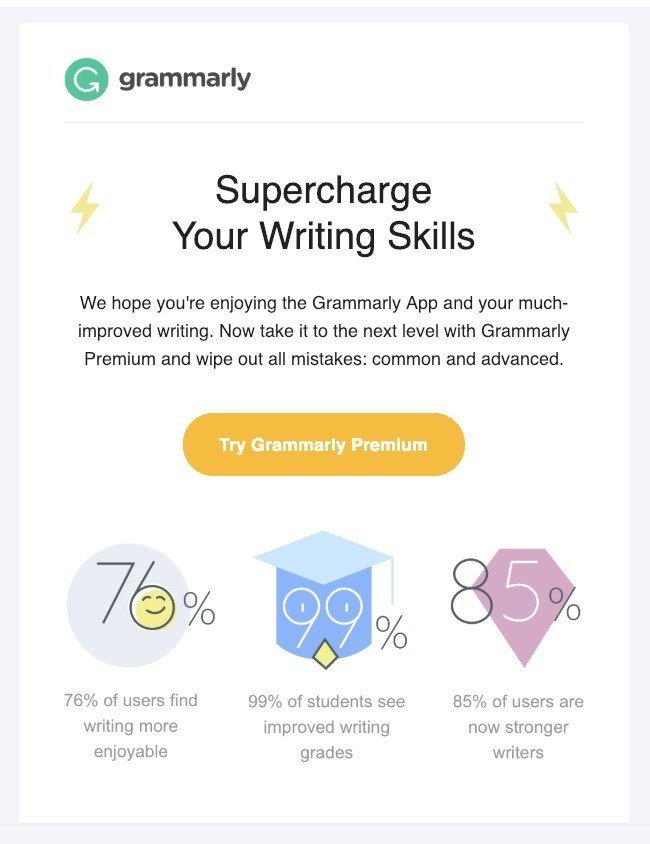
In short, email marketing is all about retaining prospects and customers in a continual sales funnel to boost company profits. If you're ready to nurture leads and boost your bottom line, we highly recommend creating a SaaS email marketing strategy for your business.
Why is Email Marketing Important for SaaS Businesses?
According to the SEO newsletter, email marketing is especially beneficial for SaaS businesses because of their unique business models. Unlike other businesses, SaaS businesses are profitable only when they can successfully convert and retain customers.
Losing customers to competitors can damage your reputation and drive down profits, especially in competitive industries like marketing and tech. Email marketing helps you send relevant and engaging messages to your target audience.
By doing so, you can keep your audience engaged and maintain recurring revenue growth. Here are some more reasons email marketing is important for SaaS businesses:
- Email marketing provides better insights into subscriber behavior, touchpoints, and preferences.
- Email marketers can use metrics such as open rate, click-through rate (CTR), and churn to understand their audience better.
- Email marketing boosts brand awareness and the adoption of your product or services.
Email marketing is so much more than a weekly newsletter. And it can help you do much more than build up your email list for bragging rights. This nearly underwhelming marketing strategy can drive substantial marketing results and foster loyal customer relationships with your brand.
9 SaaS Email Marketing Strategies to Build Your Plan
Once your foundation is in place, the next step is implementing email marketing strategies that improve engagement, retention, and conversions. Here are nine tried-and-true SaaS email marketing strategies that convert.
1. Use Lead Magnets
Lead magnets are the backbone of any successful email marketing campaign. A lead magnet is any marketing collateral that you can use to drive newsletter signups.
You can think of a lead magnet as an ebook, whitepaper, study, or webinar that promises helpful content in exchange for an email address. Traditionally, lead magnets have been at the epicenter, driving email subscriber growth.
To manage all the contacts generated by lead magnets, it is recommended to use a customer data platform to streamline a process that would otherwise be long and difficult to handle by hand.
Here's a simple example from OptinMonster that offers a valuable guide on converting visitors into subscribers. Ironic, right?
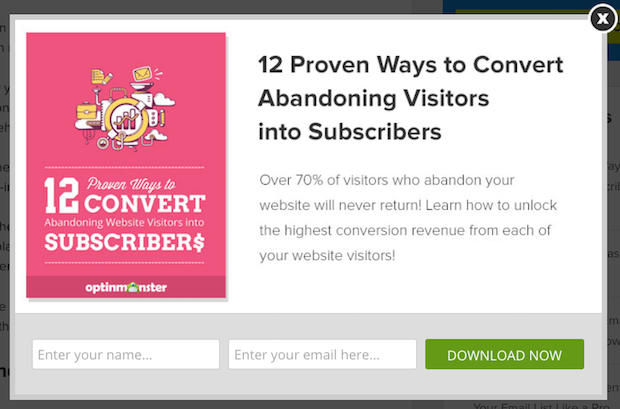
You can also invest significant resources in creating content for your blogs and resource centers. But typically, without a lead magnet, it's not enough to just place an email signup form on your blog and hope people sign up without any incentive.
That's where gated content (webinars and ebooks) that requires email list signups in exchange for VIP content comes into play.
For example, if you're a marketing influencer, you can create a playbook for mastering Google Ads that contains real-world examples and case studies. Your audience would be keen to read this playbook and would happily sign up for your email list to unlock access.
2. Send Product Updates and Feature Releases
Your email newsletter is the perfect place to send updates on new products and features. In fact, this is a key part of keeping your customers engaged, informed, and satisfied.
For example, if you're updating your product's pricing, you can share the news on your blog and in your email newsletter. This can help keep your customers informed about your product and decrease customer churn.
Or you can send out new and exciting features after incorporating customer feedback.
In this example, Reword shares an existing update: the desktop application is ready to rock and roll, speeding up the writing experience.
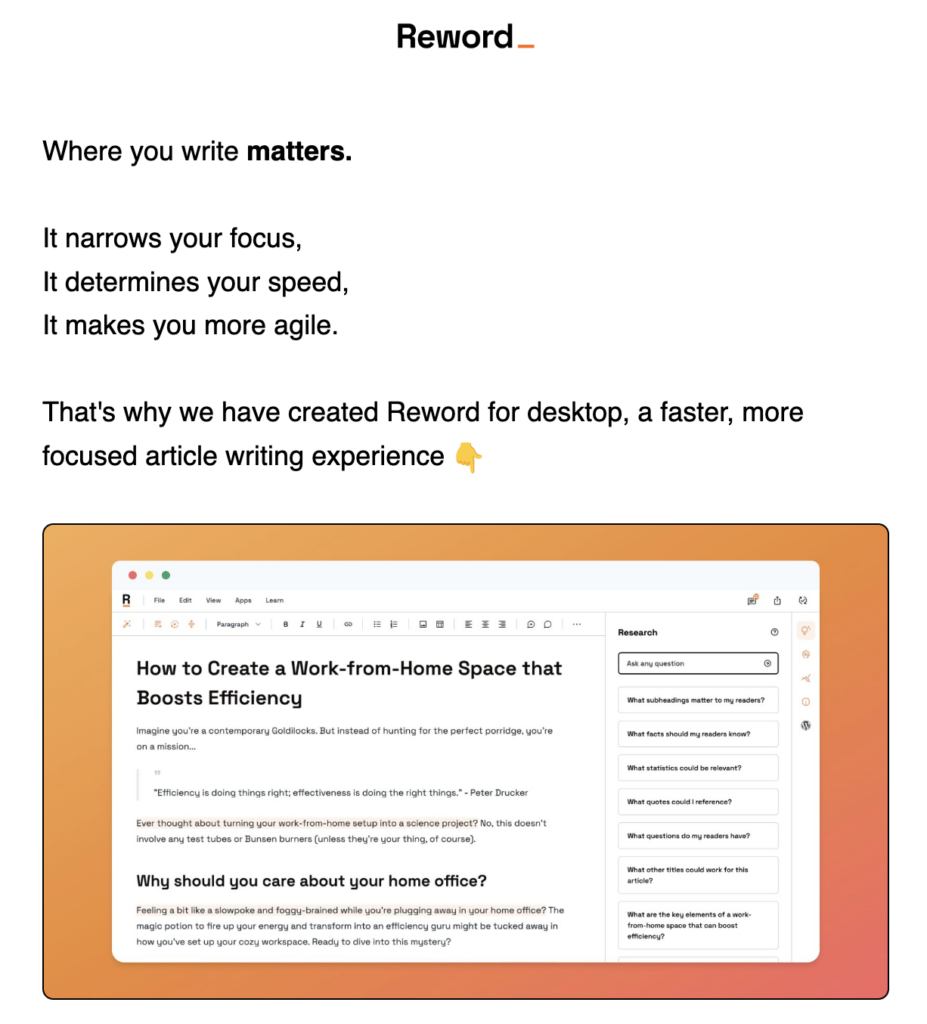
Screenshot provided by author
Now, users are excited to check out what this new desktop feature offers.
3. Promote Customer Success Stories
If you're short on ideas for your email list, you can always try promoting customer success stories.
Why? Showcasing how well your current customers use your products and services can drive more interest from prospects, pushing them closer to a purchase decision. Think of it as a form of social proof.
On top of that, you can remind current customers of the potential they can achieve with your product while building stronger trust with prospective buyers.
To further strengthen trust, SaaS companies can use review request software in post-purchase or milestone-triggered emails to automatically collect fresh customer feedback. Featuring recent testimonials and ratings in your campaigns adds stronger social proof and can reduce friction in the buying journey.
4. Take a Personalized Marketing Approach
The key ingredient to any successful email marketing campaign is email personalization. Personalization is the process of making your campaign relevant to individual subscribers.
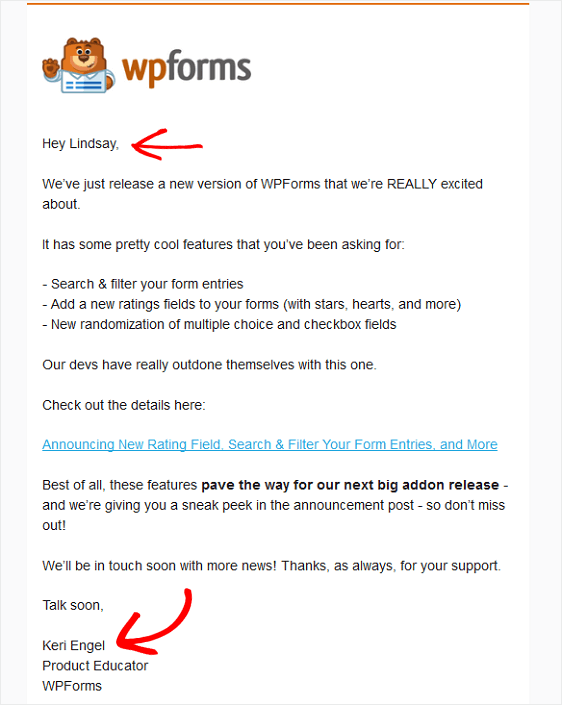
To do that, you'll need to segment your email list into lookalike audiences using customer data and behavioural insights. For example, if your email list is full of executives, you can segment them by their position in your sales funnel.
Executives who know little about your unique selling proposition may end up in the automated segment that receives demand-generation content.
On the other hand, executives ready to convert can be segmented and receive case studies and customer success stories. Giving each email subscriber access to relevant content is the best way to drive both lead generation and conversions.
Strong personalization also improves long-term engagement by making every email feel more relevant to the subscriber’s needs and stage in the customer journey.
5. Send Customer Education Emails
Competition for customer attention is constant. And every business is vying for a slice of consumer attention.
With that, it's not just enough to offer a great product. You must also educate your customers about its value, functionality, and relevance.
And email marketing provides an unrivalled platform for customer education. Here's why educating your audience should be a top priority and how you can nail it.
Before you send out any educational content, take a step back and ask: “Why should my customer care?” Remember, the goal is to understand how your product solves their problems.
The beauty of email is that it can deliver digestible pieces of information. Instead of overwhelming your customers with lengthy manuals, break down your tutorials into smaller chunks.
Use a mix of graphics, videos, and text to cater to different learning preferences. Need inspiration? Take a peek at this educational email from Copy.ai:
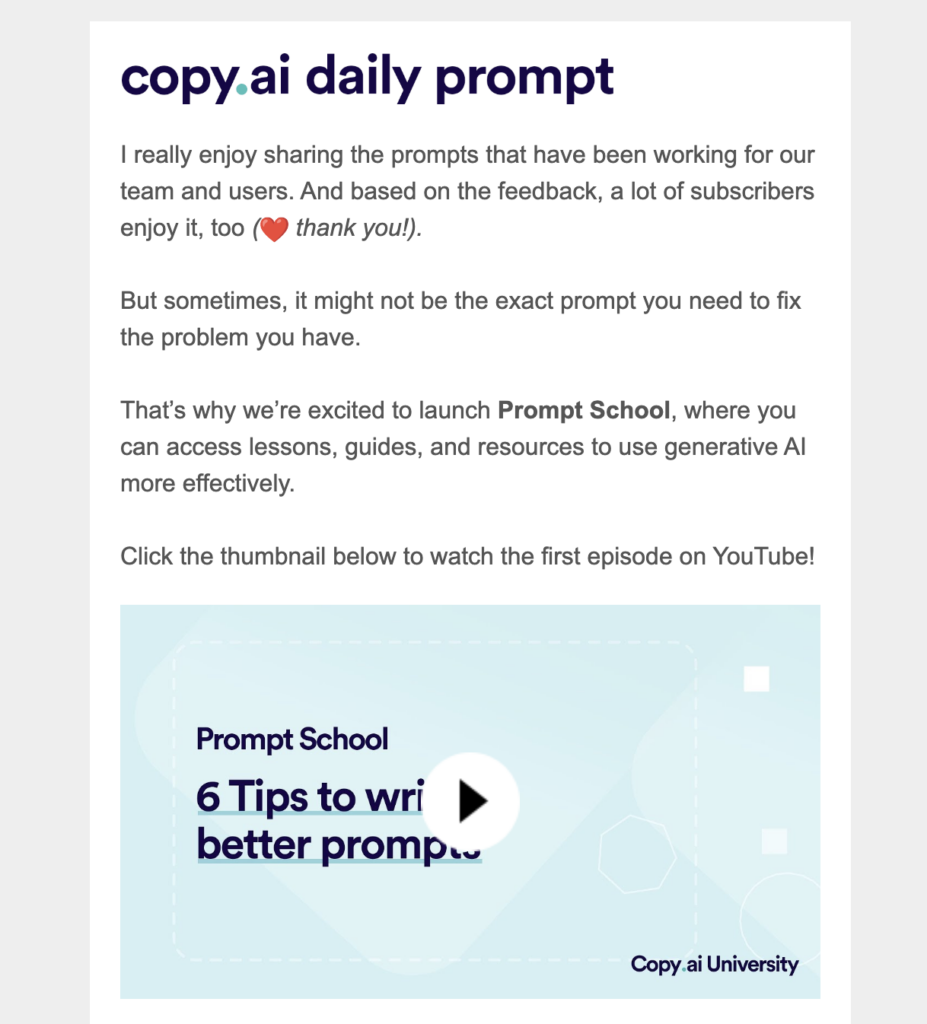
Screenshot provided by author
They embed a YouTube video in their email to promote their new prompt school on writing better prompts. It's a great way to teach their recipients about their product and keep them engaged.
6. Set Up Drip Campaigns for User Onboarding
Drip campaigns, often referred to as “nurture campaigns,” are a sequence of prewritten emails sent to subscribers.
SaaS companies usually send these automations to users over a set period or in response to specific triggers. And for SaaS businesses, these campaigns are especially crucial during the onboarding phase for new users. According to Wyzowl research, 86% of users say they’re more likely to stay loyal to companies that invest in onboarding and educational content.
For SaaS companies, onboarding emails also play a direct role in reducing early-stage churn. Users who quickly learn to integrate a product into their workflow are significantly more likely to become long-term subscribers rather than abandon the platform after the trial period.
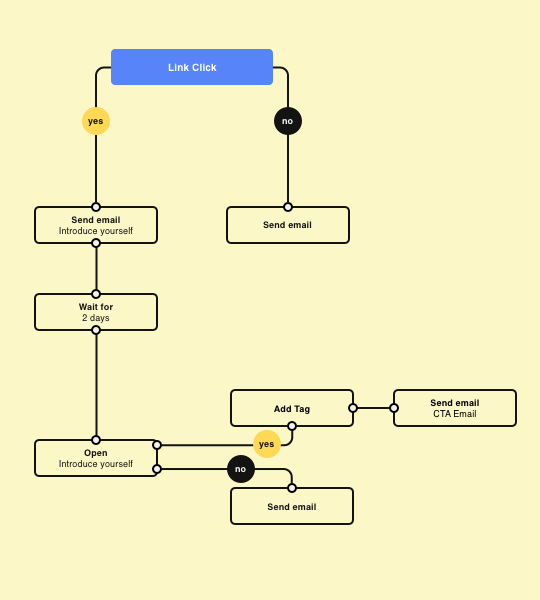
When a user signs up for your SaaS product, they're indicating interest. But this doesn't guarantee long-term engagement or even that they'll fully understand or use your tool's full potential.
Instead of leaving users to navigate your software on their own, drip emails can act as a virtual guide. Here, you can highlight essential features, offer tips, and suggest optimal ways of using your product.
The automated nature of drip campaigns provides users with the right information at the right time. For instance, immediately after signup, you might send users a welcome email. A couple of days later, an email highlighting key features. A month later, an invitation to a webinar (more on that next).
Beyond just retaining users, drip campaigns aim to increase product adoption rates. This means ensuring that users aren't just sporadically using the software but fully integrating it into their workflows.
And don't be afraid to incorporate tools into your drip campaigns to further enhance your personalization strategy. For example, you can adapt your email copy for different stages of the customer journey to improve engagement and relevance.
7. Promote Webinars and Live Demos
Once users understand the basics of your product through onboarding emails, interactive content can further deepen engagement.
Showing is often more compelling than telling.
Webinars and live demos provide an interactive platform to showcase your product's capabilities in real time. It's the go-to format for answering questions and addressing concerns as they arise.
By offering a hands-on look at your software, you not only demystify its features but also empower potential and existing users with a deeper understanding of its functionalities.
Your subscribers, whether they're prospects, new users, or long-term customers, can benefit from these sessions.
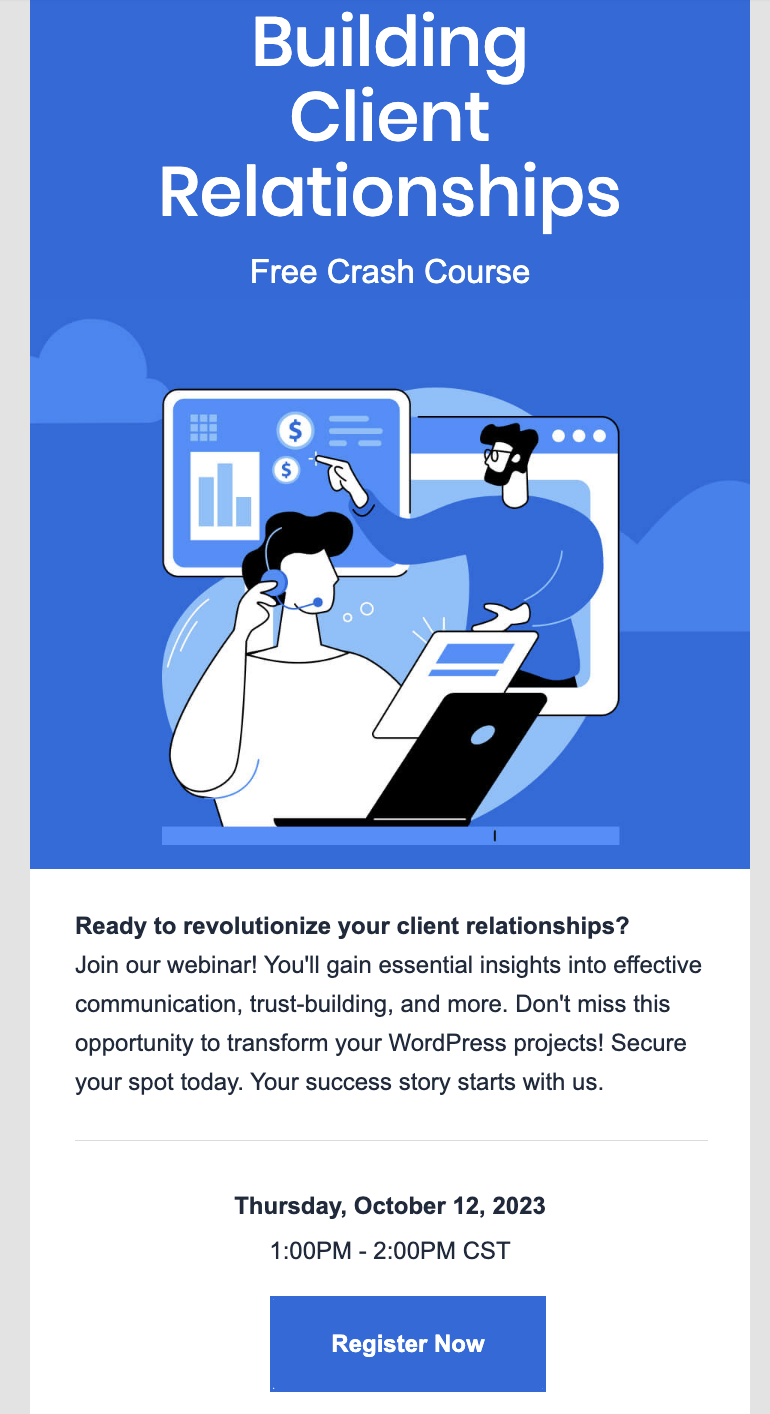
A well-timed, engaging email invitation with clear details on the webinar or demo topic, date, and registration process can drive attendance and reinforce your commitment to customer education and success.
Bluehost uses this approach to boost product adoption rates but also fosters a sense of community and trust among its user base.
Screenshot provided by author
8. Test Cross-sell and Upsell Opportunities
The relationship with a customer doesn't end once they've subscribed to your service.
There's a huge potential in cross-selling and upselling. So, what's the difference? Cross-selling refers to promoting complementary products or features. Meanwhile, upselling aims to encourage customers to upgrade to a more premium version of your service.
Email marketing is an excellent channel for testing these opportunities.
For SaaS brands with subscription models, even small increases in account expansion revenue can significantly improve customer lifetime value without increasing acquisition costs.
You can tailor email campaigns to highlight specific features or services they haven't explored yet.
For example, if a customer is using a basic version of your software, an email highlighting the benefits and additional features of the premium version could pique their interest. Similarly, if they're heavily using one module, suggesting a complementary module could enhance their overall experience.
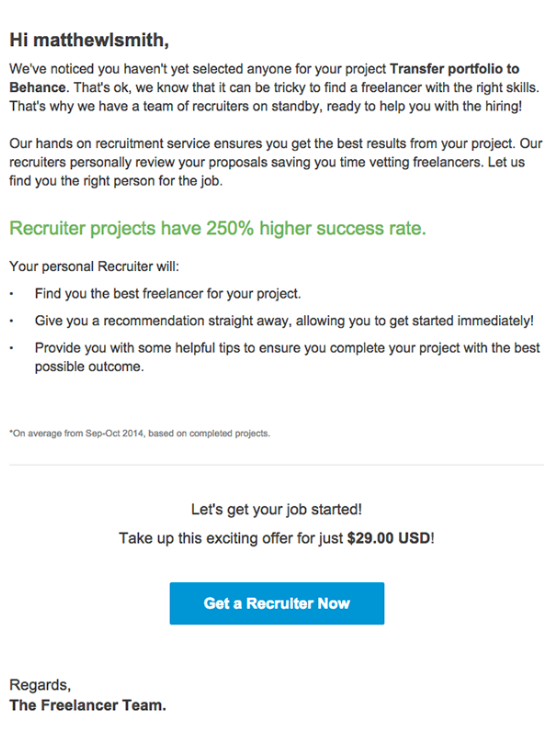
However, bombarding customers with relentless sales pitches can be off-putting. Instead, frame these opportunities as ways to add value to their current experience.
9. Leverage Behavior-triggered Emails
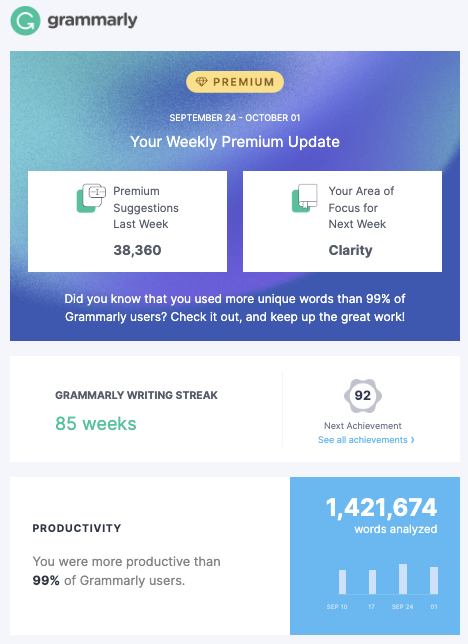
Cold email statistics show that rather than sending generic, one-size-fits-all messages, these emails respond to specific actions or inactions a user takes. That makes them timely, relevant, and significantly more impactful.
For instance, if a user explores a particular feature but doesn't fully activate or use it, a behavior-triggered email could offer additional resources, tutorials, or support to aid them.
On the other hand, if they've achieved a milestone in the software, a congratulatory email with suggestions for next steps can motivate further engagement (as with Grammarly).
Screenshot provided by author
How To Build a Successful SaaS Email Marketing Strategy
Now that you know the strategies you need to follow to master SaaS email marketing, it's time to learn the steps to take to build a campaign.
Set Clear Goals
Failing to plan is planning to fail. Every successful email marketing campaign has goals to achieve. Though it just doesn't stop there with setting clear goals.
You need to create a system to measure progress toward your goals. That's where key performance indicators (KPIs) come in. KPIs are measurable objectives that show progress toward a goal.
For example, if your goal is to improve your open rate and email signups, here's how your KPIs should look:
- Improve open rate by 15% in two months
- Increase email subscribers by 200% in three months
KPIs are much more specific than goals and make it possible for you to be clear on how well your campaign is advancing.
Plan the Triggers
Triggers are a part of an automated email marketing campaign. A trigger is a mechanism that causes a workflow to happen. For example, when someone signs up for your email list, a trigger happens, and they're sent a welcome email to confirm their signup.
The best way to plan triggers is to create an email sequence. You can start by defining the journey a new subscriber takes to eventually become a customer. Once you create a map of your customer journey, you can create email templates for each touchpoint.
This setup includes designing a welcome email, offers, and a win-back email if a prospect stops engaging with your campaign.
Master Account Activation Emails
First impressions matter in email marketing. Your welcome email is often the first direct interaction subscribers have with your brand, making it a critical opportunity to build trust and encourage long-term engagement.
In other words, your welcome email may be the most important part of your email marketing campaign. People receive hundreds of emails every day. Welcome emails stand out because they remind new subscribers what they signed up for and what to expect.
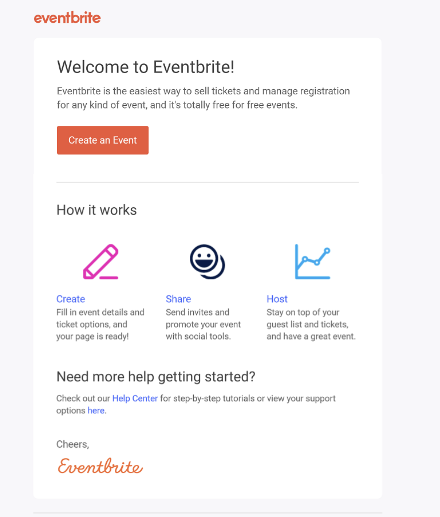
On top of that, welcome emails can qualify new subscribers by having them confirm their interest in joining an email list. If a person isn't engaged enough to click a welcome email to confirm their interest, it's safe to say they probably won't engage with your campaign at all.
Create Different Audience Segments
The success of your email marketing campaign will ultimately depend on your email segments. How specific are they? How effective are your segments? Are you putting the right subscribers into lookalike groups?
These are all the questions you need to answer to ensure your segments are correct. Ideally, you should base your segments on demographics to create lookalike audiences.
The more your audiences look alike, the better you can tailor your email content to best suit them.
Share Interesting Email Content
Creating captivating email content is vital for SaaS companies. Not every email should solely focus on promotions or software features.
Instead, bring value through educational resources, insights, and tips that resonate with your subscribers. For example, SaaS companies can share onboarding tutorials, workflow tips, industry insights, or product best practices that help subscribers solve real problems.
Consider reviewing campaign performance regularly to better understand which types of content resonate most with your audience. These agencies specialize in understanding what content connects with audiences. They can guide your SaaS company in curating and distributing emails that not only capture attention but also establish trust and build long-lasting customer relationships.
By intertwining informative content with your product's narrative, you'll create deeper connections and drive more conversions.
Choose the Right Email Marketing Software
Very few companies send manual emails anymore. The most successful email marketers use dedicated email marketing software to automate campaigns, segment audiences, and analyze performance.
Here are some other factors to consider when choosing your go-to email marketing software:
- Consider the software's price point. How much will you pay monthly? Will the plan allow you to scale cost-effectively as your email list grows?
- What are the base and custom features? Base features are similar across competing software. Custom features are unique. Knowing the difference can help you choose a value-driven product.
- What's their reputation like? Have you checked online and product reviews? This is important to avoid buyer's remorse.
Following these tips will put you in the right position to choose the software that's right for you.
Analyze Your Email Performance
None of the strategies we've mentioned will mean much unless you track your campaign's performance regularly. Email marketing can deliver high ROI, but you still need to allocate company resources to keep your campaign running.
To make sure you're not sending valuable company dollars down the drain, you should create email campaign reports at least every month. Analyze key metrics and analytics such as:
- Open rate: The percentage of subscribers who open your emails.
- Bounce rate: The percentage of subscribers who open your emails and then immediately close them.
- Click-through rate (CTR): A ratio that estimates how many people open an email and click a call-to-action (CTA).
- Unsubscribe Rate: The percentage of people who unsubscribe from your email list.
Watching these metrics will help optimize your campaign and reduce your campaign spend.
Final Words
Successful SaaS email marketing isn't about sending more emails. It's about getting the right message in front of the right person at the right stage of their journey.
From onboarding and retention to upsells and customer education, the strategies above can help SaaS brands build stronger relationships and more predictable revenue over time.
If you want email marketing to do more for acquisition and retention, TechWyse can help. They work with SaaS brands to build digital marketing strategies that bring email, SEO, content, and conversion optimization together into something that actually scales.