
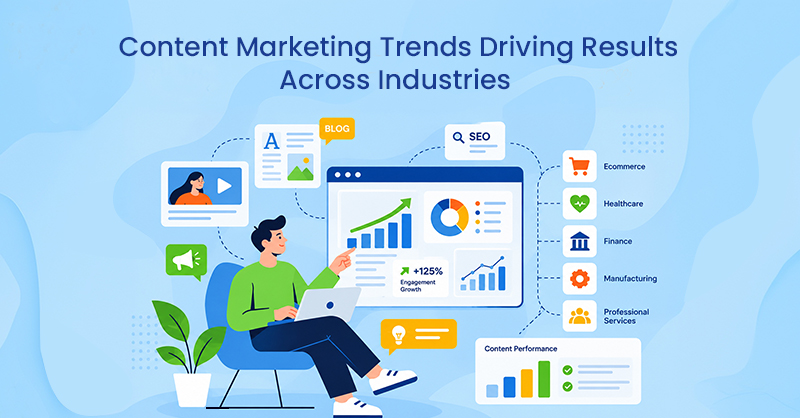
Content marketing looks different from what it did even a year ago. AI is increasingly shaping how people discover brands, search engines answer questions before readers click a single link, and audiences trust real voices over polished corporate copy.
Brands that adapt to these changes pull ahead. The ones that stick to old playbooks watch their traffic and engagement quietly fade.
This shift touches every industry, from e-commerce to local services to SaaS. Many tactics that worked in 2025 don’t carry the same weight now, and marketers who ignore that reality lose ground to competitors who don’t.
With that in mind, we’ll break down the trends actually driving results this year. Each trend comes with a real-world example, so you can see exactly how brands put these ideas into practice and get a clear sense of what to try next.
Expertise Is Becoming a Competitive Content Advantage
Search engines and AI tools now reward content that proves its accuracy. Readers face an overload of generic advice, so they gravitate toward brands that show real credentials behind their claims.
This changes how audiences pick sources to trust, and it changes how AI systems choose which content to cite. Publishers who back their work with verified expertise gain visibility that generic content can’t match.
Brands can build this kind of trust with a few concrete steps:
- Bring in a subject-matter expert to write or review your content.
- List their credentials clearly on the page.
- Cite primary sources like studies, government data, or industry reports instead of paraphrasing other blogs.
- Update older articles when new information becomes available, and note the date of the last review.
- Add author bios that explain relevant experience, since both readers and AI systems use this context to judge credibility.
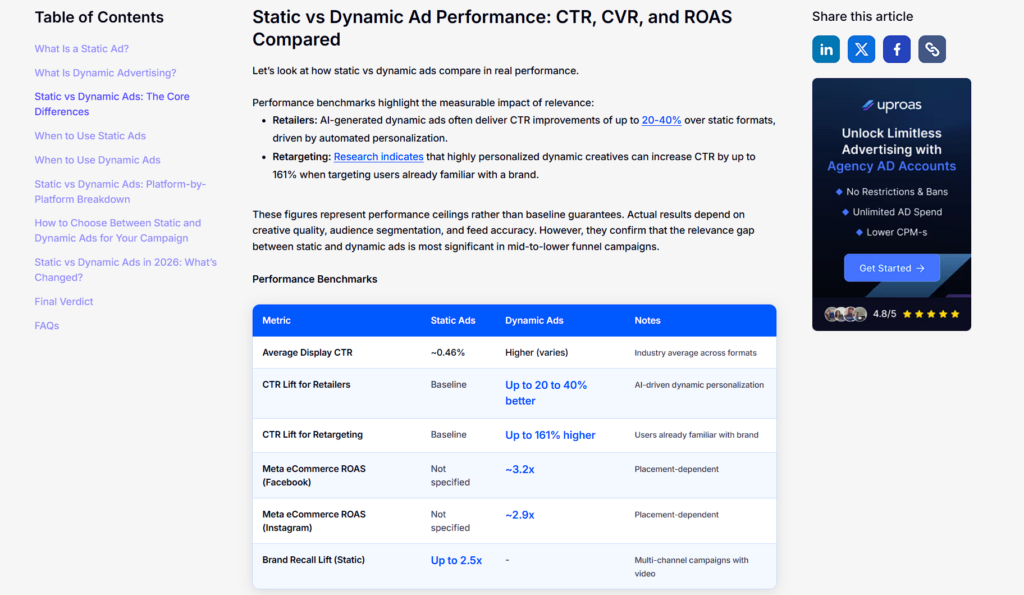
Uproas, a provider of premium agency ad accounts for Meta, Google, and TikTok, shows this approach in action.
Their post on static versus dynamic ads goes far past defining the two formats. It breaks down when each one performs better, backs every claim with research, and gives readers a clear framework for choosing the right format for their campaign goals.
The depth of the guidance does the selling. By the time readers finish, they already see Uproas as the brand that understands advertising at a technical level, and exploring Uproas’s account offers feels like a natural next step.
This structure gives readers confidence in what they’re reading, and it gives AI tools a clear signal that the content comes from a credible, well-sourced place. Brands facing high-stakes topics, or any topic where trust drives decisions, can follow this same model to stand out.
Source: uproas.io
Interactive Content Is Increasing Audience Engagement
Static articles tell readers what to think. Interactive content lets them find out for themselves. That difference keeps people on the page longer.
Quizzes, calculators, configurators, and other hands-on formats turn a one-way read into a two-way exchange, which pulls readers deeper into a topic instead of letting them skim and leave. This matters for product education too, since people remember choices they make far better than facts they’re told.
Interactive formats deliver over 52% higher engagement rates than static content, a gap wide enough to change how brands plan their content calendars.
Adding interactivity doesn’t require a big engineering budget:
- Start with a simple quiz that helps visitors pick between product options based on their preferences.
- Build a calculator that answers a specific question your audience already has, like cost, sizing, or timing.
- Let readers filter or sort a list instead of scrolling through a static one.
- Whatever format you choose, connect it directly to your product line, so exploration naturally leads to a decision.
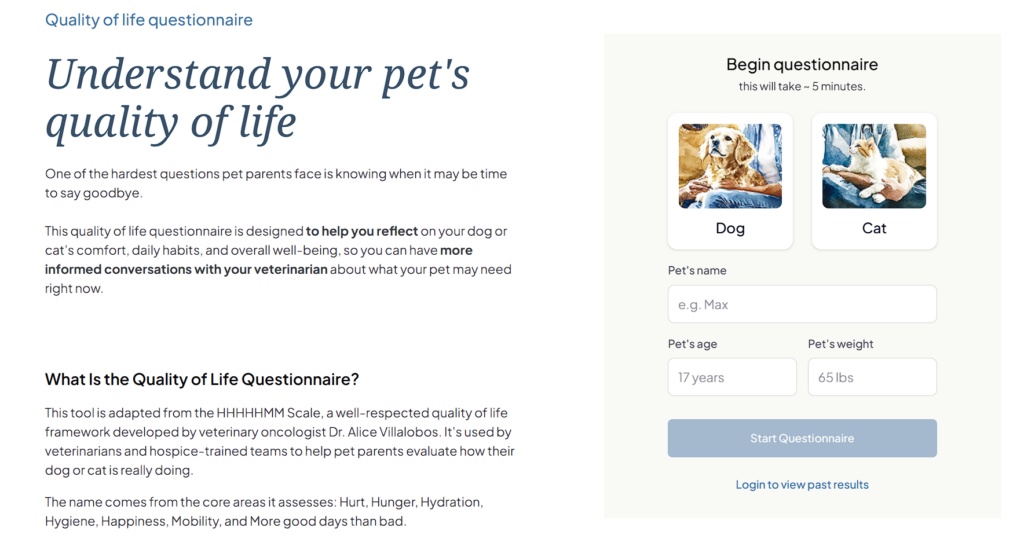
CodaPet, a service that provides in-home pet euthanasia, applies this well with its quality of life questionnaire.
The tool asks pet owners straightforward questions about their dog or cat’s comfort, daily habits, and general well-being. It tells users upfront that the questionnaire takes five minutes, then delivers results that help owners prepare for a more informed conversation with their veterinarian.
The experience turns a difficult, emotional decision into a guided process, giving families clarity when they need it most and showing how interactive content can serve even the most sensitive topics.
Source: codapet.com
Content That Makes Product Discovery Feel Natural
Nobody wants to feel sold to, and pushy CTAs tend to send readers straight to the back button.
Successful brands teach first and sell second, letting genuine usefulness do the work that a sales pitch used to do.
Readers stay because they’re learning something, and by the time they reach the product, it feels like a natural next step rather than an interruption.
Here’s how to build this kind of content:
- Map the real questions your audience asks before they buy.
- Create reference content, like glossaries, comparison guides, or how-to explainers, that answers those questions fully, even for people who aren’t ready to purchase yet.
- Link naturally to relevant products within that content instead of bolting on a sales pitch at the end.
- Keep the tone informative throughout, and let curiosity, not urgency, pull readers toward what you sell.
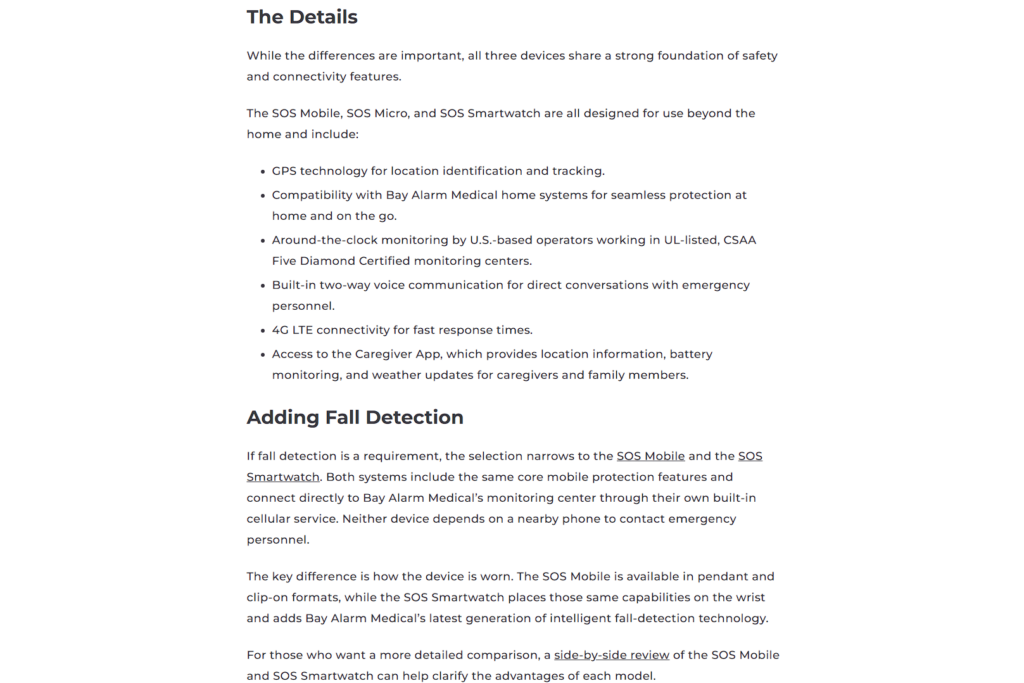
Bay Alarm Medical, a company that makes medical alert systems for seniors and people with health concerns, demonstrates this approach clearly. Its guide comparing the SOS Micro, SOS Mobile, and SOS Smartwatch breaks down real differences that matter, like fall detection availability, battery life, and how each device is worn.
The SOS Micro skips fall detection by design, since wrist-worn devices can mistake normal arm movement for a fall, and the guide explains that tradeoff honestly instead of glossing over it. It walks through which device suits an active lifestyle, which suits someone who forgets to charge devices often, and which fits a person who wants a low-profile design.
Nothing in this post pushes a sale. It simply gives readers what they need to choose confidently. That confidence naturally leads them toward a Bay Alarm Medical product.
Source: bayalarmmedical.com
Localized Content Is Driving Higher-Intent Traffic
Broad market articles cast a wide net, but they rarely answer the question someone actually types into a search bar while researching a specific street, school district, or neighbourhood.
Localized content wins that moment because it speaks directly to intent, while a generic “guide to buying a home” or “best pizza in the state” simply can’t compete on specifics.
Search engines and AI tools favour this kind of precision too, since detailed local information signals firsthand knowledge that broader content lacks.
Here’s how to build localized content:
- Pick areas your business genuinely knows well, whether that’s a neighbourhood, a city district, or a service region.
- Include details a resident would know, like local dining spots, commute patterns, seasonal events, price trends, or amenities unique to that area.
- Update these pages regularly, since local businesses close, prices shift, and new developments appear.
- Add real statistics and named landmarks instead of vague descriptions, since specificity is what separates a useful local guide from a filler page.
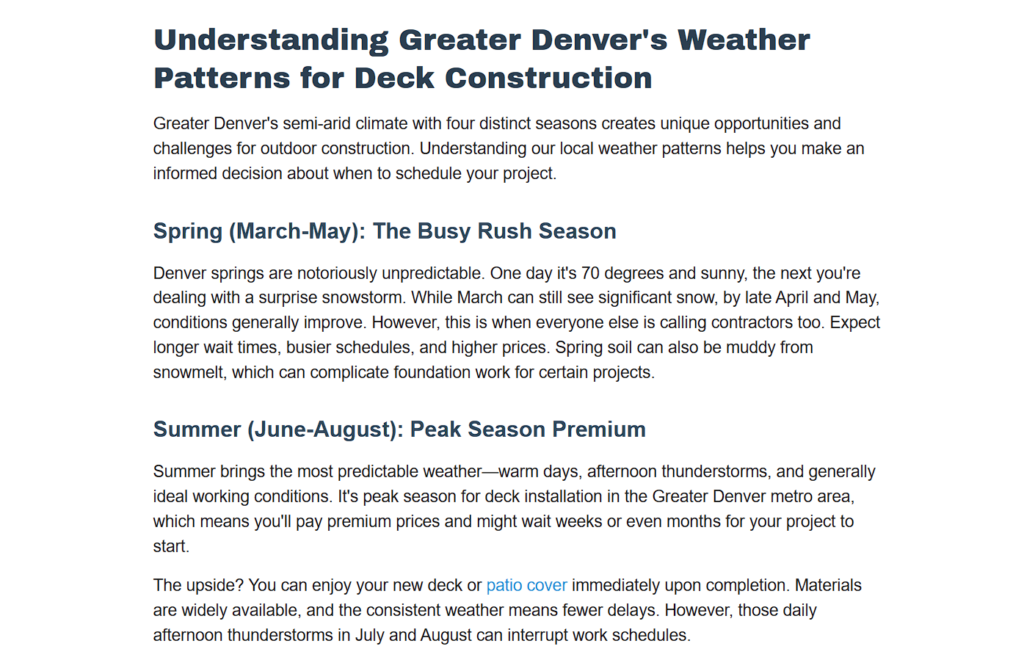
Griffin Decks & Covers, a company that builds custom decks, covers, and outdoor living spaces, puts this into practice through location-specific articles like “The Best Time to Install a Deck or Patio in Greater Denver.”
The piece walks Denver-area homeowners through the timing decisions that matter for their exact climate, covering how to save money by scheduling around contractor demand, how to speed up a project before Colorado’s weather turns, and how proper timing protects a structure’s long-term quality. None of that advice would hold up the same way in a milder climate, which is the point.
A reader in Denver gets an answer built for their exact conditions instead of a generic checklist. That specificity is what quietly turns a casual search into a real project inquiry.
Source: griffindeck.com
Human-Centered Content Is Building Stronger Connections
The internet often feels like a wall of stock photos and faceless copy, and audiences have noticed. 74% of consumers feel the internet has become less human over the last decade, and that gap creates an opening for brands willing to close it.
Content that puts real people front and center works because it answers a question readers ask without saying it out loud: Who am I actually buying from?
Team photos, founder stories, and behind-the-scenes details turn a business from a logo into a group of people with names, skills, and reasons for doing what they do.
Here’s how to build this into your brand:
- Create a genuine About Us page instead of a generic mission statement.
- Introduce the people customers would interact with, along with their backgrounds and what drives them.
- Use real photos of your team and workspace rather than stock imagery, since authenticity reads instantly.
- Share what makes your approach different, whether that’s expertise, values, or a specific way you treat customers.
- Update this content as your team grows, so it stays current and keeps reflecting who’s actually behind the brand.
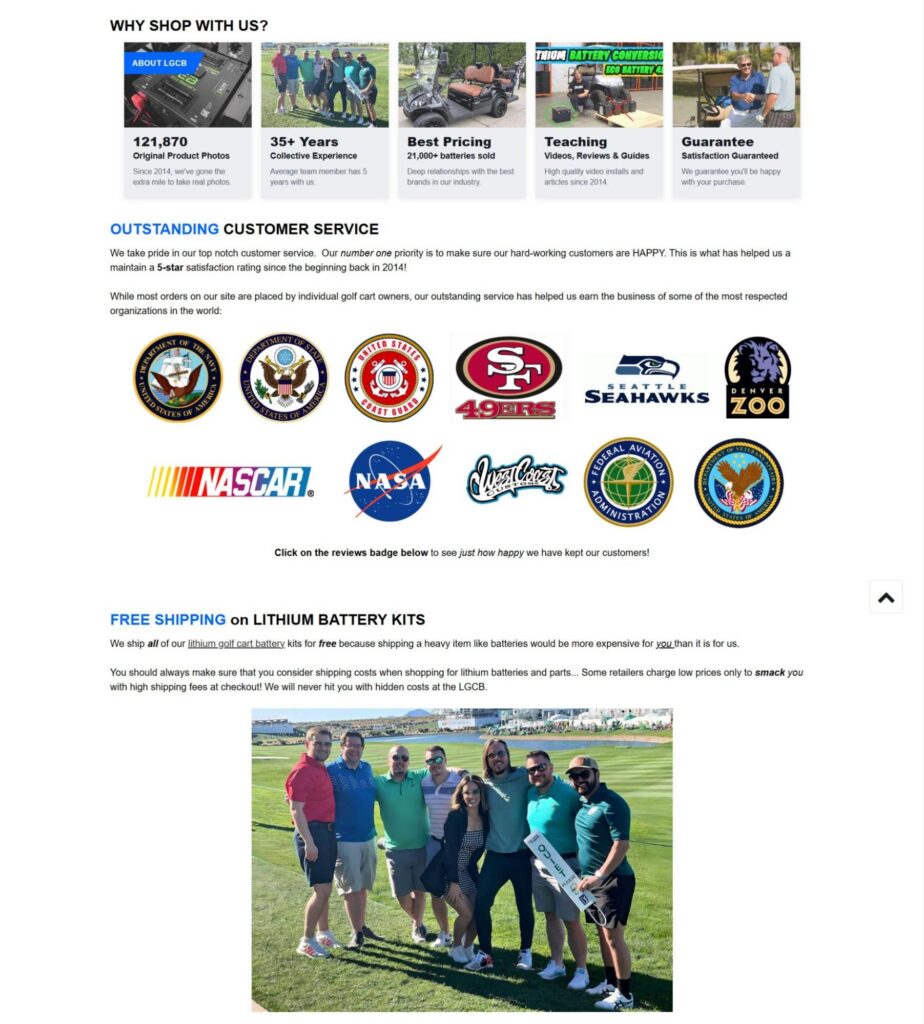
LithiumGolfCartBatteries.com, a retailer selling lithium battery kits for golf carts, puts this into practice through its own About Us page.
The page introduces the people behind the company, explains what sets their approach apart from competitors selling similar kits, and pairs the copy with authentic photos instead of generic stock imagery. This combination gives visitors a sense of who they’re dealing with before they ever place an order.
For a niche category where trust in the seller matters as much as trust in the battery itself, this kind of personal touch builds a real sense of community and turns a transactional purchase into a lasting relationship.
Source: lithiumgolfcartbatteries.com
Multi-Format Content Is Expanding Audience Reach
People absorb information differently, and a single content format can’t reach everyone who’s interested in what a brand has to say. Someone scanning a blog post on their lunch break has different needs than someone who wants to watch a two-minute video before a meeting.
Brands that repurpose their best ideas across formats, like articles, video, podcasts, and infographics, reach more of their audience without starting from scratch each time.
Video carries particular weight here. 82% of video marketers report that video has helped increase their traffic, a number that reflects how much people prefer watching over reading when a topic gets complex.
Here’s how to put this into practice:
- Identify your strongest existing content—the pieces that already perform well or cover topics your audience cares about most.
- Turn a detailed article into a short video summary, a series of social posts, or a downloadable guide.
- Match the format to the platform, since a dense case study belongs on your site while a condensed clip suits social media.
- Keep every version accurate to the source material, so readers get the same information no matter which format they choose.
Zendesk, a SaaS company known for its customer service, helpdesk, and sales support tools, shows this well through its case study on LATAM Airlines.
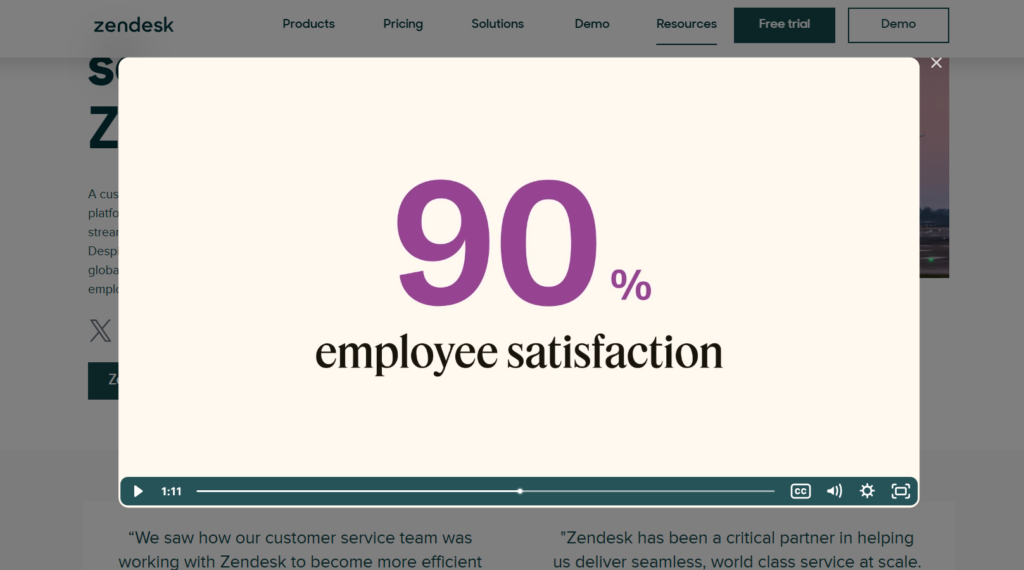
The written case study covers the airline’s move to Zendesk in detail, citing metrics like 90% employee satisfaction alongside specifics on ticket management and self-service tools. Alongside the full write-up, Zendesk offers a two-minute video that condenses the same story into a format viewers can absorb quickly.
Someone pressed for time gets the same core value as someone reading every word of the full report, and Zendesk reaches both types of readers with one story told two ways.
Source: zendesk.com
Evergreen Content Is Delivering Longer-Term Results
Trends fade, algorithms shift, and last month’s viral post rarely gets a second look. Evergreen content plays a different game entirely, answering questions that stay relevant for years and keeping traffic steady long after publication.
While seasonal or trend-driven pieces spike and disappear, a well-built evergreen resource keeps earning search visibility, backlinks, and repeat visits month after month. This makes it one of the most reliable investments a content strategy can make.
Here’s how to create evergreen content:
- Choose topics tied to lasting needs rather than passing moments.
- Write comprehensive guides that answer a question fully, rather than skimming the surface, so readers don’t need to look elsewhere.
- Structure the content with clear headings and checklists that make information easy to scan and revisit.
- Link to related resources within your own site to keep readers engaged longer.
- Mention relevant products naturally where they fit, rather than forcing a sales angle into every paragraph.
- Revisit these pages periodically to keep facts and recommendations current.
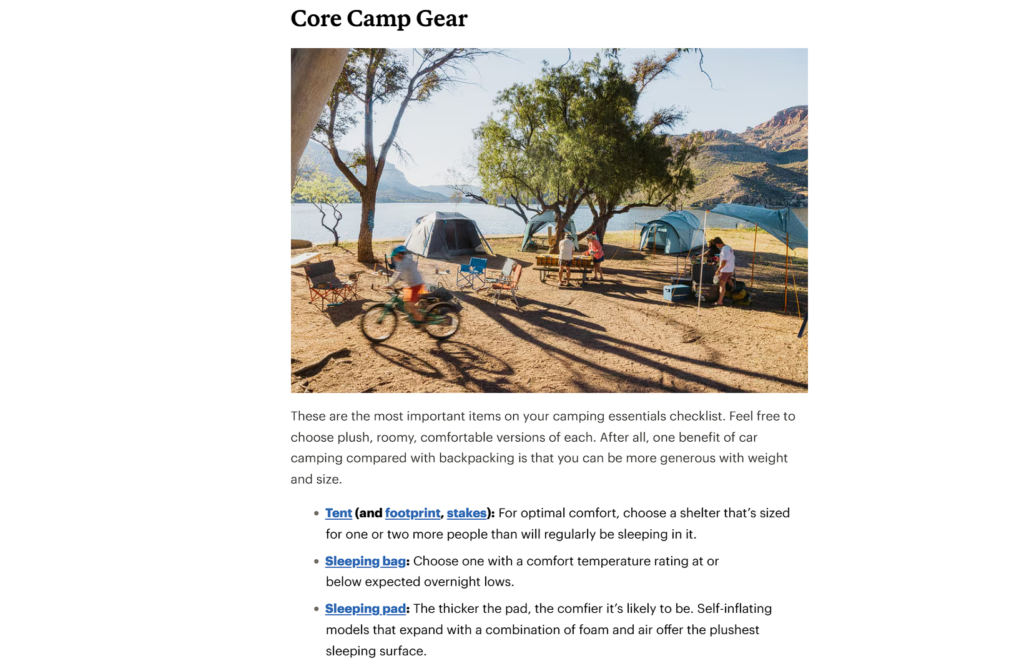
REI, a retailer selling outdoor gear and clothing for activities like hiking, camping, and cycling, runs an entire library of evergreen guides built on this model. Its Camping Essentials Checklist walks readers through everything from tents and sleeping systems to cooking gear and hygiene items, covering the full scope of what a trip requires.
The guide links out to related resources, like campfire-building tips and sleeping pad comparisons, keeping readers exploring the site instead of leaving after one page. Product mentions appear throughout, but they read as natural suggestions tied to specific gear categories rather than promotional pushes.
Years after publication, this kind of guide keeps attracting campers doing the same research that first-time visitors did at launch, all without a single update to its core structure.
Source: rei.com
Final Thoughts
Content marketing in 2026 rewards brands that show real expertise, invite people to interact, and put a human face on the work.
The trends covered here (expertise-driven content, interactive experiences, natural product discovery, localized pages, human-centred storytelling, multi-format distribution, and evergreen resources) point to the same conclusion: audiences trust content that feels genuine and useful over content built to chase clicks.
Our examples show what this looks like in practice, with each brand adapting these tactics to their own audience and niche.
You don’t need to adopt every trend at once. Start with the one that fits your brand and audience best, build from there, and you’ll find that results follow naturally when your content earns trust instead of demanding attention.
For the latest digital marketing news, check out our blog. To book an appointment, call 866-208-3095 or contact us here.