
A product review used to answer one question at a time. A shopper searched, watched several videos and pieced the comparison together.
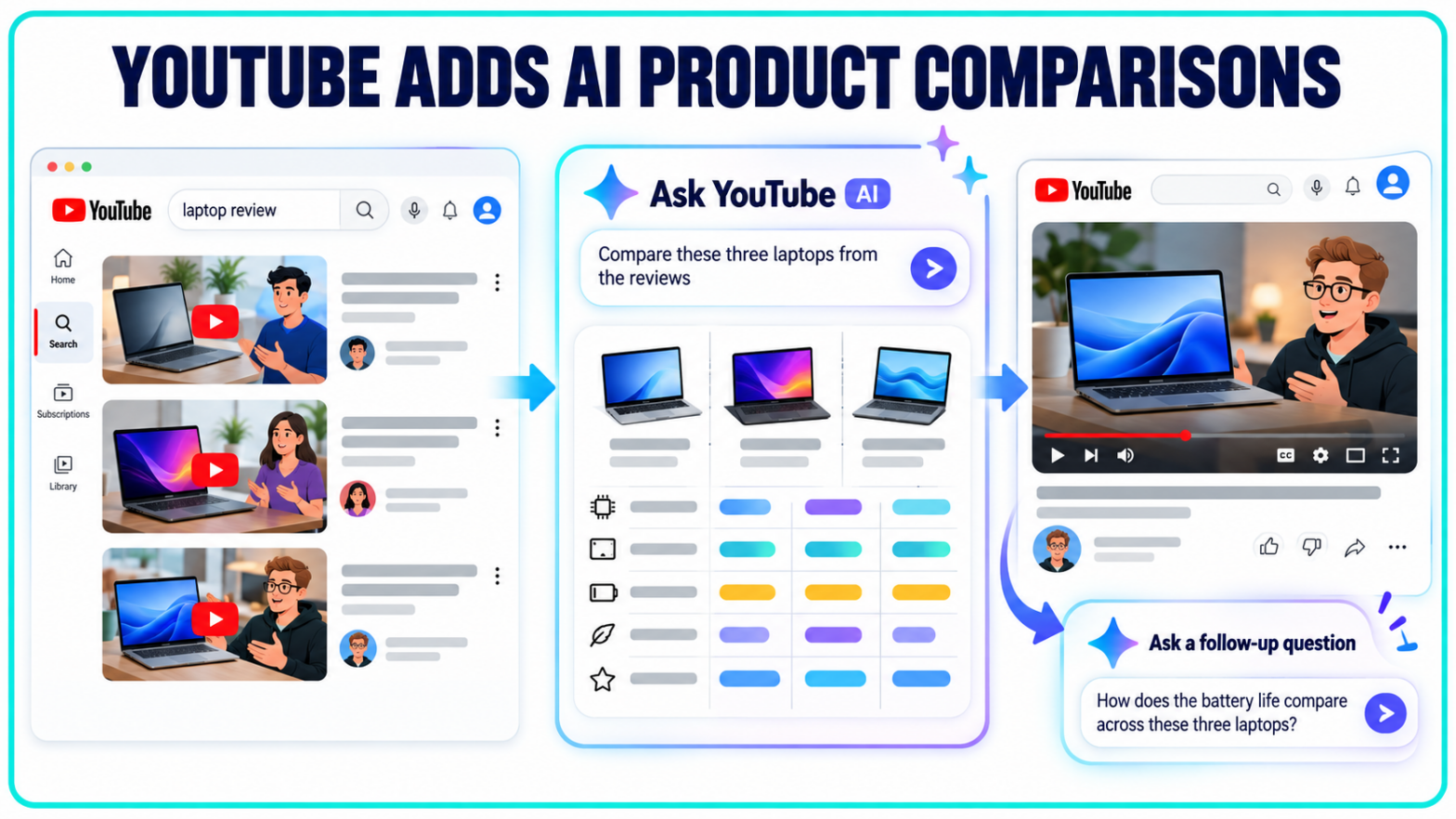
YouTube is testing a shorter route through that process. New shopping features for Ask YouTube can organize review videos into a product comparison view, then let viewers ask follow-up questions after opening a video. The change places AI between the search query and the creator’s review, at a point where shoppers are deciding which video deserves their attention.
The experience is still limited. YouTube’s conversational search tool remains an experiment for a restricted group of U.S. users searching in English. The related question tool on video watch pages has wider availability, but appears only on select videos.
Product Review Videos May Appear in a Comparison Table
YouTube described the shopping addition in its September 23 viewer update. A search for reviews of a specific product may return organized video recommendations, including a comparison table with product attributes and categories shaped by the viewer’s preferences.
That is a different way to enter a review. Instead of opening videos in sequence to find which one compares the features they care about, a viewer may see relevant distinctions alongside the recommendations. YouTube says the viewer can then select a video and continue asking about the product on its watch page.
The announcement does not specify which product categories will receive comparison tables, how often they will appear or where the listed attributes come from. A table is a possible response, not a new layout promised for every shopping query.
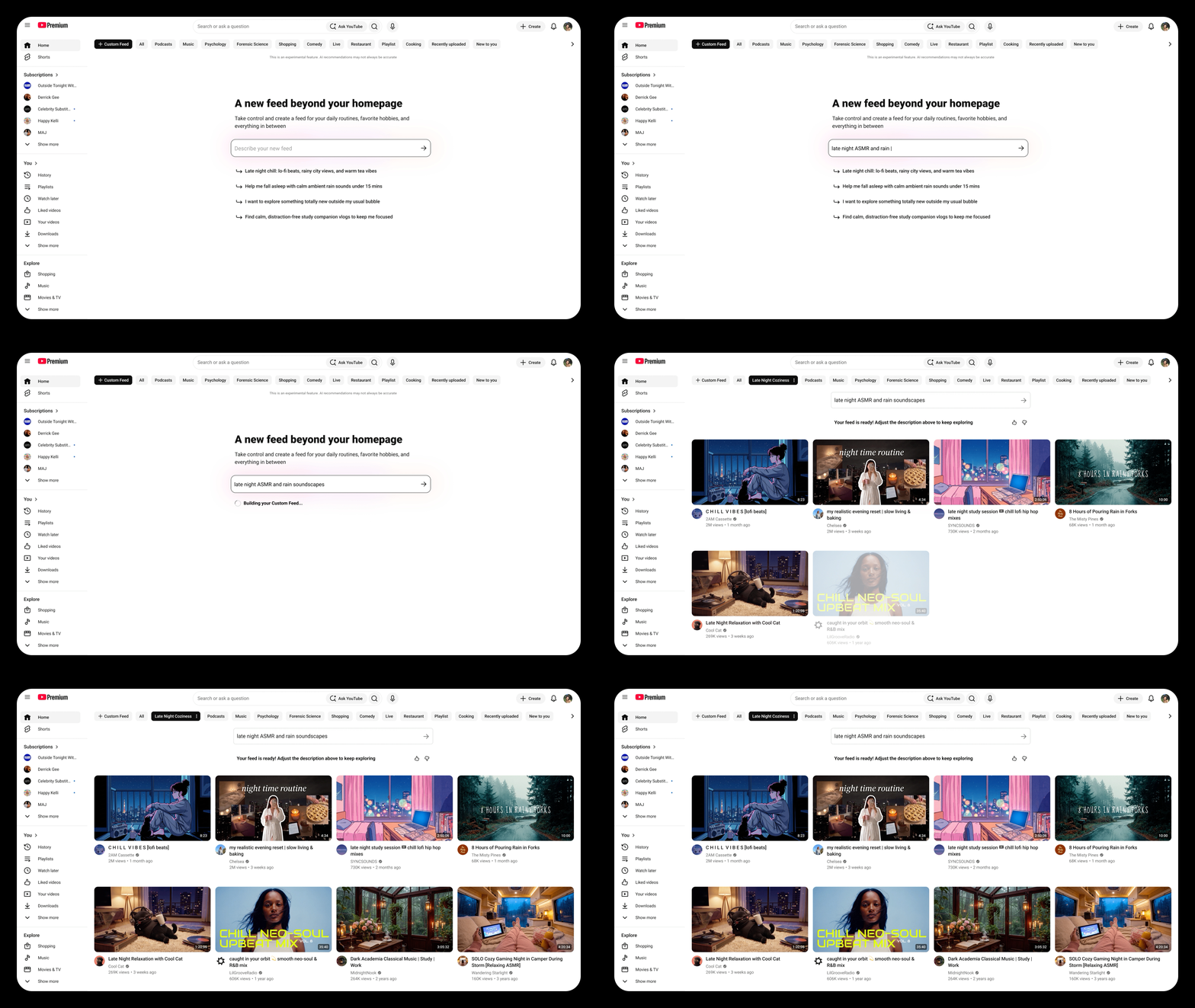
YouTube also announced Custom Feeds at the same event, allowing viewers to save dedicated home-page tabs for particular interests. Those feeds are a separate discovery feature, due for U.S. viewers on web, mobile and TV. They are not the product comparison tool.
Search and the Watch Page Do Different Jobs
The two Ask YouTube experiences connect, but they have different scopes. Search with Ask YouTube responds to a question with text, long-form videos, Shorts and, where relevant, clips that begin at a useful moment. Viewers can refine the query with follow-up prompts. The newly announced shopping comparison sits on this search side of the experience.
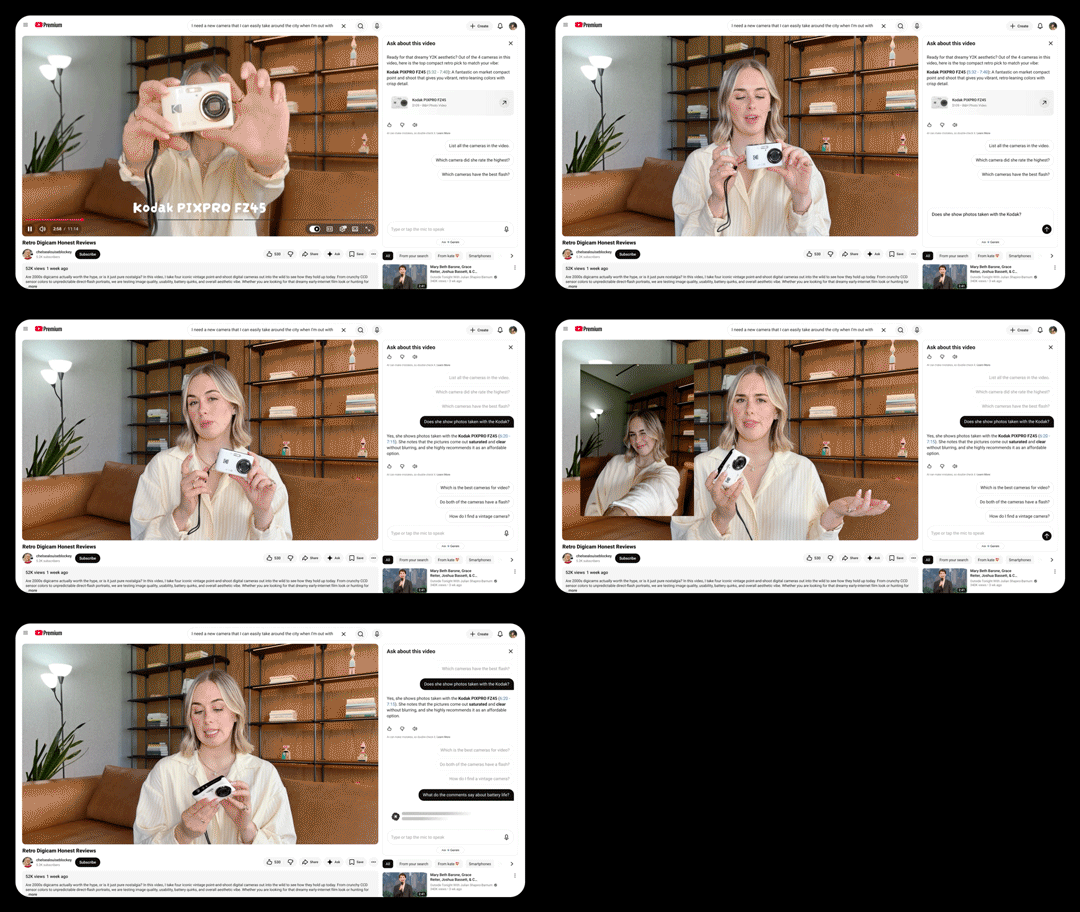
The watch-page version of Ask YouTube works while someone is viewing a selected video. A viewer can ask about its content or request related recommendations without leaving the page. YouTube’s shopping update extends that path from finding a product review to asking further questions while watching it.
On a smart TV or game console, a viewer may be able to ask by voice through the remote; some devices offer suggested prompts instead. The TV detail matters for product reviews, which people may encounter on a screen where typing a long follow-up question is awkward.
YouTube says watch-page answers can draw on information from YouTube and the web. A response is therefore not necessarily a quotation or a complete account of what the creator said in the video. The company also cautions that generated answers can be inaccurate.
Tagged Products Can Surface in Answers, With Limits
The watch-page help document says Ask YouTube may show eligible tagged products in response to a question. It also says a response may omit some products the creator tagged. For a shopper, the presence of a product in an AI answer should not be treated as a complete inventory of everything mentioned or linked in a review.
There is a commercial layer here, though its reach should not be overstated. YouTube says creators and the platform may earn commissions from purchases made through tagged products, including certain other purchases made after the viewer clicks a tag. The company has not said the new comparison tables are paid placements or that a product tag guarantees inclusion in an AI response.
The Ask YouTube search help page says conversations in this experimental phase are not used to show users ads. It describes video selection as prioritizing relevance, engagement and quality, much as YouTube’s standard search does. It does not provide a shopping-specific formula for choosing review videos or ordering products in a comparison.
Those missing details matter when interpreting a result. A comparison table can help a viewer narrow the field, but its appearance alone does not show why one creator’s review was chosen over another.
A Shopping Update With Two Different Rollouts
Access to conversational search is the clearest restriction. YouTube says it is available to a limited number of people in the United States searching in English on computers, mobile devices and TVs, with access gradually expanding. The help page does not give a separate rollout date or geographic list for the newly announced product comparison views.
The watch-page tool has a broader footprint. Its support page lists Canada among the available regions and says signed-in viewers who meet the local minimum age requirement can use it in supported languages, on select videos. That does not establish that Canadian users can see the search-side shopping comparisons. The two availability statements describe different features.
For marketers and creators, the practical implication is to treat review-video visibility and product-tag accuracy as distinct checks. Clear product names and specific comparisons help viewers understand a review, while eligible product tags create a separate route for products to appear in watch-page answers. YouTube has not announced a new optimization control or guaranteed placement in the comparison view.
The development fits a wider move toward video as a search and discovery surface. It is also separate from Google’s work on a cross-product shopping cart: YouTube’s announcement concerns finding and questioning product reviews, not a new checkout process inside Ask YouTube.
The Review Still Has to Carry the Answer
The new interface may change which product review a viewer opens first. Once there, the creator’s video remains the material the viewer has chosen to inspect, even if Ask YouTube helps navigate the questions around it.
YouTube has confirmed the comparison concept and the watch-page follow-up experience. It has not published shopping-specific selection criteria or a date when the search feature will reach viewers beyond its limited U.S. experiment.