
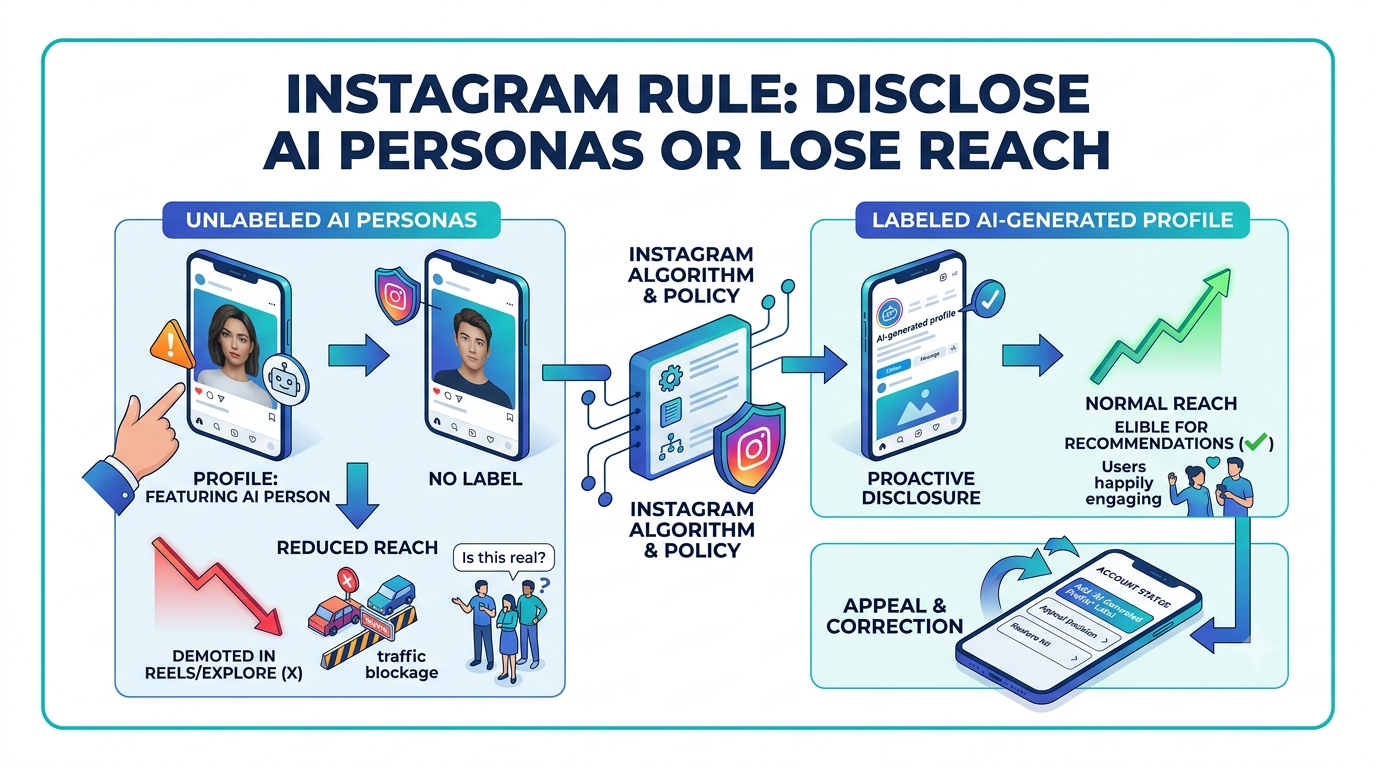
Accounts on Instagram that depict AI-generated people without disclosing that fact will now face reduced distribution on the platform. Instagram announced on August 31, 2026, in a post on the Instagram Creators blog titled "Bringing More Transparency to AI-Generated Profiles on Instagram," that it is replacing its existing "AI creator" label with a new "AI-generated profile" designation and will limit the reach of accounts that feature AI-generated people but do not carry the label.
What the New Label Requires
Instagram is renaming its existing "AI creator" label to "AI-generated profile," a change the platform says should make the disclosure easier for users to understand. The new label is meant to tell users that the person featured on a profile was generated or substantially created with AI.
The "AI creator" label, which Instagram launched in May 2026, carried the description "This profile posts content that was generated or modified with AI." That wording covered any account using generative tools broadly, making it both too broad and easy to overlook. The renamed "AI-generated profile" label is scoped specifically to accounts that "feature an AI-generated person."
The label is not intended to apply to every use of AI. Instagram says people who use AI to edit photos, polish captions, create graphics, or make other creative tweaks do not need to use the AI-generated profile label.
Reach Restrictions for Non-Compliant Accounts
Profiles that Instagram detects as AI-generated but are not appropriately labelled could face limits on their reach and may become ineligible to appear in recommendations. Demoted posts stop being recommended to non-followers in Reels and Explore. Instagram says creators who proactively label their AI-generated profiles will not see any impact on their reach.
Creators whose profiles become non-recommendable will have two options to restore their recommendation eligibility: they can add the AI-generated profile label to accurately identify their AI-based identity, or they can appeal Instagram's decision if they believe the restriction was applied in error.
Creators who previously added the "AI creator" label will now see the updated name and can review whether the label still applies to their account. Accounts that had already adopted the old label are being asked to review the updated version, because the meaning has changed underneath them.
User Feedback and Context
Instagram stated in the August 31 announcement that the change was driven directly by user reports. According to Instagram, feedback showed that users did not like encountering profiles that appeared to feature real people, only to discover later that the person was AI-generated.
The change replaces the optional "AI creator" label Instagram began testing in May 2026, and it is the first time the platform has attached a penalty to undisclosed AI personas.
The announcement coincides with growing scrutiny of AI-generated content across social platforms. The New York Times reported in July that it found hundreds of AI-generated doctors, healers, and wellness personalities on social media promoting supplements or making health claims to users. The announcement also comes after Instagram faced backlash over an AI tool that allowed users to generate images using other people's likenesses. Users objected to having their public Instagram content used without an explicit opt-in, and Meta subsequently removed the feature.
Meta's Broader Regulatory Context
The AI labelling update follows a significant legal development for Meta's parent company. Meta agreed to pay up to $18 billion over 10 years and implement broad child-safety reforms on Instagram and Facebook under a nationwide settlement with 52 state attorneys general. The agreement resolves claims that Meta designed Instagram with addictive features, knowingly exposed young users to serious mental harms, and intentionally misled the public about the safety of its platforms. Pending judicial approval, platform protections will include a default two-hour daily time limit cumulative across both Facebook and Instagram, along with a Night Mode and other teen-facing restrictions.
Separately, the EU AI Act Article 50 became applicable on August 2, 2026. It requires providers to design AI systems that interact directly with people so those people are informed they are dealing with an AI system, unless this is already obvious, and requires synthetic audio, image, video, and text to be marked in a machine-readable format and detectable as artificially generated.
Implications for Brands and Creators Using AI Personas
For marketers, agencies, and content creators operating virtual influencer accounts on Instagram, the August 31 policy creates a direct compliance requirement. Accounts featuring AI-generated people that do not carry the new label face algorithmic demotion from Reels and Explore, channels that typically drive audience growth for new and emerging creators. Brands running AI influencer campaigns, or agencies managing virtual talent rosters, will need to confirm whether their accounts qualify for the label and apply it proactively to avoid distribution penalties. The policy does not affect accounts that use AI only for content production tasks such as editing or caption generation, provided the profile persona itself is a real person.
Instagram confirmed in the August 31 Creators blog post that the new label will appear on a creator's profile and alongside their content where no existing AI-content label already applies, and that Account Status will be the tool through which restricted creators receive notification and initiate appeals.