

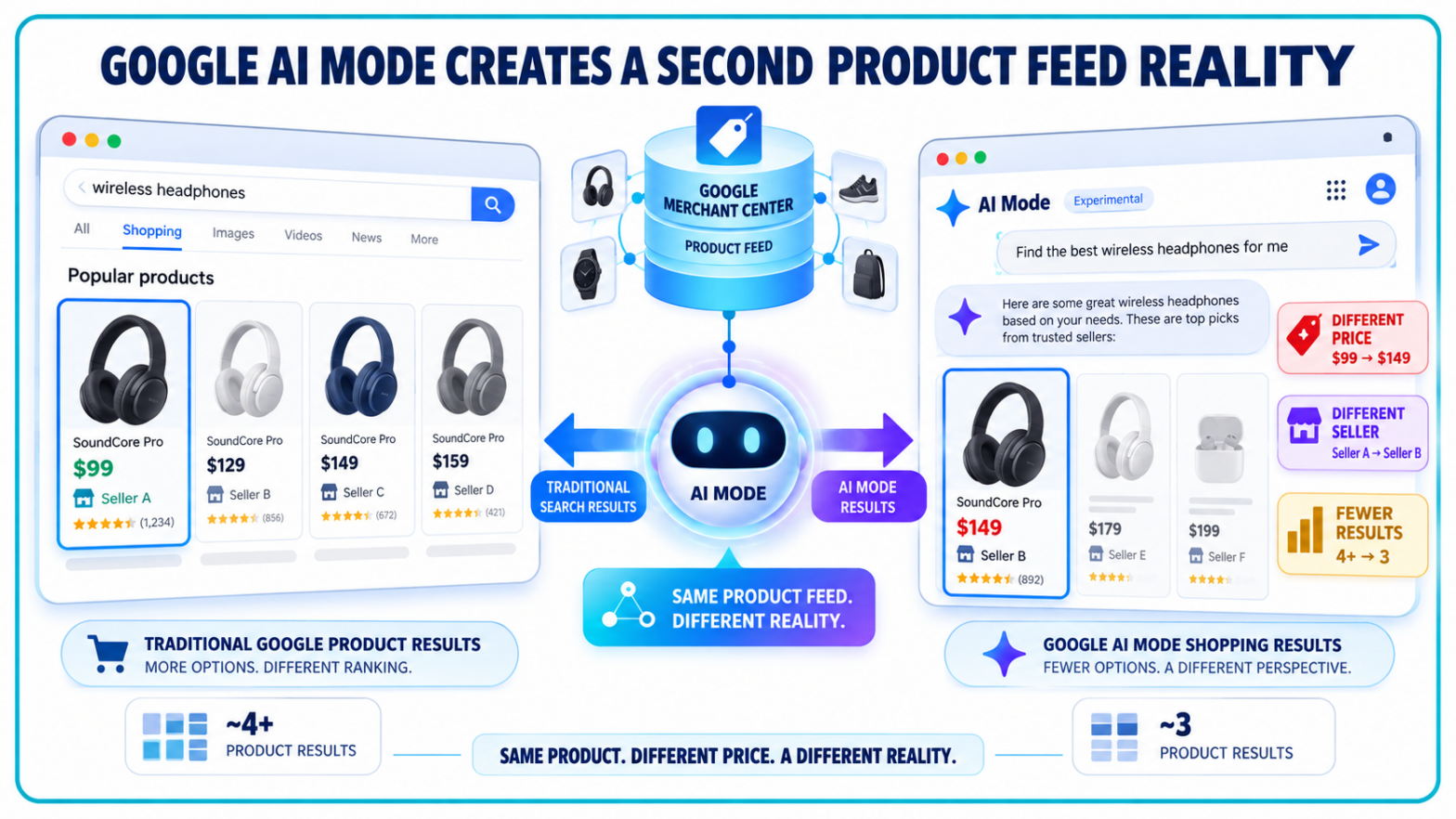
Retailers may now have two versions of the same Google shopping result to worry about.
New data comparing Google AI Mode with traditional product results found that identical items can surface with different prices, different sellers and, in many cases, not surface in both experiences at all. For ecommerce teams already managing feeds, promotions, structured data and inventory updates, that creates a measurement problem that is difficult to dismiss as a simple ranking difference.
The gap is substantial.
A study tracking more than two million product listings between August 9 and August 31 found that when the exact same product appeared in both Google AI Mode and traditional search, the AI Mode price was 21.6% higher on average. Prices disagreed in 38.1% of those matched cases. When they differed, AI Mode showed the higher price 68.4% of the time.
For retailers, however, price is only half the story.
The Same Product Can Lead to a Different Merchant
Google AI Mode is not simply rearranging the familiar Product Carousel.
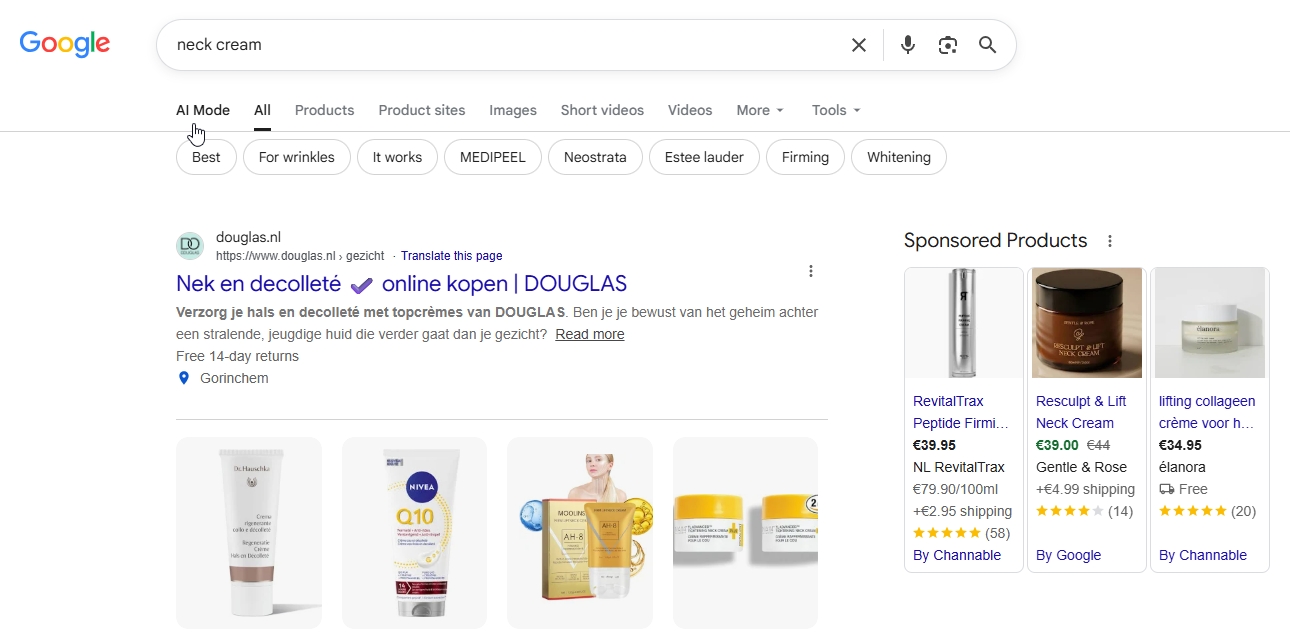
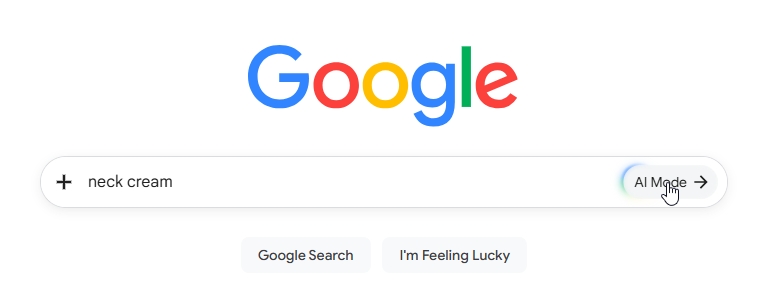
Productrise found that the lead seller changed in 49.6% of cases where the same product appeared in both experiences. Only 1.28% of products appearing in traditional search also appeared in AI Mode for the same search on the same day.
That suggests Google’s conversational shopping layer is building a materially different selection of products and offers rather than reproducing the conventional shopping results with an AI interface on top.
The size of those result sets also differs sharply. Traditional search showed an average of 27.8 products for the queries Productrise measured, compared with 3.9 products in AI Mode. Fewer available positions make each selection more consequential for the brands and retailers competing to appear.
Google has described AI Mode shopping as a system combining Gemini with its Shopping Graph, which contains product information including retailers, deals and availability. The company says AI Mode can interpret conversational requests and return shoppable options based on those signals.
There is no evidence in the study that Google is deliberately selecting more expensive merchants. The data identifies a correlation in the results, not the cause of that difference.
Still, retailers have to deal with what shoppers actually see.
Google’s Own Pricing Rules Depend on Consistency
The findings arrive against a very different set of expectations inside Google Merchant Center reporting for AI shopping.

Google’s Merchant Center documentation tells retailers that submitted prices should accurately reflect the prices customers see on their product landing pages. When prices or availability change frequently, merchants are expected to update Google accordingly.
Google also treats price mismatches as a significant data-quality problem. A difference between a merchant’s submitted feed and its landing page can cause products to be disapproved, and persistent mismatches can put an account at risk of suspension.
To reduce those gaps, Merchant Center can automatically update price, sale price, availability and condition using structured data and information extracted from product pages. Google explicitly says these automations are designed to correct temporary discrepancies rather than replace frequent, accurate product-data updates.
That system makes sense when one merchant's feed disagrees with one merchant's website.
The AI Mode findings expose another layer. A retailer can have internally consistent product data while Google's separate shopping surfaces still select different offers, sellers or prices for the same product query.
That difference is much harder for a merchant to diagnose from a conventional feed error report.
Product Feed Optimization Now Has Another Surface to Track
For ecommerce marketers, AI shopping is becoming less interchangeable with traditional Shopping visibility.
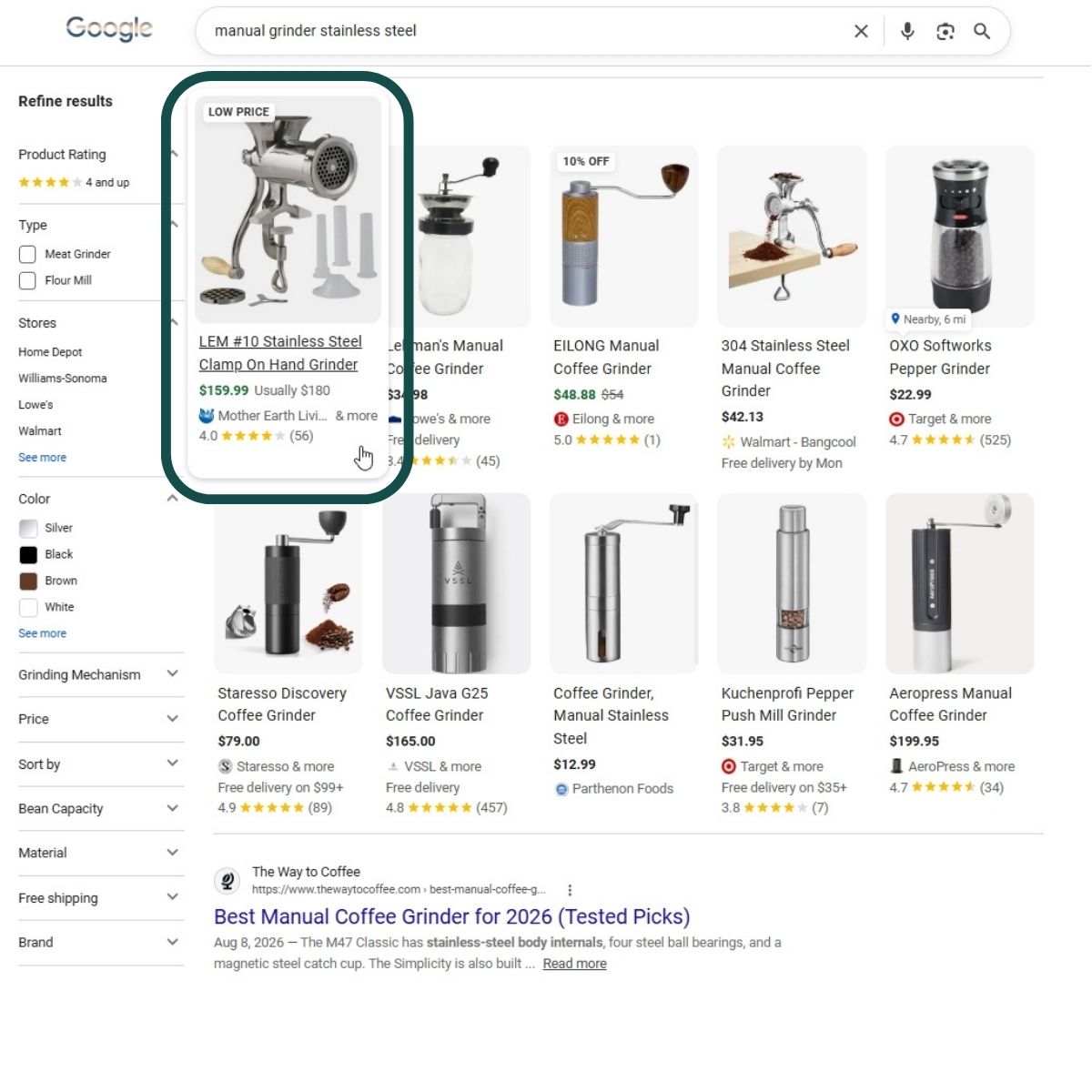
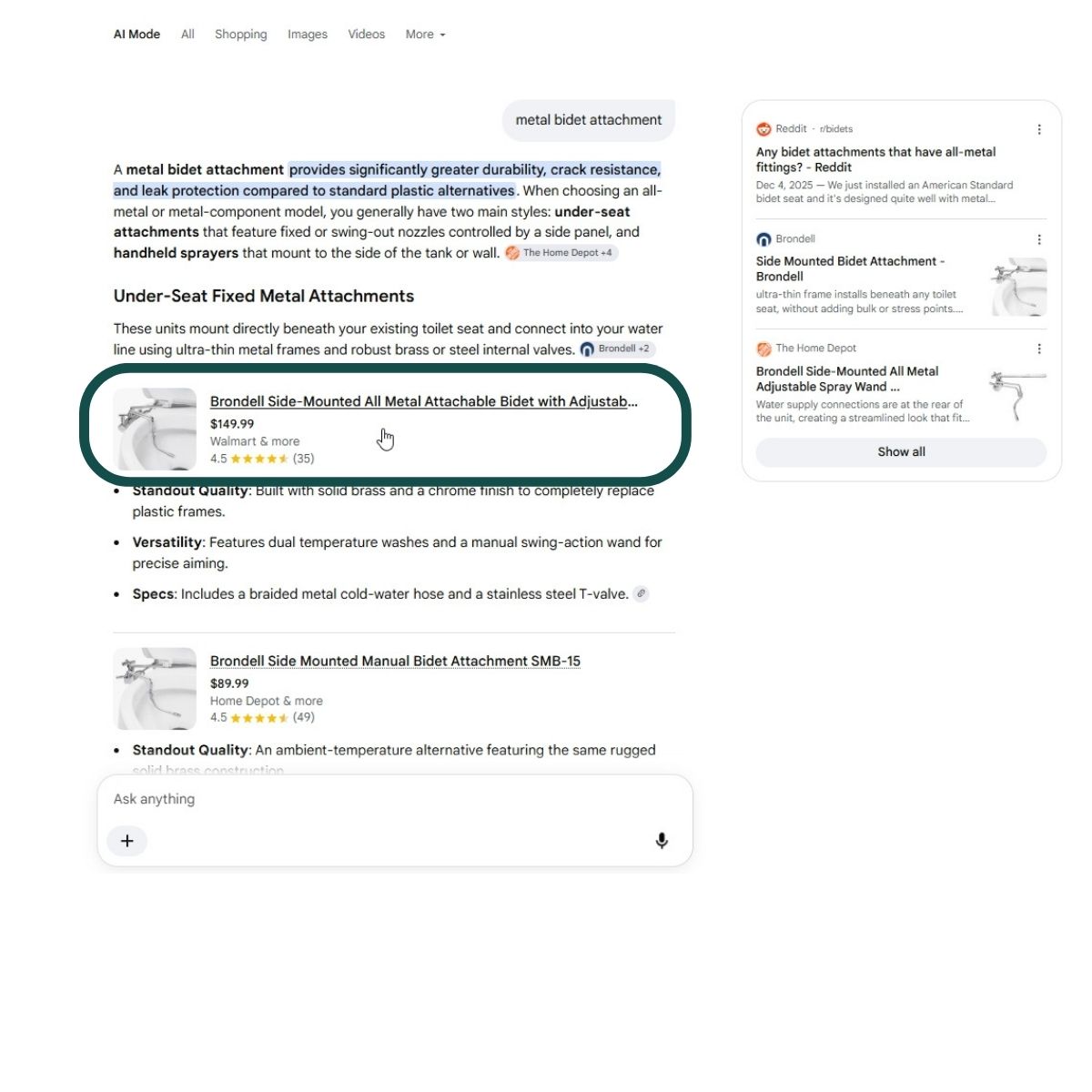
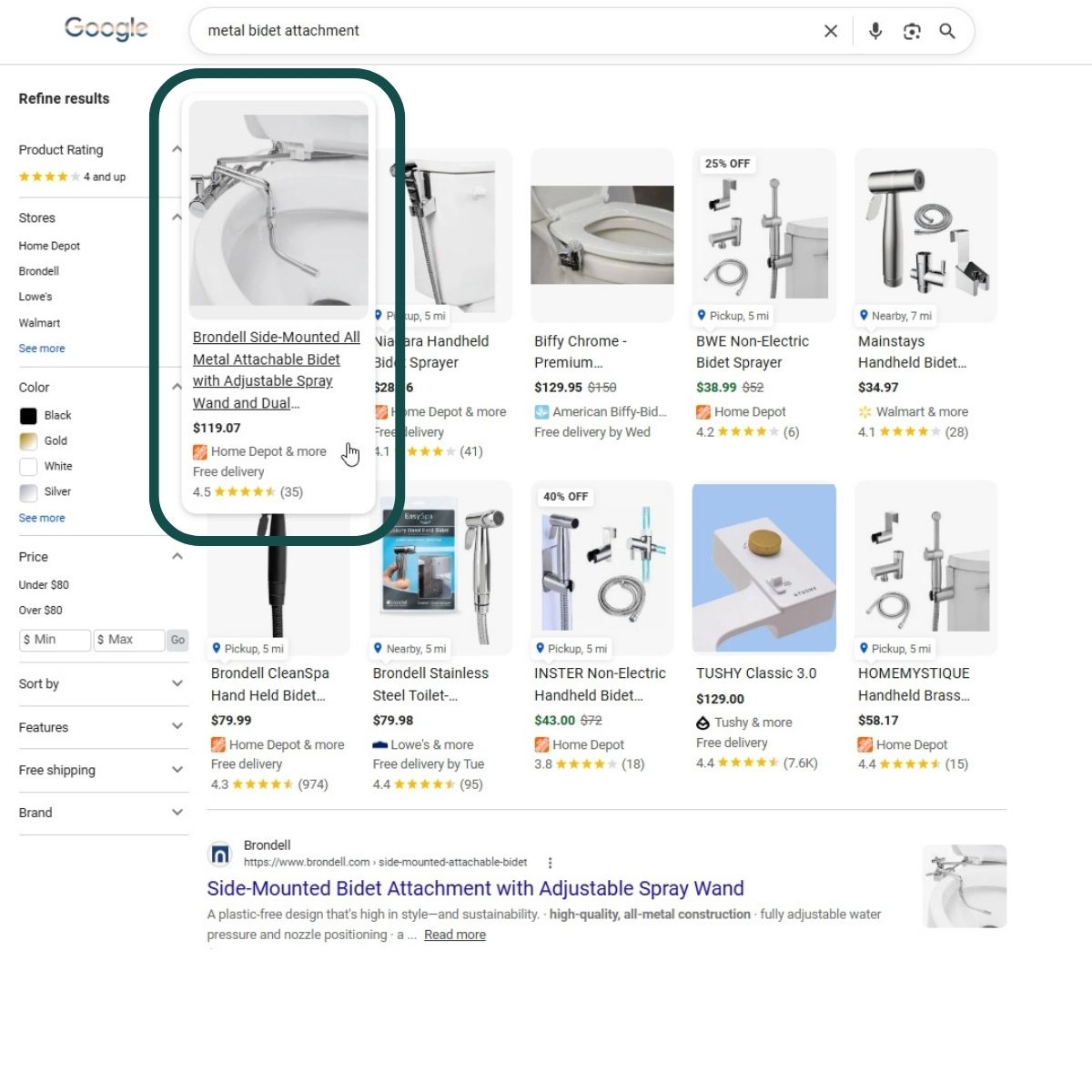
A product can rank prominently in the Product Carousel but disappear from Google AI Mode. Another retailer selling the same SKU can become the lead seller. A sale price visible in one environment may not be the offer emphasized in the other.
That complicates competitive monitoring.
A ranking report showing strong organic product visibility does not necessarily establish equivalent AI Mode visibility. A retailer comparing its displayed prices with competitors could also draw the wrong conclusion if only traditional search is being monitored.
The same issue reaches attribution. When Google AI Mode chooses a different seller for an identical item, changes in referral traffic or product-level conversions may be connected to offer selection rather than a decline in demand for the product itself.
Google has already acknowledged that retailers need more visibility into AI-driven product discovery. In May, the company announced new Merchant Center tools intended to report how brands and products appear across AI experiences, including AI Mode, AI Overviews and Gemini.
The Productrise findings show why that distinction matters.
A Higher AI Mode Price Does Not Necessarily Mean Bad Feed Data
One danger for retail teams is treating every visible price discrepancy as a feed synchronization failure.

The study includes cases where the underlying reason is more complicated. Different sellers can hold the same product at different prices. A traditional result might surface a discounted or pre-owned offer while AI Mode selects a new product from another merchant. Outliers of that kind can produce large percentage differences even though each individual seller's submitted price is technically correct.
Google's Shopping Graph is built from a broad set of product and seller information. Google says retailers provide data directly through Merchant Center, while the Shopping Graph also incorporates product information found across the web.
More recently, Google said its shopping infrastructure had expanded to more than 60 billion product listings. Its agentic commerce systems are increasingly designed to reason across merchants, inventory, deals and product attributes instead of simply presenting a static list of matching SKUs.
That makes the provenance of a displayed offer increasingly important.
Retailers need to know not only whether Google has the correct price, but which seller, product variant, promotion and data source Google has selected for a particular AI shopping response.
Retail Measurement Can No Longer Stop at the Product Carousel
For marketers, the immediate practical implication is measurement rather than panic.
Product feed optimization still requires accurate Merchant Center data, current landing-page prices, valid structured data and synchronized promotions. Google continues to recommend frequent product-data updates, particularly for merchants whose prices and availability change often.
But traditional shopping rankings alone are becoming a weaker proxy for how products are represented across Google.
Teams already monitoring AI-powered Shopping campaigns may need to separate AI Mode visibility, seller selection and displayed offer data from conventional Shopping performance when evaluating changes in clicks or conversions. That is particularly relevant for brands sold through several retailers, where Google can choose among multiple legitimate offers for the same product.
The latest study does not establish that Google AI Mode systematically favours expensive products by design, nor does it identify the ranking signals responsible for the difference.
It does establish something retailers can measure: the shopping result presented by AI Mode is frequently not the same shopping result a customer receives in traditional Google Search.
For ecommerce teams trying to reconcile price, visibility and referral data across Google, those two surfaces can no longer be treated as one.