Short-form video usually reveals its weak spots after the audience has already swiped away. YouTube is trying to move part of that diagnosis earlier.
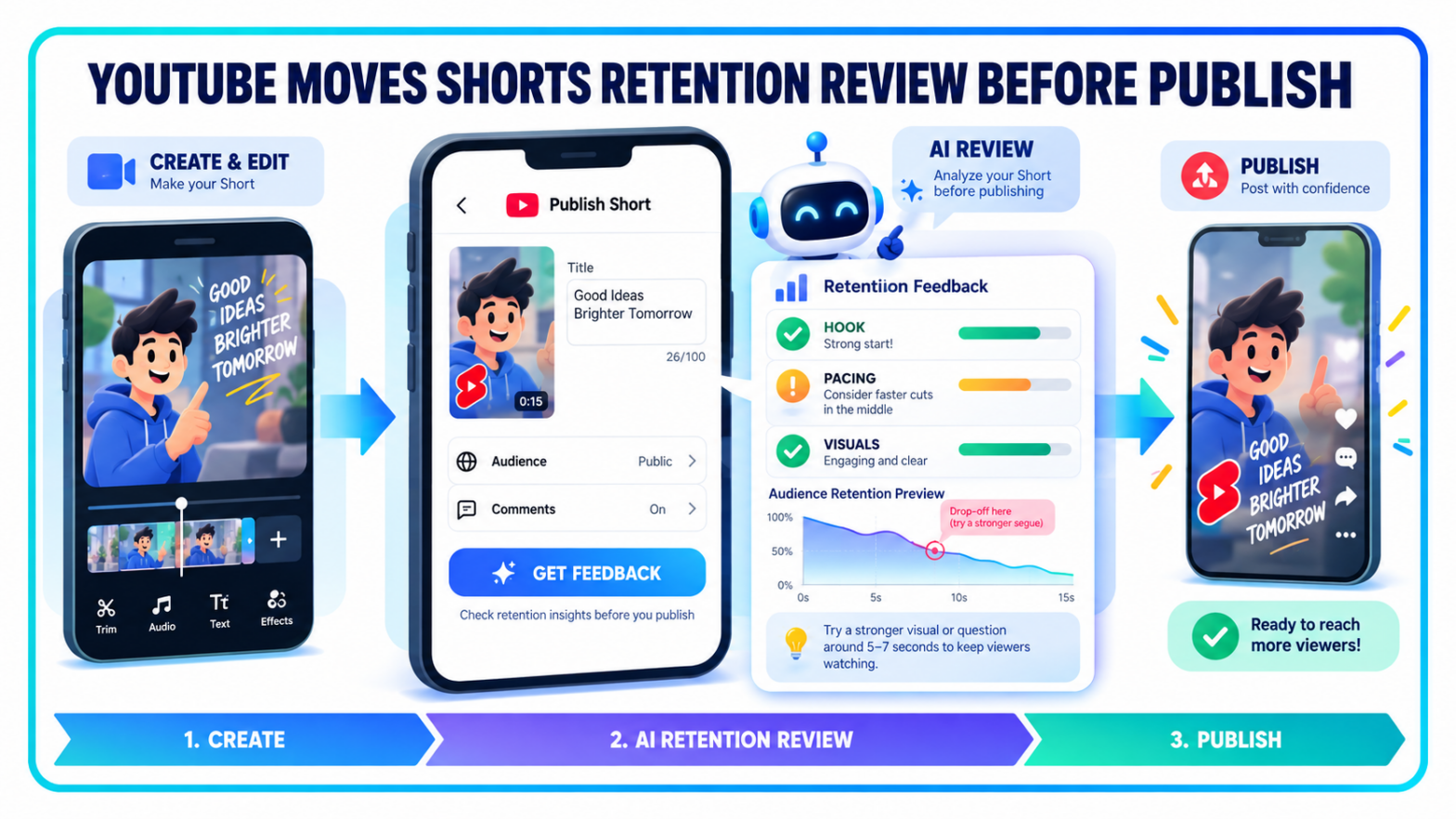
The platform is expanding a pre-publish “Get feedback” feature for Shorts that gives creators private suggestions about elements such as the opening hook, pacing and visuals before a video goes live. Rather than waiting for retention data to expose a slow opening or uneven edit, eligible creators can now request feedback while there is still time to change the Short.
The tool does not promise views, predict performance or rewrite the video. Its role is narrower: introduce another review point between editing and publishing.
YouTube Shorts Gets a Review Before the Audience Sees It
The new workflow appears during the normal YouTube Shorts publishing process.
After a creator finishes recording or editing a Short and reaches the screen where the title, privacy and audience settings are selected, a “Get feedback” button can now appear. YouTube’s Help Center says selecting it produces an analysis of the video’s hook, pacing and other elements. The creator can then continue publishing or return to the video for more work.
Creator Insider describes the feature as providing tailored insights before a Short is shared publicly. The feedback is advisory. It does not automatically alter the footage, replace an edit or force creators to follow its recommendations.
That distinction matters because short-form creative often involves deliberate departures from conventional editing rules. A slow opening can be intentional. So can an abrupt cut or an unusually long shot.
YouTube is offering another opinion before publication, not establishing a mandatory creative standard.
The current expansion is focused on adult creators in the United States using the main YouTube mobile app on Android or iPhone. Availability may therefore vary while the rollout continues.
Hooks and Pacing Sit Close to YouTube’s Retention Problem
A hook is easy to discuss after a Short fails.
By then, the useful evidence is already historical.
The new feedback feature shifts part of that conversation into production. A creator can examine whether the opening establishes a reason to keep watching, whether the middle section slows down or whether the visual treatment supports what is being said before those decisions encounter a live audience.
YouTube’s own recommendation guidance provides context for why those questions matter. The platform groups content performance signals into appeal, engagement and satisfaction. Under engagement, YouTube specifically asks whether people who start watching actually stick around.
That puts YouTube creator tools such as Get Feedback unusually close to the creative decisions that can shape retention.
There is still no guarantee that a technically tighter opening will produce stronger results. Viewers may dislike the topic, reject the premise or simply prefer another video in the feed. The platform has not claimed that following its suggestions will increase distribution.
The feature can flag creative considerations. The audience still decides what holds attention.
Video Marketing Teams Get a New Quality-Control Layer
For brands, publishers and agencies, the change introduces a possible review stage into video marketing workflows that have often relied on internal judgement before launch and audience data afterward.
That gap can be significant with Shorts.
Traditional video production may involve script reviews, rough cuts, client approvals and multiple revisions. Short-form publishing moves faster, and smaller creative decisions can survive all the way to publication simply because the format is treated as lightweight content.
Get Feedback creates an opportunity to catch some of those decisions without commissioning another formal review.
A brand publishing a product explanation, for example, could receive feedback suggesting that the opening takes too long to establish the subject. A creator delivering a news update might be prompted to reconsider visual variety or pacing. The team can accept the suggestion, reject it or test a revised version.
The payoff also deserves scrutiny even though YouTube does not formally list it as a named feedback category in its Help Center. If a hook promises one thing and the rest of the Short spends its limited runtime somewhere else, stronger pacing alone will not repair the mismatch.
For marketers, that makes the tool more useful as a creative checkpoint than as a scorecard.
Get Feedback Does Not Replace Real Audience Retention Data
There is an important boundary between pre-publish guidance and observed behaviour.
YouTube already gives creators post-publish performance information showing what happened once real viewers encountered a video. Its analytics distinguish basic views from deeper engagement measures, including “Engaged views,” which track viewers who chose to continue watching.
That evidence remains more consequential than a pre-publish suggestion because it comes from an actual audience.
A creator could receive positive feedback on pacing and still see viewers leave early. Another Short could ignore a recommendation and perform well because its audience responds to an unconventional format.
YouTube Analytics therefore remains the place to determine whether the creative choices worked after publication. Get Feedback operates one step earlier, when those choices are still editable.
For marketing teams, the practical use is straightforward: run the pre-publish check as another QA signal, then compare the published Short against retention and engagement data. Repeated differences between the tool’s recommendations and actual audience behaviour can also help teams decide how much weight its suggestions deserve for a particular channel.
No single pre-publication review can account for every audience.
YouTube Is Bringing More Evaluation Into the Creation Process
YouTube has spent much of 2026 adding tools around the creation, remixing, discovery and measurement of video.
Get Feedback extends that work into an earlier part of the publishing cycle. Instead of using platform intelligence only after a video is available, creators can now request an assessment while they are still making editorial decisions.
That does not turn YouTube into an editor.
The company’s own documentation describes a feedback button and analysis, not a performance forecast. Creator Insider likewise positions the feature around tailored suggestions before publishing.
For Shorts creators, the practical change is smaller but immediate. The first signal about a weak hook or uneven pacing no longer has to come from a collapsing retention graph after publication.
Eligible creators can see the feedback first, decide whether it fits their audience and publish from there.