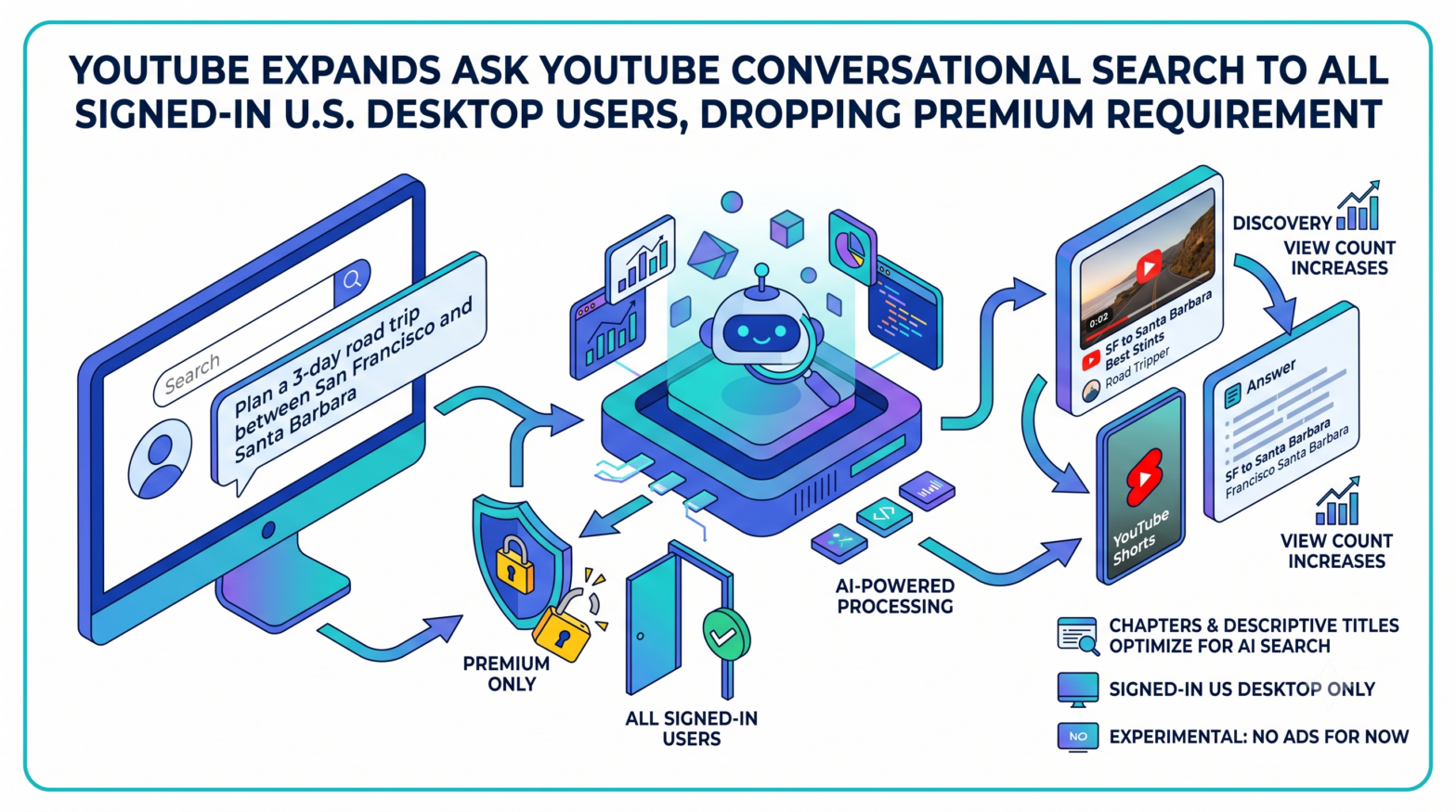
YouTube's AI-powered search feature is now accessible to tens of millions of additional users in the United States. YouTube announced in a July 6 community post on its official Help forum that Ask YouTube is now available to all signed-in U.S. viewers aged 13 and older conducting English-language searches on desktop, removing the Premium subscription requirement that had defined the feature since its initial test.
From Premium-Only Test to Broad Desktop Rollout
When YouTube first announced the test in April, Ask YouTube was limited to U.S. YouTube Premium members 18 and older who opted in through youtube.com/new. On July 6, YouTube expanded it to signed-in U.S. viewers 13 and older using English-language searches on desktop, with signed-out viewers and supervised accounts remaining excluded.
Ask YouTube launched in the app in 2023 and lets users pose conversational questions to expand discovery. YouTube added Ask YouTube to the connected TV version of its app in February, making the desktop web the latest surface to receive the feature.
How the Feature Works
Ask YouTube draws from real-time information from the web and YouTube content to answer complex questions, with responses blending long-form videos, Shorts, and text. Responses can also include relevant clips from videos accompanied by video title and channel details, and users can refine and follow up on their initial question within the same search session.
Users enter a prompt in the search bar, for example, "plan a 3-day road trip between San Francisco and Santa Barbara", and select the Ask YouTube option to get results. YouTube described the feature in its July 6 announcement as designed to help viewers "explore complex questions and dive deeper into topics."
Users can switch back to traditional video results by clicking "All" on an Ask YouTube results page or by returning to the Home page. Ask YouTube remains a separate search option rather than a replacement for standard YouTube Search.
What Ask YouTube Means for Creators and View Counts
For creators, the feature offers an additional path for viewers to discover their content. Views from Shorts, videos, and previews shown in Ask YouTube responses count toward total view metrics and YouTube Partner Program eligibility.
YouTube stated in its July 6 announcement that creators can improve their chances of appearing in Ask YouTube results by publishing unique, high-quality content and adding clear video chapters and descriptive titles, signals its systems use to match video segments to viewer questions. Featured videos display the video title and channel name within the response.
Privacy Handling During the Experiment
To help improve its products, human reviewers may read and process user conversations with Ask YouTube. YouTube said it takes steps to protect privacy, including disconnecting conversations from a user's Google Account before reviewers see them and using automated tools to remove personal information such as email addresses and phone numbers. Conversations reviewed by human reviewers are kept separately for up to three years. YouTube also confirmed that during this experimental phase, conversations are not being used to show users ads.
Global Expansion Planned
YouTube said it will roll out the feature to more devices, languages, and users worldwide in the coming months.
Implications for Video SEO
YouTube's explicit guidance that chapters, descriptive titles, and video segments are the signals its systems use to match content to conversational queries indicates that structured metadata now plays a functional role in AI-driven discovery, not just traditional keyword ranking. Creators whose videos are organized into clearly labelled chapters covering discrete subtopics are better positioned to have individual segments surfaced inside Ask YouTube responses. Videos without chapters or with vague titles may appear less frequently in AI-generated answers even if they rank well in standard search results.
YouTube confirmed in the July 6 community post that the desktop rollout is live and that broader device and language support is planned for later in 2026.