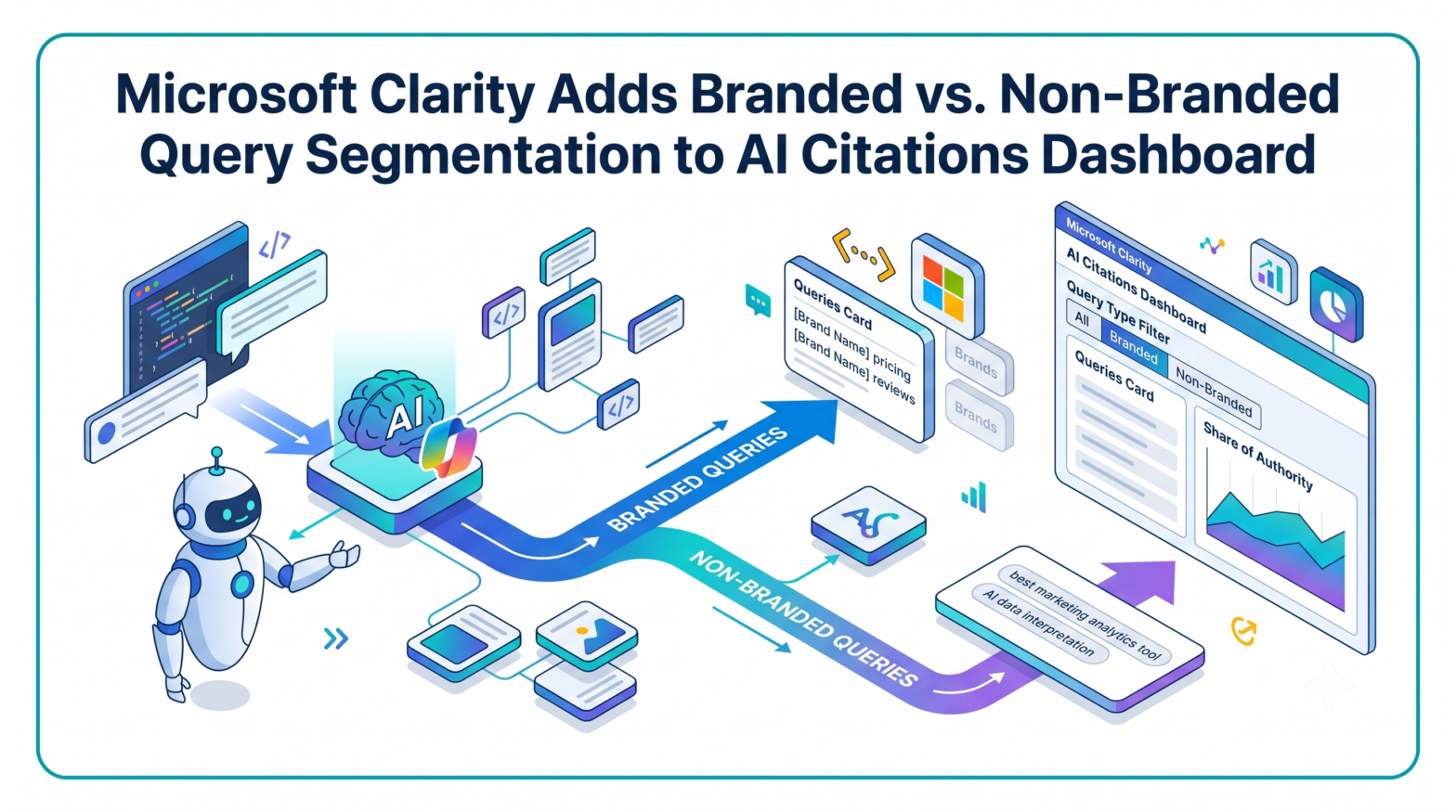
Marketers and site owners using Microsoft Clarity can now separate AI-driven citation data by branded and non-branded query type. Microsoft published the update on the Clarity blog under a Clarity Staff byline, dated August 3, 2026. The change adds branded query segmentation to the AI Citations dashboard, letting site owners distinguish grounding queries that reference a brand by name from the generic retrieval queries AI systems run when composing a response.
What Changed in the Citations Dashboard
The update is the third citation-side release from the Clarity team in 25 days, and the first that directly addresses whether measured AI visibility reflects existing brand demand or new content discovery. It arrives as a filter layered onto the existing Citations dashboard rather than as a separate reporting section.
Topic Insights launched July 9, 2026, followed by Query Topics entering beta on July 22, 2026. Branded query segmentation followed 12 days after that, 25 days after the first of the three releases.
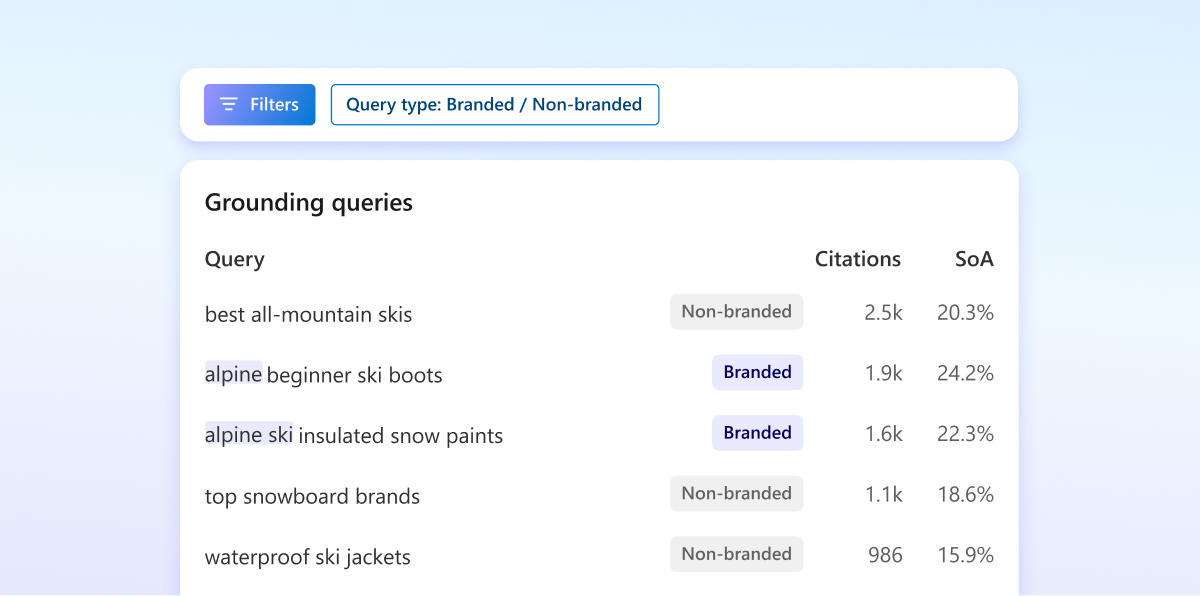
Three specific capabilities are now live inside the Citations dashboard. Individual queries in the queries card are now labelled as branded, so users can identify brand-specific grounding activity at a glance. The Share of Authority card, which shows a domain's percentage of total citations compared to competing domains across the same query set, now breaks out results by branded and non-branded query type separately. Dashboard data can also be filtered by branded or non-branded queries independently, allowing direct performance comparisons between the two segments.
The Signal Gap the Update Addresses
According to Microsoft, not all AI visibility comes from the same kind of query: some citations are driven by queries that reference a brand directly, while others come from broader, generic queries an AI system uses to help answer a prompt. Without the ability to separate these signals, total citation counts can obscure whether performance is the result of existing brand awareness or organic content discovery through general queries.
Because brand strength inflates branded citation counts, a dashboard reporting only totals rewards brands for demand they generated elsewhere. Isolating the non-branded figure is what makes it interpretable, as it measures whether content is doing work an AI system could not have done without it.
Scope and Platform Coverage
The Citations dashboard reports citations across Microsoft AI surfaces such as Copilot and Bing generative search, not across ChatGPT, Gemini, or Perplexity directly. The dashboard tracks citation activity in AI-generated answers only and does not measure traditional search rankings, impressions, or click-through rates; it captures influence that occurs before a user visits a site, inside the AI experience itself.
The Citations feature is free with no traffic limits and requires no CDN or server-side integration. Setup uses the standard Clarity tracking code plus domain verification through Bing Webmaster Tools or Google Search Console.
Practical Implications for Digital Marketers
For agencies and in-house teams measuring AI visibility, the branded versus non-branded split introduces a meaningful distinction into reporting. Branded citation volume reflects how often AI systems are sourcing content in response to direct queries about a company or product. Non-branded citation volume reflects how often content is being selected when users ask general questions, the segment most relevant to top-of-funnel discovery and category-level authority. With the filter now available, campaign reporting can separate these two performance drivers, allowing teams to identify whether gaps in AI visibility stem from brand awareness deficits or from content coverage issues in non-branded topic areas.
Microsoft has not published a roadmap for further segmentation or indicated whether branded and non-branded splits will reach Bing Webmaster Tools, where the citation tooling originated.