
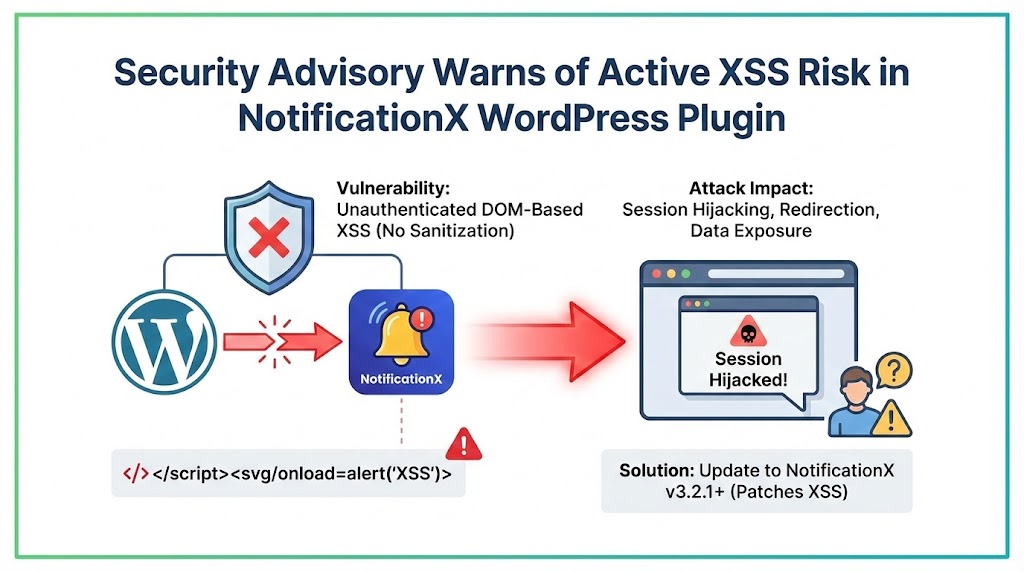
A newly disclosed security advisory has identified a high-severity vulnerability in the NotificationX plugin for WordPress and WooCommerce, placing more than 40,000 websites at risk of client-side attacks.
The flaw allows unauthenticated attackers to inject malicious JavaScript that can execute in a visitor’s browser under specific conditions, potentially exposing both site operators and users to session hijacking, redirection, and data exposure.
Widely used marketing plugin affected
NotificationX is commonly used on marketing and ecommerce sites to display sales popups, announcement banners, and other real-time notifications intended to drive urgency and engagement. Because the plugin operates on the front end and interacts directly with visitors’ browsers, security weaknesses can have immediate impact.
According to the advisory, the primary vulnerability is rated 7.2 on the CVSS scale, placing it in the high-severity category.
How the vulnerability works
The issue stems from a DOM-based cross-site scripting (XSS) flaw in how the plugin processes preview data. Specifically, the plugin accepts input via a POST parameter used for preview functionality but fails to adequately sanitize or escape that input before rendering it in the browser.
This allows an attacker to craft a malicious page that automatically submits data to a vulnerable site. When a victim’s browser processes the response, the injected script executes as if it were trusted content from the site itself.
Because the attack occurs entirely on the client side, it does not require the attacker to authenticate or hold any user role on the affected WordPress installation.
Potential impact on sites and users
If successfully exploited, the vulnerability can allow attackers to execute arbitrary JavaScript in the context of the affected site. This can enable a range of malicious actions, including:
-
Hijacking administrator or editor sessions
-
Performing actions on behalf of logged-in users
-
Redirecting visitors to fraudulent or malicious destinations
-
Accessing sensitive data available through the browser
The attack relies on social engineering or traffic manipulation to lure users into visiting a malicious page, after which exploitation occurs automatically.
Affected versions and patch availability
All versions of NotificationX up to and including version 3.2.0 are affected. The issue has been addressed in version 3.2.1, which includes fixes for the XSS vulnerability.
Site owners who are unable to update immediately are advised to disable the plugin until the patched version can be deployed. Leaving vulnerable versions active exposes both visitors and authenticated users to ongoing risk.
Additional, lower-severity issue disclosed
The advisory also notes a separate vulnerability affecting earlier versions of the plugin. This second issue allows authenticated users with Contributor-level access or higher to reset or regenerate analytics for NotificationX campaigns without proper authorization checks.
While this flaw does not enable site takeover or code execution, it could be abused to disrupt campaign data and reporting. Updating to version 3.2.1 or later resolves this issue as well.
Mitigation remains straightforward
The disclosure highlights the continued importance of timely plugin updates in the WordPress ecosystem. For sites using NotificationX, applying the latest version is currently the only effective mitigation against these vulnerabilities.
As marketing-focused plugins increasingly interact with dynamic front-end content, security issues in this category can have outsized impact—making routine maintenance and patching a critical operational requirement rather than a best practice.