



A brand’s reputation can appear to change inside ChatGPT without anything changing at the company. The question used to measure it can shift the answer.
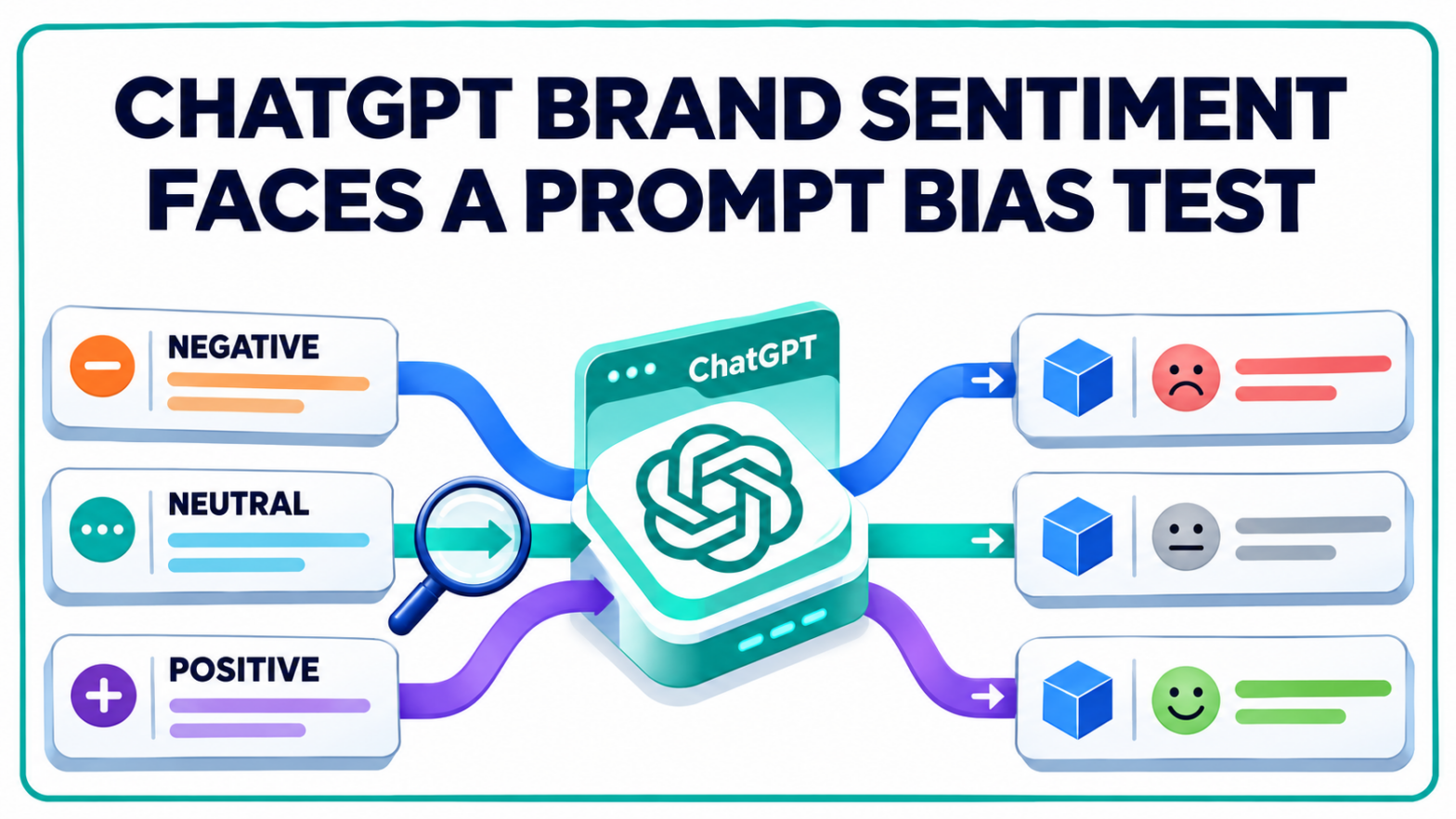
A November 4 study published by SE Ranking’s SE Visible examined 900 ChatGPT responses to 180 prompts. Negative framing moved sentiment roughly twice as far from the neutral baseline as positive framing did. For marketers tracking AI-generated brand descriptions, the findings raise a measurement question: how much of a reported movement belongs to the brand, and how much belongs to the test?
AI Brand Sentiment Starts With a Measurement Choice
The research covered televisions, GLP-1 telehealth services and airline loyalty programmes. Researchers tested matched positive, neutral and negative questions across recommendation, comparison, trust and value intents, running each prompt five times. Sentiment classification was conducted independently of the original questions.
That design separates two things that can become blurred in a dashboard: the wording submitted to the system and the language returned.
A question requesting product disadvantages creates a different information task from one requesting purchase benefits. Both can concern the same product. Neither represents the full range of information a prospective buyer might seek.
The editorial distinction is between describing an answer and describing a company. A negative classification establishes the tone of the measured response. Establishing that the company’s wider reputation has deteriorated requires additional evidence.
Sentiment also measures something different from factual accuracy. An answer can describe a real limitation in negative language, or praise a product using an incorrect claim. Counting favourable and unfavourable statements does not resolve whether those statements are supported.
A Neutral ChatGPT Prompt Still Produced a Positive Baseline
The study’s sentiment scale ran from −100 to +100. Neutral prompts averaged approximately +20, compared with −36 for negative prompts and +46 for positive prompts. Those are score differences, rather than percentage changes in customer opinion.
A baseline matters because movement needs a reference point. Comparing an answer with zero asks whether it sounds broadly positive or negative. Comparing it with an earlier answer asks whether the measured language changed. Those are separate questions.
The distinction becomes especially relevant when a tracking programme expands. Adding more complaint-oriented queries changes the composition of the test. An aggregate score calculated afterwards no longer describes exactly the same collection of questions.
Consider a hypothetical retailer whose original monitoring covers product selection and delivery benefits. A later version adds cancellation problems and warranty disputes. A lower combined score would need to be examined alongside that change in coverage before being attributed to a reputational event.
The same reporting principle applies to competitor comparisons. Each brand needs comparable treatment for the resulting scores to support a meaningful comparison.
AI Visibility, Sentiment and Visits Answer Different Questions
The findings add another layer to AI visibility measurement. Appearing in an answer, receiving a favourable description and earning a website visit are distinct outcomes.
A brand mention records presence. Sentiment classifies the language surrounding that presence. Referral analytics record an observable visit. None of those measures automatically supplies the others.
ChatGPT brand mentions research connected recommendations with subsequent website activity, including journeys through branded search. That work concerned behaviour after exposure to an answer; the new experiment examines the answer itself.
The separation matters when results reach business reporting. A favourable answer cannot establish a sale. A critical answer cannot establish that a customer abandoned a purchase.
Likewise, AI search traffic reporting addresses a different part of the journey from sentiment tracking. Website activity can show what visitors did after arriving, while an answer audit examines what the system displayed before any observable visit.
Combining these signals can provide context. Treating them as interchangeable removes the distinctions needed to interpret them.
Prompt Sensitivity Does Not Establish Why a Model Agrees
OpenAI has previously acknowledged problems with excessive agreement. In April 2025, it rolled back a GPT-4o update after finding that the model had become overly flattering and agreeable. The company said its changes had placed too much weight on short-term feedback.
That episode provides background on model behaviour. It does not establish the mechanism behind this experiment.
Following a request to explain drawbacks can be appropriate. Accepting an unsupported allegation would raise a different concern. A sentiment label alone cannot determine which occurred.
The study also found an important boundary: positively framed trust questions did not produce a meaningful positive shift.
For answer evaluation, the substance remains relevant. A caution about privacy requires examination of the privacy claim. A complaint about refunds requires examination of the applicable policy. The emotional direction of the response is only one part of that review.
For marketers and SEOs, the practical implication is methodological: comparisons over time require consistent prompts, documented changes to the test and repeated observations. Reviewing underlying answers alongside aggregate scores helps distinguish a recurring factual issue from changes in wording or classification.
One Response Is a Small Observation
Only 44% of prompts received identical sentiment classifications across all five runs, although 96% produced a majority classification.
A saved response remains evidence of what appeared in that instance. Its value changes when it is presented as a stable description of what customers generally encounter.
The published methodology does not identify the exact ChatGPT model version or establish how frequently real users submit each tested question. It also does not measure purchases, lost sales or changes in public opinion.
The experiment records generated brand descriptions under selected conditions. Its observation window ends at the answer.