


Google’s AI answers are gaining more ways to satisfy a query without sending users elsewhere. They are also putting publishers, official websites and creators closer to the remaining opportunities for a click.
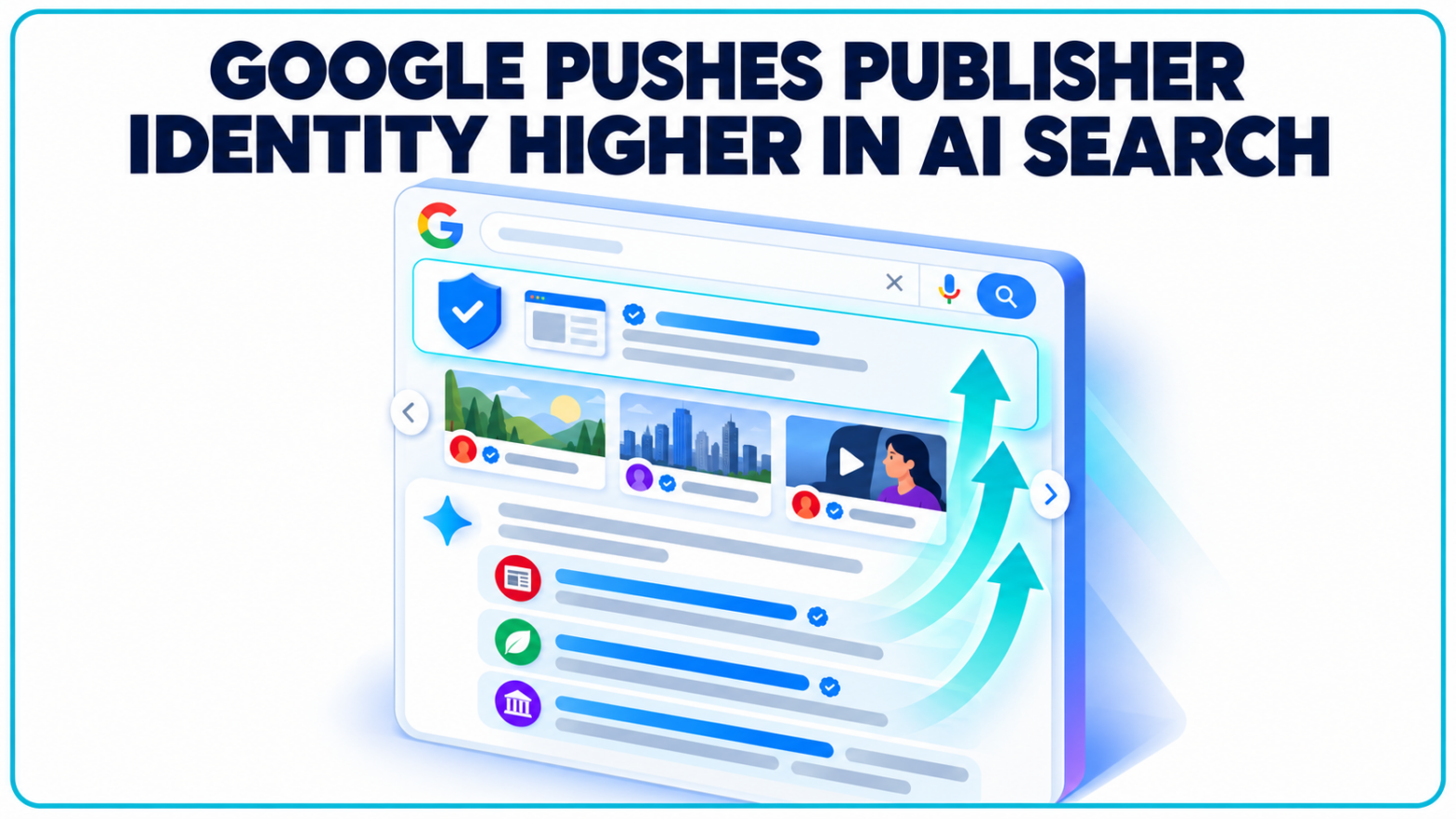
The company’s October 15 announcement introduces higher inline links, dedicated panels for official pages, wider news carousel availability, more visual related-article links and clickable creator names. Together, the changes make source identity a more visible part of Google’s AI-generated results.
Google Is Moving Source Links Closer to the Answer
Google says it has made “continued and substantial increases” to the number of inline links appearing in its AI experiences. Those links are embedded in the words and phrases of an AI response rather than being confined to a separate citation block.
Now, Google plans to show them higher in responses more frequently.
Placement matters. A link attached to the sentence a user is currently reading has a clearer relationship to the information it supports. It may also have a better chance of being noticed before the AI answer resolves the searcher’s immediate question.
This continues the link changes Google introduced earlier in 2026. TechWyse previously covered how Google AI Mode and other AI Search surfaces added source previews, subscription labels and more granular citations.
The October update goes beyond increasing link volume. Google is adjusting when and where sources appear inside the answer.
The company is also redesigning related-article links shown at the end of some AI responses. Those recommendations will receive image thumbnails and a more prominent presentation, giving users a visual route into deeper reporting after they have read the generated response.
Official Websites Get a Dedicated Position for Specific Tasks
Some searches have one authoritative destination.
A traveller requesting an airline refund, for example, may need the carrier’s official form rather than a general explanation of its policies. Someone renewing a government document needs the responsible agency’s website. A customer trying to manage a subscription needs the provider’s account page.
Google will test a dedicated section at the top of AI responses for cases where one or two official websites provide the correct place to complete a task or obtain exact information. Each link will include context explaining why the destination is useful.
That could give official brand and institutional pages a clearer role within AI Overviews, particularly for navigational and action-oriented queries. It does not amount to a general ranking preference for official sites. Google described the format as a test for searches with a limited number of appropriate destinations.
For businesses, the development puts more pressure on core service pages to state their purpose plainly. Page titles, headings and on-page instructions should make it immediately clear whether a URL is the official place to book, apply, cancel, register, download or complete another task.
News Carousels Are Expanding Across Markets and Languages
Timely reporting is receiving a more visual position inside Google’s AI experiences.
Google is rolling out prominent article carousels to additional locations and languages globally. The carousels, which appear for timely topics, will also be available across a wider range of queries.
The company did not publish a country-by-country rollout schedule. Nor did it specify which additional languages are included.
These carousels can highlight a user’s Preferred Sources, allowing selected websites to stand out within the collection. Google says the number of people using the feature has increased more than sevenfold since the beginning of 2026.
That growth points to a shift in how publisher visibility can be shaped. Relevance and Google’s ranking systems still determine whether a source is suitable for a query, but users can now give familiar publications a more recognizable position in their own results.
For publishers, that favours audience recognition alongside query-level optimization. A source that readers know and deliberately select may be presented differently from an unfamiliar site covering the same developing story.
Still, the feature primarily helps publishers that have already established a relationship with the user. It offers less immediate support to a new or specialist publication that a searcher has not encountered before.
Creator Names Become Clickable Inside AI Mode Videos
Google is also testing clickable creator and publisher names on video results in AI Mode. Selecting a name opens the source’s Search profile, where users can learn more about the creator and view work from connected platforms.
The test began during the week of the announcement. It applies to video results in AI Mode rather than every link or citation across Google Search.
The feature adds an identity layer between an individual video and the creator’s broader body of work. Instead of displaying a platform and title alone, Google can give users a route to information about who produced the content.
TechWyse examined the broader role of Google Search profiles when they launched in June. Since then, eligibility has expanded. Google’s current profile requirements list Canada, India and the United States as supported markets. A creator must generally have at least 10,000 followers or subscribers on YouTube, Instagram, X or TikTok, meet Google’s policy requirements and use an account owned by someone aged 18 or older.
Google says creating a profile does not directly affect content rankings. Following a source through its profile may, however, make that source’s content more likely to appear in the user’s Discover feed.
More Link Inventory Does Not Guarantee More Publisher Traffic
The practical change for marketers and SEOs is one of presentation, not a new optimization system. Clear page titles, recognizable authorship, consistent creator or publisher identities, accurate official pages and timely original reporting all become more important when Google is giving users additional context before they select a source. Performance should be assessed by query type and link format rather than treating every appearance in AI Search as equivalent.
Google did not publish click-through figures for the new inline links, official-site panels, carousels or related-article designs. It also did not claim that the changes would restore traffic displaced when an AI response answers a query directly.
More links create more potential exits from an AI answer. They do not establish how often searchers will take them.
For now, the rollout remains a mixture of active changes and tests: news carousels are expanding globally, related links are receiving a more visual design, official-site sections will be tested, and clickable creator names are being tested on video results in AI Mode.