

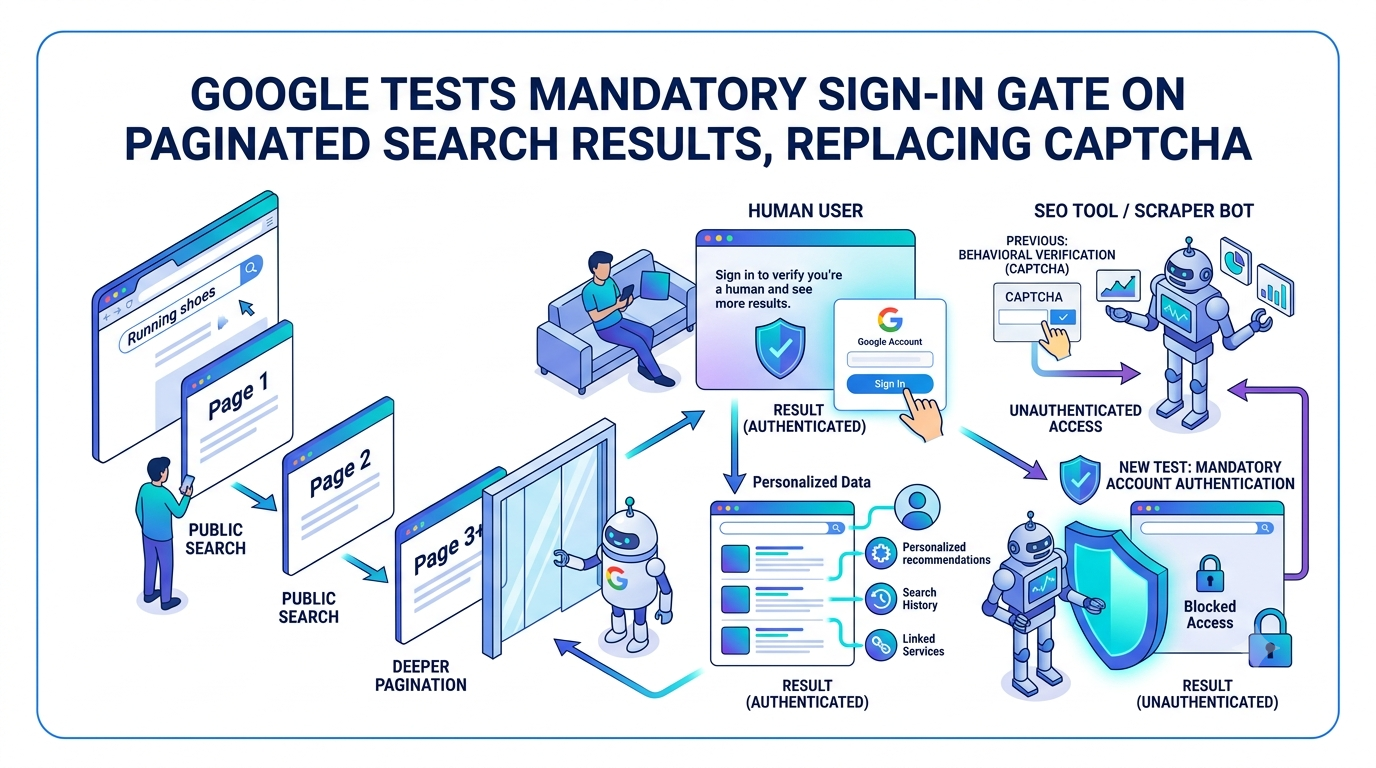
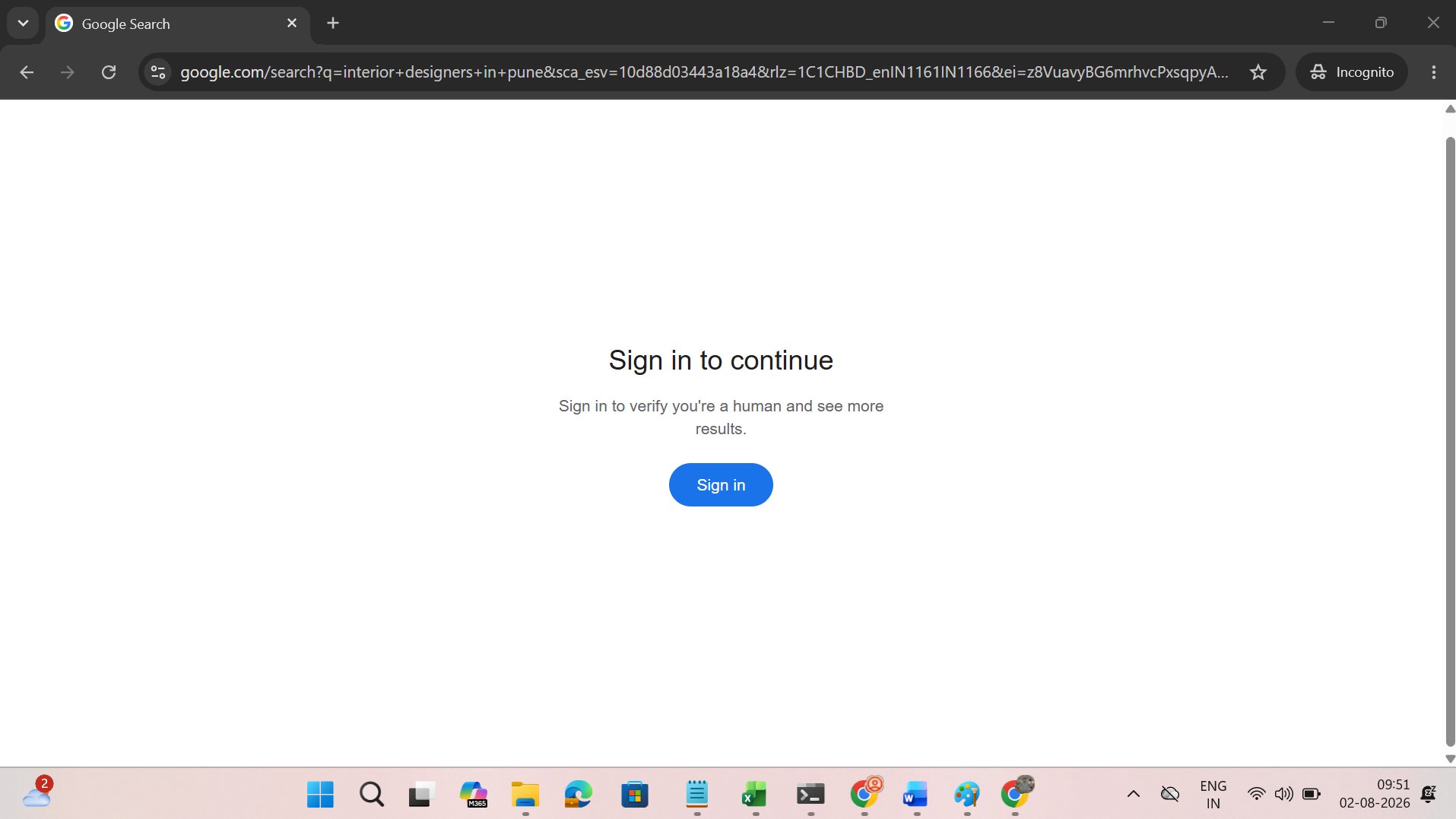
Users who page through Google Search results beyond the first few pages may soon be required to sign in to their Google account before more results load. Google is testing a new method to verify human users by requiring them to sign in after browsing beyond the first few pages of results, instead of using CAPTCHAs. The behaviour was first documented publicly by Kamlesh Shukla, who shared a screenshot of the prompt on X.
What the Prompt Shows and When It Appears
Google stops showing search results as a user clicks through paginated pages, displaying the message "Sign in to verify you're a human and see more results." The behaviour was observed in Chrome's Incognito mode after browsing beyond the first few pages of results.
The prompt replaces what has historically been Google's standard response to suspected automated browsing. Google launched its own anti-scraping system, called "SearchGuard," in January 2025 to prevent scraping by bots, and its standard mechanism includes serving CAPTCHA challenges to suspicious traffic. SerpApi, for instance, is alleged to have "used automated means to bypass CAPTCHAs." The new sign-in requirement would represent a different class of gate entirely, one tied to a verified Google identity rather than a behavioural puzzle.
The test was observed specifically in Chrome's Incognito mode after several pages of results had been viewed, and it is not widely replicable, suggesting a limited rollout or that it is only triggered under specific conditions.
Scope of the Test
Google has not issued a public statement or blog post confirming this test, and TechWyse was unable to independently replicate the sign-in prompt across multiple browsers and search sessions. The test appears to be limited and is not widely replicable at this time. No timeline or broader rollout plan has been announced.
Implications for SEO Rank-Tracking and Scraping Tools
If Google were to expand this requirement beyond a narrow test, it would have direct operational consequences for the SEO tooling industry. Rank-tracking platforms, SERP monitoring services, and data aggregators that programmatically access Google's paginated results would face a hard authentication barrier that cannot be resolved with a standard CAPTCHA solver.
The timing of this test is notable given Google's recent legal activity around search result scraping. On July 20, a federal judge dismissed Google's lawsuit against SerpApi, a firm that scrapes Google search results and resells them as structured data, which Google had sued in December under the Digital Millennium Copyright Act. The court found that search results are not copyrighted material, ruling that the DMCA provision Google invoked, Section 1201, only protects technology that guards copyrighted works, and that plain results such as URLs, snippets, and factual index data are public facts, not works. Those claims were thrown out with no chance to refile.
Despite the ruling, Google confirmed it plans to amend its complaint against SerpApi to continue blocking AI scraping bots from harvesting its platform data. A sign-in gate enforced at the infrastructure level, rather than through copyright law, would constitute a separate, non-legal mechanism to achieve a functionally similar outcome.
Personalization Consequences for Signed-In Users
Requiring a Google account sign-in to access search results beyond the first page would also alter the nature of those results. Google's search personalization systems draw on account-level signals including search history, location, and linked third-party services when a user is authenticated. Data from third-party services linked to a user's Google account contributes to personalized recommendations in Search, and when history settings are turned off, Search services will not personalize recommendations, though some tailoring based on current context remains.
Forcing authentication to unlock additional pages would therefore mean that deeper search result sets are no longer accessible in a neutral, signed-out state, introducing an account-dependent layer to what has historically been anonymous browsing. This has implications for the reliability of rank-tracking data collected without account credentials, and for users and researchers who rely on signed-out searches as a baseline for organic ranking signals.
Many search tools rely on automated access to public search results to monitor rankings, competitors, and AI visibility. A mandatory sign-in requirement at the pagination layer would interrupt that access at a structural level, regardless of what the courts determine about the legality of scraping.
Google has not confirmed whether this test will advance to a general rollout.