
Sharp increases in Google Search Console clicks are raising questions about whether some websites have gained visitors or simply recorded unusual activity. Early-November observations show abrupt jumps, but the cause remains unconfirmed.
The distinction affects how agencies, publishers and businesses interpret their search performance. A higher click total can change a monthly report without establishing that more potential customers reached the website.
Desktop-Heavy Spikes Complicate the Growth Story
SEO consultant Marie Haynes published a first-hand analysis of three monitored properties on November 3. Her figures showed November 2 click totals approximately 2.1 to 6.5 times their preceding seven-day averages.
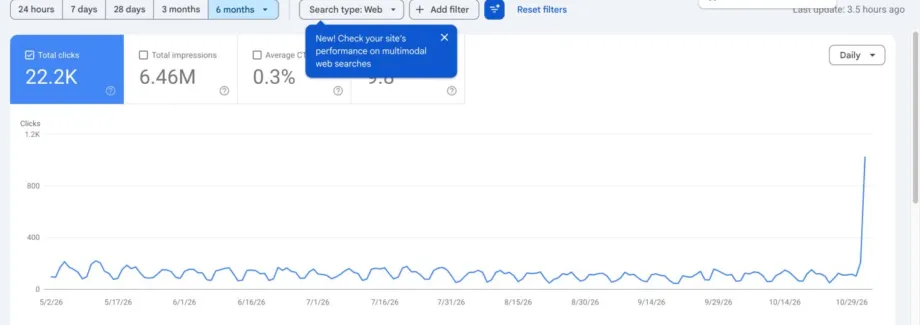
Two sites recorded predominantly desktop activity. A third showed a concentrated increase from Canada, including one page receiving clicks across numerous variations of a troubleshooting question.
Haynes also reported unusually high click-through rates on results with average positions well below the top listings. Most properties she monitored showed normal activity.
Those findings describe a limited sample, not a measured share of Search Console users. Her analysis included fresh, unfinalized data through November 2, another qualification when interpreting the figures.
Haynes proposed automated activity and filtering or logging problems as possible explanations. Those remain hypotheses rather than a confirmed diagnosis from Google.
Search Console API Comparisons Need Matching Data
The freshness of the observations matters because Google offers different ways to retrieve recent performance figures.
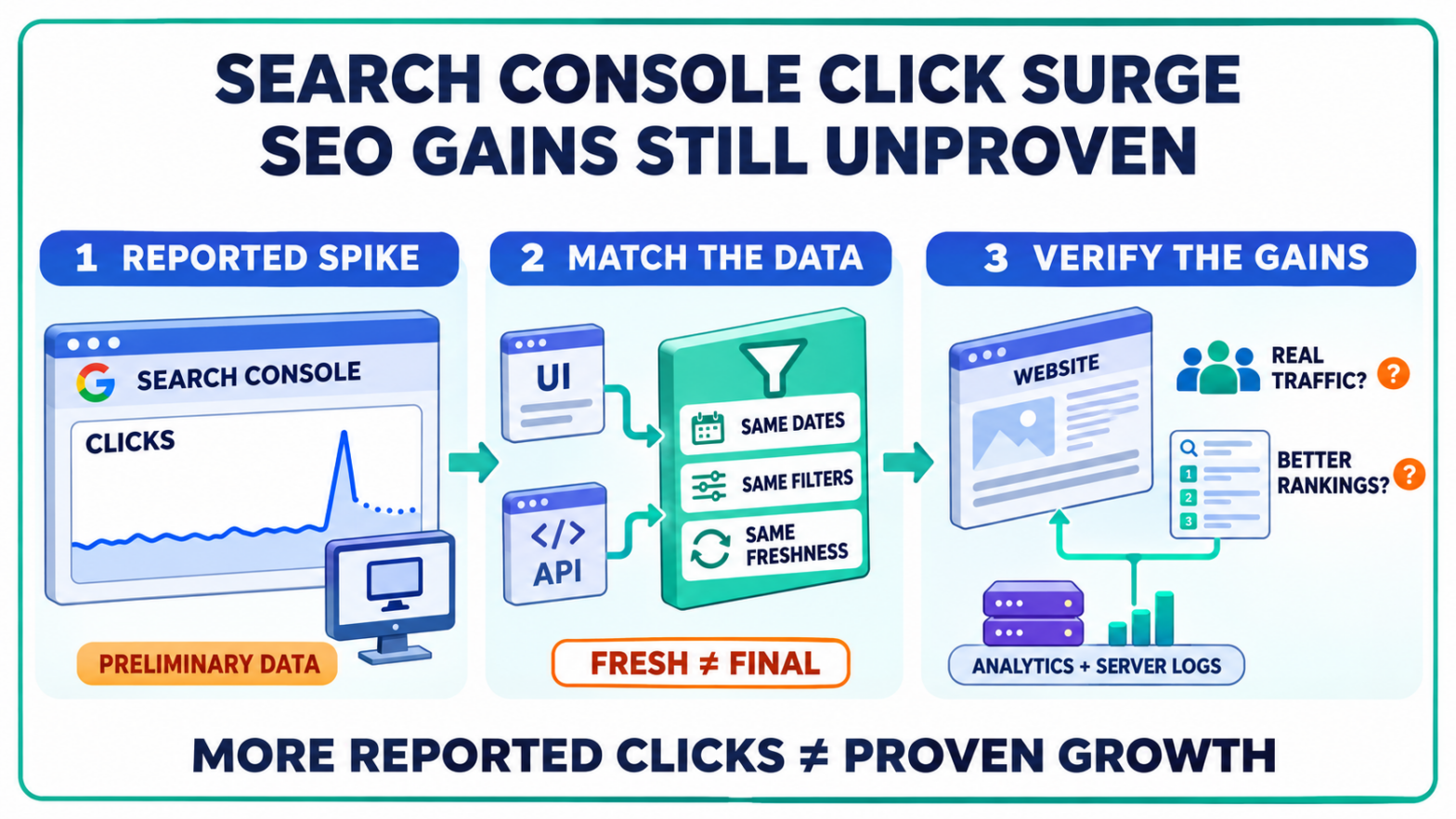
According to Google’s Search Analytics API documentation, an API request returns finalized data by default. Requesting all data also includes fresh figures that may still change. Recent-data responses can identify the first incomplete date when the request meets the documented conditions.
An API export and a browser report therefore need matching date ranges, filters, grouping and data freshness before their totals can be meaningfully compared.
That does not explain away the reported spikes. It establishes a separate question: whether two views are measuring the same activity on the same basis. A mismatch alone cannot identify a processing defect.
The scope of the search report also matters. Google Search Console now distinguishes text-based and multimodal web searches alongside other search types. Comparing differently filtered views can change the population being measured before any unusual activity is considered.
Analytics Differences Are Not Automatically Evidence of a Bug
A second comparison involves website analytics, but Search Console clicks and analytics traffic are not interchangeable totals.
Google’s guidance on reporting discrepancies identifies processing differences, reporting delays, JavaScript requirements and time zones as reasons its figures can differ from other tools.
Daily Search Console reporting uses Pacific Time outside the 24-hour view. A website analytics property using another time zone can assign activity around midnight to a different calendar date.
There are differences inside Search Console itself, too. Query tables omit anonymized searches, and the interface displays a limited number of rows. Adding a page or search-appearance filter can also change aggregation and alter chart totals.
A sum of visible rows that falls short of the chart is therefore not, by itself, evidence that clicks were fabricated.
For marketers, the immediate practical implication is to preserve the original figures, flag the unusual dates in SEO reporting, and compare equivalent periods with Google organic acquisition data and available server records. That provides corroborating evidence without assuming clicks, sessions and business enquiries should match one for one.
A Click Increase Does Not Establish a Ranking Gain
Google’s Performance report documentation treats clicks, impressions, click-through rate and average position as separate measurements. Click-through rate is calculated from clicks divided by impressions; average position describes where the site’s topmost result appeared.
An increase in one metric does not establish an improvement in another.
A click spike can lift the reported click-through rate without demonstrating that rankings improved. Equally, a change in average position requires context about the pages and searches included in the comparison.
The distinction between reported figures and underlying performance has previously affected SEO reporting, including TechWyse’s coverage of a separate Discover reporting issue. That history does not establish the cause of the November observations.
As checked on November 4, Google’s Search Status Dashboard listed no incidents across crawling, indexing, ranking or serving. The dashboard covers those Search systems, so its clear status is not confirmation that every Search Console reporting function is unaffected.
Google also documents that the newest Performance report data can remain preliminary while collection continues. The interface marks those points with a dotted line, and their values may change over the following hours.