

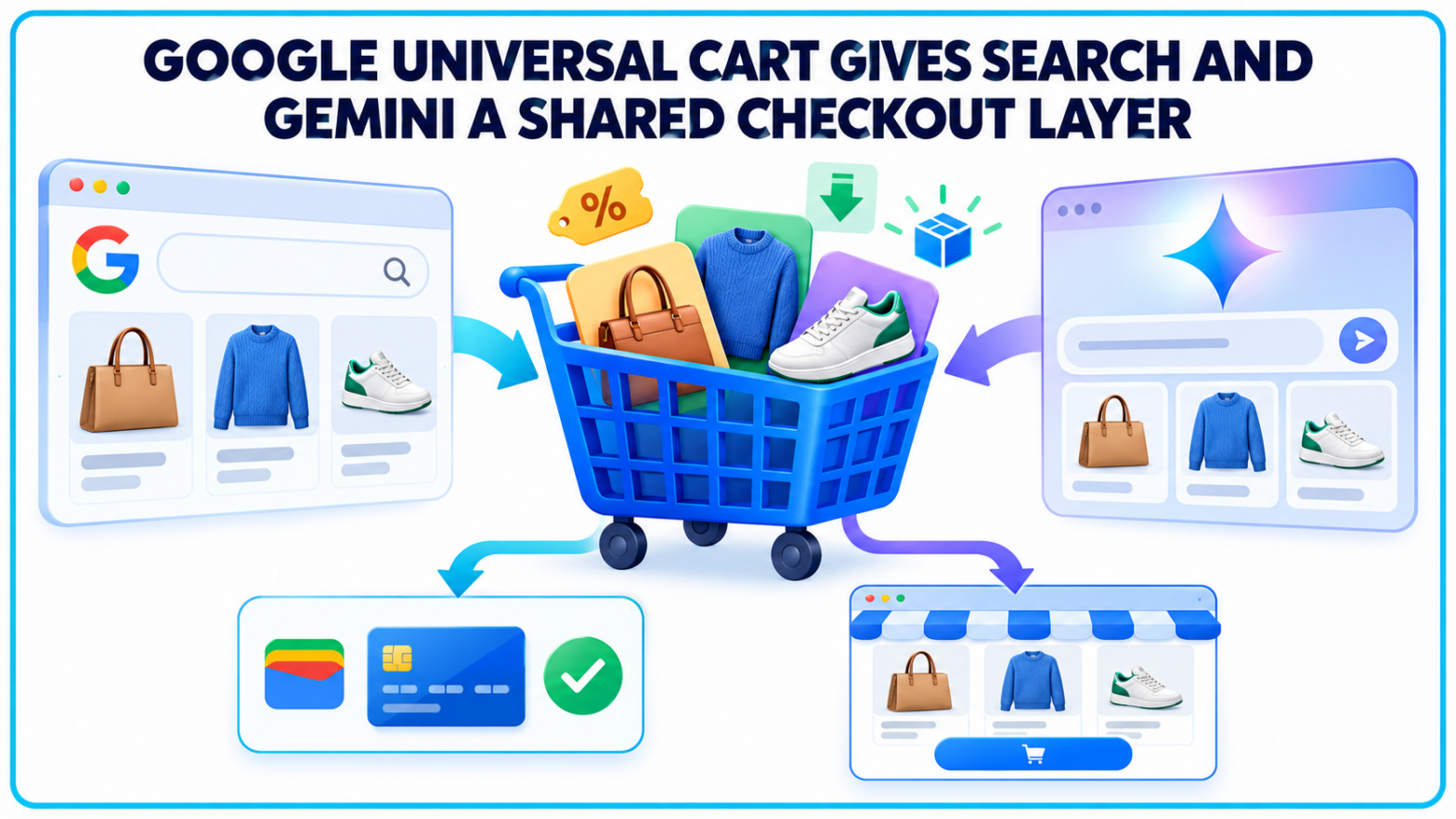
The shopping cart is moving closer to the beginning of Google’s customer journey. Products discovered across Search and Gemini can now remain in one persistent cart, even when they come from different retailers.
The Google Universal Cart began rolling out in the United States on October 15, turning an earlier preview into a live consumer product ahead of the holiday shopping season. It can save products, monitor prices and inventory, surface promotions and route shoppers through one of two checkout experiences.
One Cart Now Follows Shoppers Across Google
Online carts usually belong to individual retailers. A product added at one store stays separate from an item saved at another, leaving shoppers to manage wish lists, browser tabs, screenshots and abandoned sessions.
Google’s model treats the cart as a layer across its own shopping surfaces.

A user could add a handbag found through AI Mode in Search, save a sweater while speaking with Gemini and return to both products later. The cart retains those items across Google, regardless of whether they came from the same merchant.
That persistence gives Google a larger role between discovery and purchase. Search and Gemini are no longer only presenting products or answering comparison questions. They can hold the shopper’s consideration set after the initial session ends.
Google describes Universal Cart as a user-controlled tool rather than an autonomous purchasing agent. Its October 15 launch announcement separates the product from agentic tools designed to act on a shopper’s behalf. The cart organizes the journey, but the customer still decides what to save, how to pay and where to complete the transaction.
Price Alerts and Card Perks Extend the Consideration Stage
A saved product is not static inside Universal Cart.
The system can notify shoppers when a price falls or an unavailable item returns to stock. Google says the feature draws on its Shopping Graph, which contains more than 60 billion continually refreshed product listings.
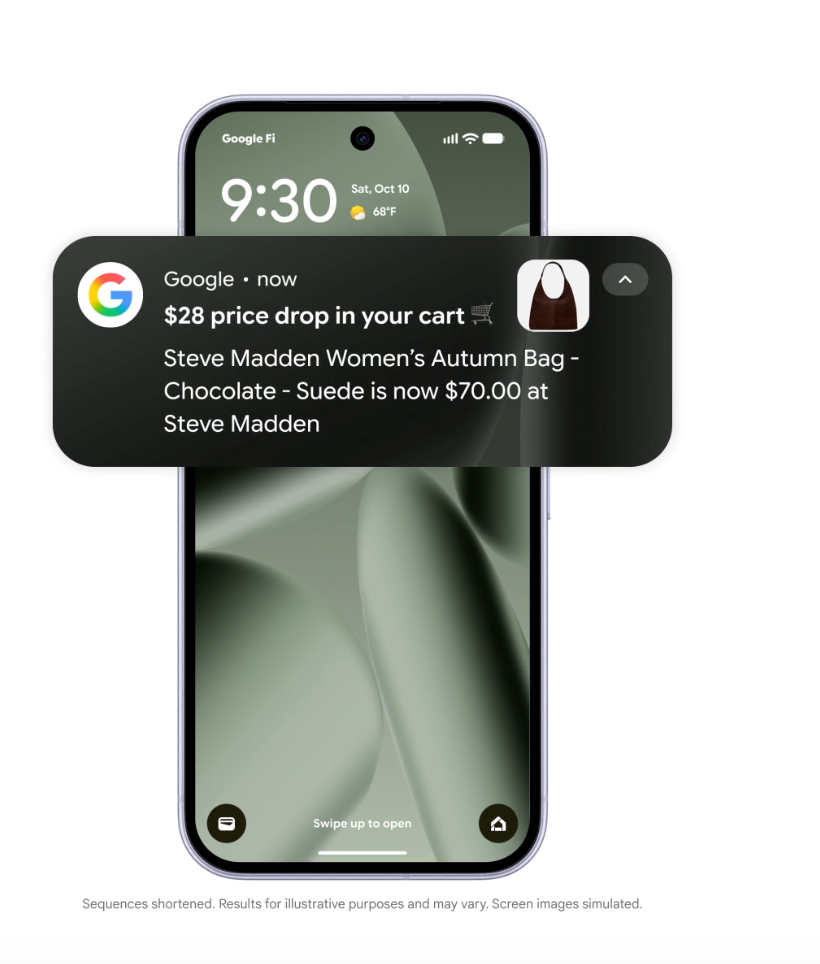
Universal Cart can also surface relevant promotion codes. Its connection to Google Wallet lets the system consider benefits attached to a shopper’s payment cards and suggest a payment method based on available perks.
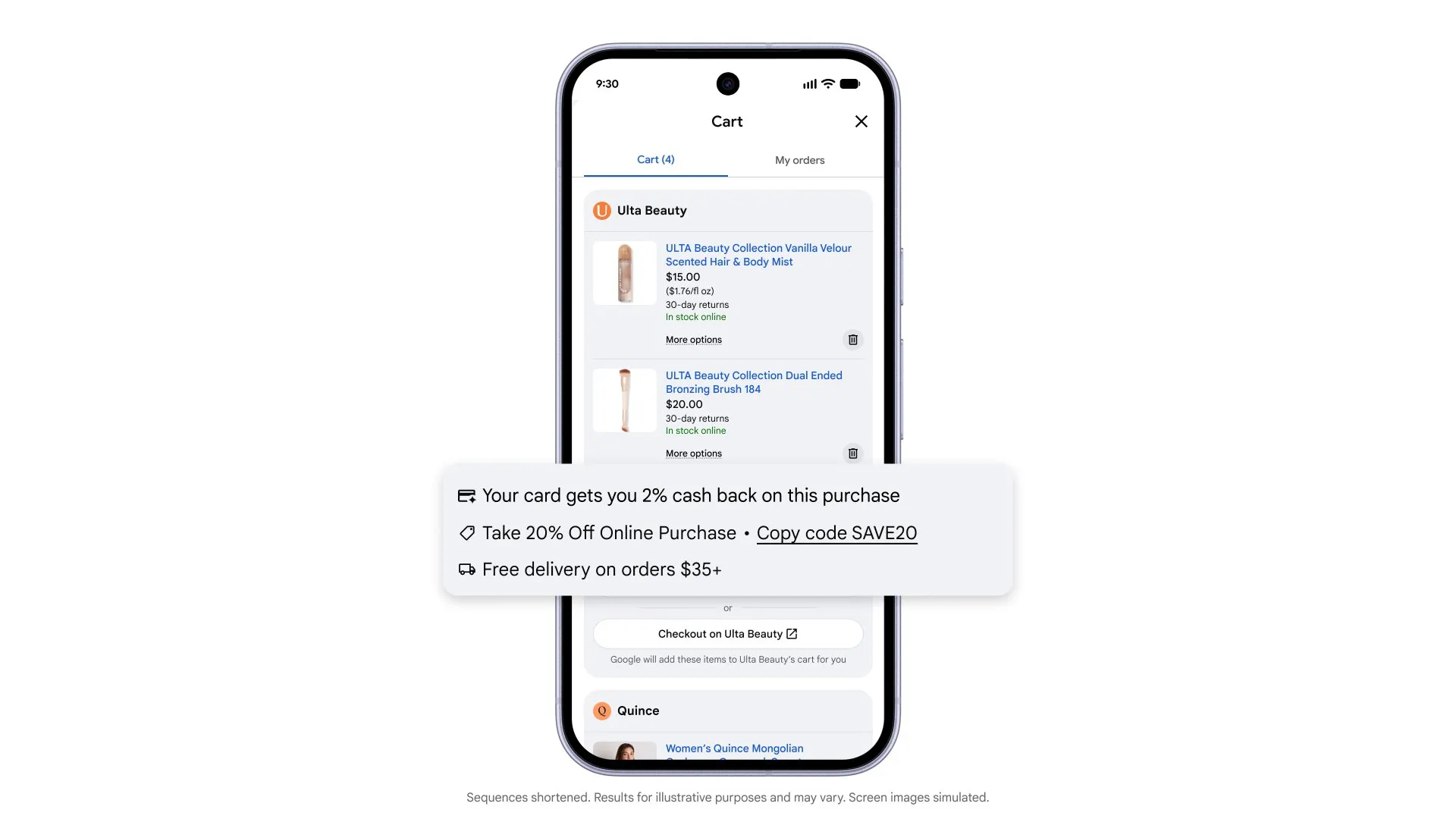
Those features make the cart another product-ranking environment. A shopper may add several comparable items, wait for a promotion and make a final decision after Google reports a pricing or inventory change.
For retailers, competition can therefore continue after a product has earned visibility in Search or Gemini. Current pricing, stock status, promotional data and payment benefits may all influence which saved item eventually converts.
That broadens the scope of AI shopping beyond product recommendations. Google is building an experience that remains involved while shoppers pause, compare alternatives and wait for better purchase conditions.
Google Supports Native Checkout and Merchant Cart Transfers

Universal Cart does not require every transaction to end in the same place.
For participating retailers, shoppers can complete a purchase through Google Pay without leaving the cart. Google says the supported experience uses payment information stored in Google Wallet and can be completed in a few taps.
The second route transfers selected products to the retailer’s own cart, where the shopper finishes the order on the merchant’s website. That option preserves more of the retailer’s existing checkout experience while reducing the need for customers to search for the products again.
Nike, Sephora, Target, Ulta Beauty, Walmart and Wayfair are among the retailers named in Google’s announcement. The company also says the experiences are available with many Shopify merchants, although checkout availability can vary by store and integration.
The retailer remains the seller of record under either route. Order confirmations and customer support also come directly from the merchant, rather than Google.
Both checkout paths are powered by the Universal Commerce Protocol, the open standard behind Google’s wider agentic commerce infrastructure. UCP gives shopping interfaces, merchant systems and payment services a shared way to exchange information required for tasks such as cart creation and checkout.
Product Data Has to Remain Accurate After Discovery
Universal Cart places more pressure on the product data feeding Google’s shopping systems.
A product title or image can help an item enter consideration, but information such as inventory, price, promotions and availability remains important after it has been saved. Stale data can create a discrepancy between the persistent cart and the retailer’s actual offer.
For marketers, the practical work centres on maintaining accurate Merchant Center feeds and reviewing how promotions, stock changes and checkout routes appear across Google’s shopping surfaces. Product visibility can no longer be evaluated only through a click to the merchant’s website; an item may stay inside Google while the shopper compares options and waits to buy.
Measurement may also differ between the two checkout routes. A transfer to the retailer’s website returns the shopper to the merchant’s normal commerce environment, while native checkout keeps more of the transaction within Google’s interface. Retailers will need to distinguish between those paths when interpreting conversion and attribution data.
Universal Cart does not eliminate the merchant site. It changes when that site enters the journey.
The Initial Rollout Stops at the U.S. Border
The October launch is limited to Google Search and the Gemini app in the United States. Google has not said that Universal Cart is currently available through YouTube or Gmail, two surfaces discussed when the product was previewed earlier in 2026.
The company has also not provided a Canadian release date for the consumer cart.
Canadian retailers may still encounter other parts of Google’s AI commerce expansion, including Merchant Center reporting and staged UCP capabilities. The cross-retailer Universal Cart described in Google’s October announcement, however, remains a U.S.-only shopping experience at launch.