

A link in an Instagram bio can keep sending customers to a business long after the original post has been forgotten. But what happens when the service hosting that link shuts down?
That's the problem facing businesses and creators using Buffer Start Page. Buffer is discontinuing its link-in-bio landing page service, with unmigrated pages scheduled to begin disappearing on February 2, 2027.
The company is offering migration tools and redirects to preserve existing links. Users who fail to move their pages, however, risk losing destinations connected to social profiles, promotional campaigns and other marketing materials.
Buffer Start Page Users Have Two Deadlines to Watch
The shutdown won't happen overnight. Buffer has established a phased retirement schedule, giving existing customers time to move their content before their landing pages are removed.
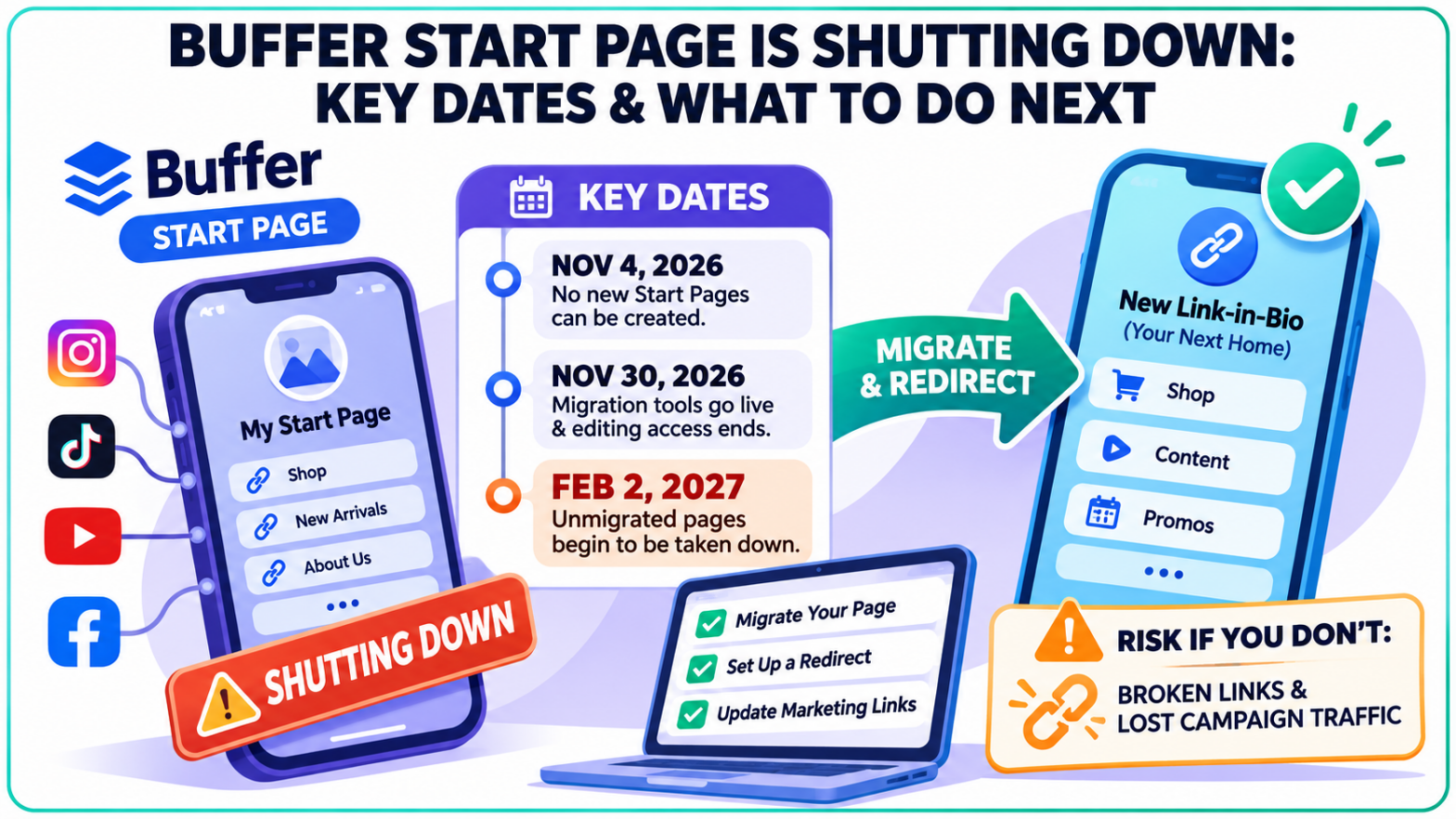
According to Buffer's official retirement announcement, three dates define the transition:
- November 4, 2026: Buffer stopped allowing users to create new Start Pages.
- November 30, 2026: Migration tools are scheduled to become available, and editing access to existing Start Pages will end.
- February 2, 2027: Buffer will begin taking down pages that haven't been migrated.
Existing pages can remain live during the transition. Users can continue editing their content until November 30, but will need to move elsewhere to manage it after that date.
That distinction matters for businesses running seasonal promotions or regularly changing their social media links.
A retailer using Start Page to promote holiday collections, for example, may still have a functioning page in December. It won't have the same editing access to update offers or replace outdated destinations.
The practical deadline for maintaining content is therefore earlier than the final shutdown date.
Buffer has also confirmed that users who complete the redirect setup can keep their existing Start Page links working after February 2. Pages without a configured redirect will lose that continuity once removed.
Why Buffer Is Abandoning Its Link-in-Bio Tool
Start Page launched in 2021 as a lightweight alternative to building a complete website.
It allowed creators, nonprofits and small businesses to place multiple links, images, videos and promotional content on a single customizable page. That page could then serve as the central destination for social media profiles and other marketing channels.
The appeal was straightforward. Businesses could share one address while directing visitors toward different products, services or content.
Five years later, Buffer has decided the service no longer fits its product priorities.
The company is concentrating resources on its core social media management features, including publishing, analytics, content planning and community engagement.
Maintaining Start Page would require continued investment in a separate website-hosting product. Buffer also acknowledged that its capabilities have fallen behind competing link-in-bio platforms.
Infrastructure costs contributed to the decision. Hosting public pages requires capacity for traffic spikes, ongoing maintenance and moderation to prevent spam and malicious content.
Buffer considered keeping the service available without further development or operating it independently. Neither approach offered a sustainable path under its current priorities.
The decision doesn't eliminate Buffer's social media scheduling or publishing services.
Instead, it removes an adjacent product that businesses may have treated as part of their wider social media marketing infrastructure.
Old Bio Links Could Become Broken Campaign Destinations
The largest immediate risk isn't losing the page design. It's losing the traffic pathways that already point toward it.
Link-in-bio pages frequently act as intermediaries between social platforms and business websites.
A visitor might discover a company through Instagram, tap its profile link, select a featured product and eventually reach a checkout page.
Start Page can occupy the middle of that journey.
If the landing page disappears without a replacement or redirect, visitors following the original URL may never reach the business's intended destination.
The problem extends beyond active profile links.
Older social posts, archived content, email signatures, QR codes and printed materials can continue circulating long after publication. Businesses may not control every place where their original Start Page address appears.
Buffer's shutdown makes those existing links an important part of the migration.
Similar dependencies exist across social commerce. TechWyse previously covered how social platforms are connecting discovery with shopping destinations, including Pinterest's expansion of creator storefront linking.
In each case, reaching a product or business depends on the links between platforms continuing to work.
For brands using Start Page, a failed link could interrupt an otherwise functioning customer journey.
There is also a distinction between losing a landing page and losing its individual destinations.
A business's website, booking system or online store may remain fully operational after Start Page closes. The broken connection occurs when visitors cannot get past the old intermediary URL.
Buffer's redirect option is designed to preserve that first connection, provided users configure it before their page is removed.
Migration Options Include Lnk.bio, Self-Hosting and Redirects
Buffer plans to introduce migration tools on November 30, offering users different ways to preserve their content.
One option is exporting the complete Start Page, including its files and images.
The exported materials can then be uploaded to hosting services such as Netlify, Vercel or Cloudflare Pages.
Buffer says it will provide setup instructions and documentation that can also help users complete the process with an AI assistant.
This approach gives businesses more control over where their landing page lives. It also introduces hosting and maintenance responsibilities that Start Page previously handled.
Another option is moving to Lnk.bio.
Buffer has partnered with the independent link-in-bio provider to offer a migration process for users who prefer a visual editing interface.
The company says Lnk.bio's free offering supports the functionality customers previously used with Start Page, while additional features are available through paid plans.
The migration won't necessarily reproduce every feature exactly.
Buffer has specifically identified its updates feed as a component that doesn't translate directly to other platforms. Users will be shown which elements carry over before completing their move.
The third component is redirect support.
After migrating, users can provide Buffer with the address of their replacement landing page. Buffer will then redirect their existing start.page URL to the new destination.
That provision is particularly relevant for businesses with links already embedded in content they cannot easily edit.
Buffer says these redirects will remain active after the shutdown and that users will receive advance notice if the arrangement changes.
The company hasn't announced a fixed expiration date for the redirects.
Social Referral Traffic Needs More Than a Working Redirect
Keeping a link operational is one part of the transition. Preserving reliable campaign measurement is another.
Businesses using Start Page as a central traffic destination may have multiple links pointing toward product pages, booking forms, newsletters or promotional offers.
Moving to another platform creates an opportunity for those destinations, their tracking parameters or their reporting setup to change.
A redirected link may successfully deliver visitors while the business's analytics reports their activity differently.
Campaign tracking depends on the information passed between the referring platform and the destination website.
Google's campaign URL documentation explains how UTM parameters identify traffic sources, marketing channels and individual campaigns.
If a migration changes or removes those parameters, marketers can lose some of the detail needed to distinguish social campaign performance.
TechWyse has previously examined a related attribution issue involving referral traffic being classified as Direct after tracking signals disappeared.
That incident involved AI referrals rather than social media, but the underlying measurement problem is relevant: traffic can continue arriving even when analytics no longer identifies its origin correctly.
For businesses migrating Start Page, the practical considerations are specific. Teams should preserve important destination URLs, check their campaign parameters, confirm that redirects resolve correctly and compare website referral reporting before and after the change.
A live replacement page is not sufficient evidence that every downstream link works.
Businesses also need to consider what visitors encounter after migration. A missing product listing, outdated promotion or incorrectly configured booking link can undermine the transition even when the original bio URL successfully redirects.
Where possible, updating social profiles and controlled campaign materials to use the new destination directly reduces dependence on an intermediary redirect.
Google's site migration guidance similarly recommends updating profile links and advertising destinations after URLs change.
The same principle applies to link-in-bio pages, although Buffer's redirects are intended to protect older links that cannot be replaced.
Buffer has separately addressed customers paying for Start Page as a channel within their accounts.
Beginning November 30, Start Page will stop counting toward paid channel slots. Customers can use the available slot for another supported channel or reduce their channel count through their billing settings, with the change reflected on their next bill.
The retirement does not automatically cancel or replace the rest of a customer's Buffer subscription.
For existing Start Page users, November 30 marks the end of ordinary page editing and the planned start of migration access. February 2, 2027, marks the beginning of removals for pages that haven't moved.
Buffer will continue supporting configured redirects after that date, leaving the continuity of existing social links dependent on customers completing the migration process.